


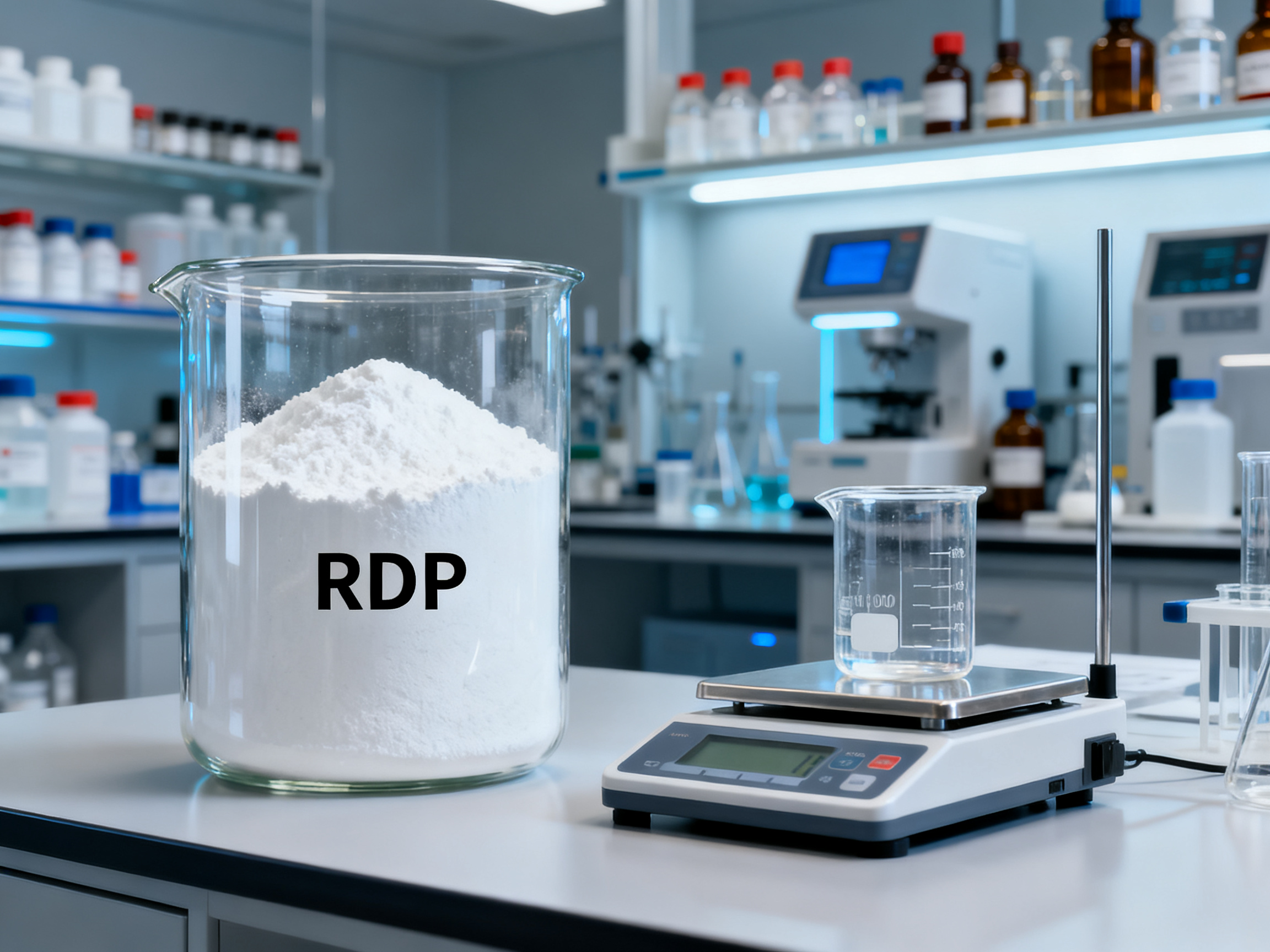
Key Technical Specifications of RDP Powder
For mortar formulators and industrial buyers, understanding the physical and chemical properties of RDP is essential for selecting the right grade. Below is the typical Technical Data Sheet (TDS) for premium industrial-grade Redispersible Polymer Powder:
How Does Redispersible Polymer Powder Work in Mortar?
When water is added to dry-mix mortar containing RDP, the polymer powder redisperses into original emulsion particles. As the mortar cures, the water evaporates, and these particles coalesce to form a continuous, flexible polymer film.
This microscopic polymer network bridges gaps, seals pores, and intertwines with the crystalline structure of cement hydrates. This process dramatically reduces the modulus of elasticity and alters the brittle nature of traditional concrete.
5 Core Benefits of Incorporating RDP Powder
Exceptional Adhesion Strength: RDP forms a high-strength polymer bond between the mortar and challenging substrates (such as EPS/XPS boards, old concrete surfaces, and non-porous ceramic tiles).
Superior Flexibility and Deformation Resistance: The elastic polymer film compensates for structural thermal expansion, stress, and shrinkage, preventing micro-cracks from developing into major structural failures.
Enhanced Water Retention & Cohesion: Working synergistically with Cellulose Ether (HPMC/MHEC), RDP improves the water retention capabilities of dry-mix mortar, preventing premature drying and ensuring thorough cement hydration.
Excellent Workability: The spherical polymer particles act as a lubricant, making the wet mortar easier to mix, trowel, and apply, which significantly boosts on-site construction efficiency.
Outstanding Weather & Freeze-Thaw Resistance: By reducing water absorption and creating an elastic barrier, RDP-modified mortars withstand extreme temperature shifts and harsh environmental elements.
Key Applications of RDP in Dry-Mix Mortar Industry
Redispersible Polymer Powder is heavily utilized across diverse dry-mix formulations to meet strict international standards (such as EN 12004 for tile adhesives).
1. Tile Adhesives (C1 / C2 Grades)
In tile adhesive formulations, RDP prevents sliding and provides the extreme flexibility required for large-format tiles, porcelain tiles, and natural stones. It ensures the bond survives thermal stress in exterior environments.
2. Wall Putty and Skim Coat
RDP adds a smooth texture to wall putty, preventing surface chalking (脫粉), improving sanding properties, and enhancing impact resistance before final painting.
3. Self-Leveling Mortar
In self-leveling flooring compounds, RDP boosts compressive strength, improves abrasion resistance, enhances surface smoothness, and guarantees superb adhesion to the subfloor.
4. Exterior Thermal Insulation Systems (ETICS / EIFS)
Used for both bonding mortars (fixing insulation boards to the wall) and embedding/base coats (with fiberglass mesh). RDP ensures the insulation layer resists wind loads, thermal shocks, and impact damage.
Quality Evaluation Guide: How to Identify Premium RDP Powder
As a leading RDP manufacturer, we advise industrial purchasers to inspect three core indicators to prevent low-grade or adulterated product sourcing:
Ash Content Testing: Burn a small sample at 1000°C. Heavy adulteration with mineral fillers (like calcium carbonate) results in high ash content (>15%), which severely downgrades the product's ultimate bonding performance.
Film-Forming Inspection: Mix RDP with water at a 1:1 ratio, pour it onto a glass plate, and let it dry. A premium product forms a clear, flexible, plastic-like film, whereas substandard powder leaves behind a brittle, chalky residue.
Viscosity and Stability: Ensure the redispersed liquid maintains uniform viscosity without separating, precipitating, or emitting foul chemical odors.
Frequently Asked Questions (FAQs) About RDP Powder
Q: What is the main difference between RDP and HPMC?
A: HPMC (Hydroxypropyl Methyl Cellulose) primarily functions as a water-retaining agent and thickener to keep wet mortar workable. RDP (Redispersible Polymer Powder) functions as a binding binder that creates flexibility and high adhesion strength once the mortar cures. They are typically used together in dry-mix formulations.
Q: How does Glass Transition Temperature (Tg) affect RDP selection?
A: A lower Tg (e.g., -15°C) yields a more flexible polymer film, which is perfect for exterior thermal insulation and cold climates. A higher Tg (e.g., +10°C) provides higher hardness and higher compressive strength, which is ideal for self-leveling floors and interior wall putty.
Q: What is the recommended shelf life and storage condition?
A: RDP should be stored in a cool, dry warehouse below 30°C and protected from moisture. Under proper conditions, its shelf life is 12 months. Bags should not be stacked too high to prevent caking under high pressure.
Leading Bulk RDP Manufacturer & Supplier
Are you looking to optimize your mortar formulation or source premium grade Redispersible Polymer Powder for industrial applications? We offer customizable Tg options, strict ISO-certified quality controls, and comprehensive technical support.
Our expertise is at your service
Send us your request for a quote, and we will generate a quote that includes everything you need for your project.
Submit your request
Send Your Inquiry
We welcome your cooperation and we will develop with you.
