


Blog
2026 Polyvinyl Alcohol Price Outlook
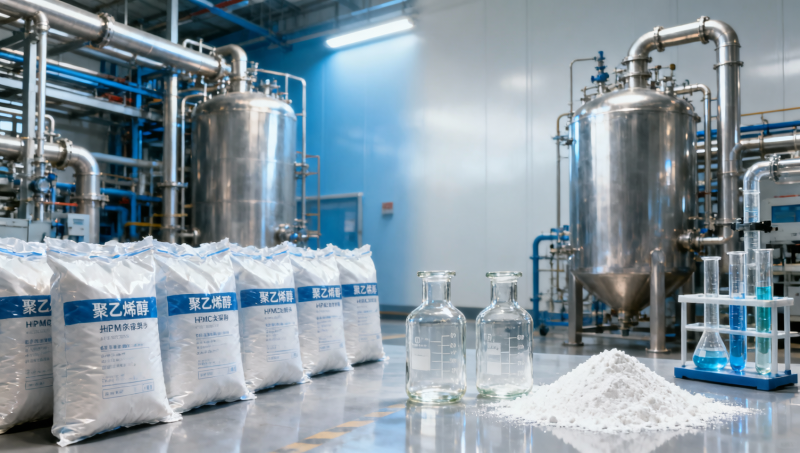
As industries track the 2026 Polyvinyl Alcohol price outlook, buyers are also comparing raw material trends with the performance of a reliable HYDROXYPROPYL METHYL CELLULOSE supplier and related chemical partners. For technical and commercial decision-makers, understanding cost movements, supply stability, and downstream demand is essential to evaluating sourcing strategies, whether for HYDROXYPROPYL METHYL CELLULOSE high viscosity applications or broader industrial materials.
Why the 2026 Polyvinyl Alcohol Price Outlook Matters for Chemical Procurement
The 2026 Polyvinyl Alcohol price outlook is not just a budgeting topic. For technical evaluators, it affects formulation stability, substitution planning, and production scheduling. For commercial teams, it influences contract timing, inventory strategy, and supplier risk assessment. For business decision-makers, it shapes margin control across construction chemicals, adhesives, coatings, paper processing, textile applications, and related industrial segments.
In most chemical sourcing cycles, price movements are rarely driven by one factor alone. Buyers usually need to review at least 4 core variables: upstream feedstock costs, regional energy and utility pressure, operating rates at manufacturing plants, and the pace of downstream demand recovery. When these variables shift within 1–2 quarters, procurement teams often need to revise annual purchasing assumptions and safety stock levels.
Polyvinyl alcohol is widely used where film-forming, binding, dispersing, or water-soluble performance is required. That means its price outlook is closely linked to industries that also evaluate cellulose ether performance. In practical sourcing work, buyers often compare PVA market direction with the reliability of partners supplying HPMC, RDP, HPS, and related functional additives because cost pressure rarely stays isolated within a single product line.
This is where supplier capability becomes critical. Jinan Ludong Chemical Co., Ltd. focuses on the production, trading, and integrated services of cellulose ethers and construction solution materials. With annual production capacity reaching 45,000 tons and HPMC viscosities controllable from 400 to 200,000 CPS, the company offers the kind of supply depth and specification flexibility that helps buyers manage uncertainty when adjacent chemical markets become volatile.
What procurement teams usually want to know first
- Will the 2026 Polyvinyl Alcohol price outlook suggest stable quarterly purchasing, or should contracts be split into 2–3 batches?
- How much supply risk comes from plant maintenance, export logistics, or changing regional demand?
- Which technical parameters must remain fixed even if procurement needs lower-cost alternatives?
- Can one supplier support broader formulation planning across cellulose ethers and related additives to reduce coordination costs?
Which factors are likely to shape the 2026 Polyvinyl Alcohol price outlook?
The 2026 Polyvinyl Alcohol price outlook will likely be shaped by a combination of feedstock economics, manufacturing utilization, freight conditions, and downstream purchasing behavior. In chemical markets, even when end-use demand appears stable, prices may still move if upstream intermediates tighten, if plants reduce operating rates for maintenance, or if export channels experience congestion over a 2–6 week period.
Another important variable is procurement behavior itself. When buyers expect prices to rise, they often bring orders forward, creating temporary tightness. When they expect weakness, they delay purchases, which can pressure short-term pricing. This means that market sentiment can amplify real supply-demand changes, especially in sectors where monthly and quarterly tender cycles strongly influence order concentration.
For technical teams, performance replacement risk must also be considered. If Polyvinyl Alcohol becomes more expensive, some users may evaluate system optimization using cellulose ethers or blended additive strategies. However, substitution is rarely one-dimensional. Water retention, film formation, rheology, workability, and compatibility all need to be reviewed across 3 stages: lab screening, pilot verification, and production confirmation.
Because of this, many buyers prefer working with suppliers that understand both market movement and application behavior. Ludong Chemical’s integrated production approach, combining traditional processing with intelligent automated production, is relevant here. It allows better response to diverse order structures, including regular procurement, viscosity-specific requirements, and batch planning aligned with changing market conditions.
Key market drivers to monitor in 2026
The table below summarizes the main drivers that procurement teams should monitor when evaluating the 2026 Polyvinyl Alcohol price outlook and related sourcing implications in the chemicals sector.
For buyers, the practical lesson is simple: a price outlook should be treated as a moving scenario, not a fixed number. The most effective strategy is often to pair market monitoring with supplier discussions on specification flexibility, order splitting, and alternative formulation support rather than waiting for a perfect entry point that may never appear.
How should technical and commercial teams compare PVA with adjacent additive options?
When the 2026 Polyvinyl Alcohol price outlook becomes uncertain, cross-functional teams usually start asking whether part of the formulation burden can be shifted to other additives. This does not mean direct replacement in every case. Instead, it means evaluating where cellulose ethers, starch ethers, redispersible powders, or blended systems can improve cost-performance balance without creating unacceptable process or quality risk.
For example, in drymix mortar, tile adhesive, skim coat, and construction-grade systems, the technical focus may shift toward water retention, open time, anti-sag behavior, workability, and consistency control rather than only binder cost. In these situations, a reliable cellulose ether supplier can help reduce the pressure caused by sharp changes in one raw material category, especially when viscosity ranges and application grades need tighter control.
Ludong Chemical is well positioned for these discussions because its core portfolio includes HPMC, RDP, and HPS, supported by flexible production capability. Buyers looking at broader additive strategies may also assess Methyl Hydroxyethyl Cellulose (MHEC) for selected construction and industrial systems where rheology, water retention, and application consistency must be balanced against procurement constraints.
The important point is not whether one product is universally better. It is whether the selected material matches the target application over a workable process window, often defined by 3–5 key checks such as viscosity behavior, dissolution profile, compatibility with other ingredients, storage stability, and batch-to-batch consistency.
Comparison framework for sourcing discussions
The following comparison table is useful when teams need to discuss Polyvinyl Alcohol alongside cellulose-ether-related options from a procurement and application perspective.
This comparison shows why technical and commercial decisions should be made together. A lower unit price does not always lower the total formulation cost. If dosage increases, processing slows, or complaint risk rises, the apparent saving can disappear within one or two production cycles.
A practical 4-step evaluation path
- Define the non-negotiable technical parameters such as viscosity target, water retention, film behavior, or workability window.
- Compare at least 2–3 sourcing scenarios, including current formulation, optimized formulation, and partial substitution route.
- Run pilot validation over a short but meaningful period, such as 7–15 days or several production batches.
- Review total cost, delivery reliability, and after-sales technical support before scaling procurement.
What should buyers check before locking supply in a volatile market?
A volatile 2026 Polyvinyl Alcohol price outlook makes supplier evaluation more demanding. Buyers should not focus only on the quoted price per ton. In chemical procurement, the real decision often depends on 5 linked dimensions: specification stability, production capacity, lead time predictability, communication efficiency, and support for application adjustment when market pressure forces formulation changes.
This is especially important for companies serving construction materials and industrial processing sectors. A delayed shipment of 7–15 days can affect not only manufacturing schedules but also project delivery commitments. Likewise, variation in viscosity, moisture sensitivity, or dissolution behavior may trigger reformulation, retesting, or customer-side complaints that cost more than the original purchase value difference.
Jinan Ludong Chemical offers a relevant sourcing profile for such situations. Its combination of large-scale manufacturing, trading capability, and integrated services helps buyers coordinate broader additive requirements through one experienced chemical partner. The company’s production lines support both traditional process reliability and intelligent automation, which is valuable when customers need repeatability across regular orders and custom application ranges.
For teams assessing construction and chemical grades, the availability of HPMC type 75 and type 60, together with a wide viscosity control band from 400 to 200,000 CPS, gives more room for technical matching. That flexibility can reduce procurement friction when a project requires multiple performance levels instead of a one-grade-fits-all approach.
Supplier qualification checklist for 2026 purchasing plans
- Can the supplier clearly define application grades, viscosity ranges, and recommended use conditions rather than offering only generic descriptions?
- Is there enough capacity to support monthly, quarterly, or project-based order patterns without frequent allocation risk?
- Can the team support sample requests, parameter confirmation, and basic formulation communication within a practical response cycle?
- Does the supplier understand both technical evaluation and commercial planning, including quotation windows, shipment coordination, and batch continuity?
Common procurement risks that are often underestimated
One common mistake is assuming that a stable quotation guarantees a stable total supply plan. In reality, quotation validity may be short, especially when feedstock or logistics costs move quickly. Another mistake is accepting broad parameter labels without clarifying the exact application window. In construction chemicals, even moderate differences in viscosity behavior or mixing response can affect field performance.
A third mistake is separating technical trials from commercial negotiations. If trial samples are approved but batch supply conditions are not aligned, the scale-up phase becomes risky. This is why many professional buyers request confirmation on sample support, production scheduling, packaging expectations, and delivery rhythm before finalizing larger-volume cooperation.
How can companies balance cost, performance, and supply continuity in 2026?
The best response to the 2026 Polyvinyl Alcohol price outlook is usually not a single low-price purchase. A stronger strategy is to balance 3 objectives at the same time: cost control, technical suitability, and supply continuity. In chemical manufacturing and construction material production, disruptions often happen when one of these three is over-prioritized while the others are ignored.
For many buyers, this means dividing procurement into structured stages. One common approach is to secure a base volume for 1–3 months, then leave a flexible portion open for opportunistic buying or technical adjustment. This reduces exposure to sudden price spikes while avoiding excess inventory if demand softens or formulation priorities change.
Another practical approach is to qualify adjacent material routes in advance. Even if Polyvinyl Alcohol remains the preferred option, teams should know what additive adjustments are technically realistic if pricing, lead times, or customer demands shift. In this context, early review of products such as Methyl Hydroxyethyl Cellulose (MHEC) can support broader resilience planning for selected applications.
The goal is not constant reformulation. The goal is decision readiness. If market conditions change over a 4–12 week period, companies with pre-qualified options can respond faster, negotiate better, and maintain customer delivery performance with fewer emergency adjustments.
Decision matrix for balancing cost and reliability
Use the matrix below to structure internal discussions when balancing the 2026 Polyvinyl Alcohol price outlook against broader additive sourcing decisions.
A clear matrix like this helps procurement, R&D, and management teams align faster. It also reduces internal disagreement by turning vague concerns into measurable checks and staged actions.
FAQ: what decision-makers often ask about the 2026 Polyvinyl Alcohol price outlook
Should buyers lock annual contracts or purchase in shorter cycles?
That depends on demand stability, storage conditions, and supplier confidence. In many chemical purchasing scenarios, a mixed approach works better than either extreme. Companies often lock a core share of demand for 1–2 quarters while keeping a flexible portion for monthly adjustment. This reduces exposure to price volatility without creating excessive inventory risk.
What technical checks matter most if a company evaluates alternatives?
Focus on the parameters that directly affect product performance and processing efficiency. Depending on the application, these may include viscosity profile, dissolution behavior, compatibility with other ingredients, water retention, film-forming characteristics, and batch consistency. In practice, teams should define 3–5 non-negotiable checks before discussing commercial replacement options.
How long does supplier qualification usually take for related additives?
A basic qualification process may take 7–15 days if the requirements are clear and the application is familiar. More complex systems can take 2–4 weeks or longer because they require sample preparation, pilot mixing, production verification, and internal commercial approval. The timeline becomes shorter when the supplier can provide coordinated technical and delivery support from the start.
What is the biggest commercial mistake during volatile pricing periods?
The biggest mistake is evaluating price without evaluating execution risk. A lower quote may become more expensive if it leads to delayed shipment, unstable specifications, repeated testing, or customer-side quality issues. In B2B chemicals, total procurement value includes material performance, supply continuity, communication speed, and the cost of operational disruption.
Why work with Ludong Chemical when reviewing 2026 sourcing options?
When evaluating the 2026 Polyvinyl Alcohol price outlook, many companies need more than a supplier list. They need a chemical partner that can support technical discussion, commercial coordination, and adjacent material planning at the same time. Jinan Ludong Chemical brings that value through its focus on cellulose ethers, construction solutions, and integrated production and trading services.
Its manufacturing setup is built to respond to varied customer requirements, supported by advanced production lines and a combination of traditional and intelligent automated processes. With annual capacity of 45,000 tons and HPMC viscosity control from 400 to 200,000 CPS, the company can support projects that require consistent supply, differentiated grades, and practical communication across both technical and commercial teams.
If your team is reviewing raw material budgets, validating alternative additive routes, or comparing supplier stability for 2026 planning, the discussion can be structured around concrete needs. These may include parameter confirmation, product selection, viscosity range matching, lead time planning, sample support, application-based recommendations, and quotation communication for staged purchasing.
Contact Ludong Chemical to discuss your target application, expected order cycle, required specification range, and delivery priorities. A focused conversation around samples, formulation direction, procurement timing, and supply continuity can help your team make better decisions before market movement turns into operational pressure.
Send Your Inquiry
We welcome your cooperation and we will develop with you.
