


CONEXPO 2026 Closes: China’s Smart Construction Solutions Gain Traction in MENA & LatAm
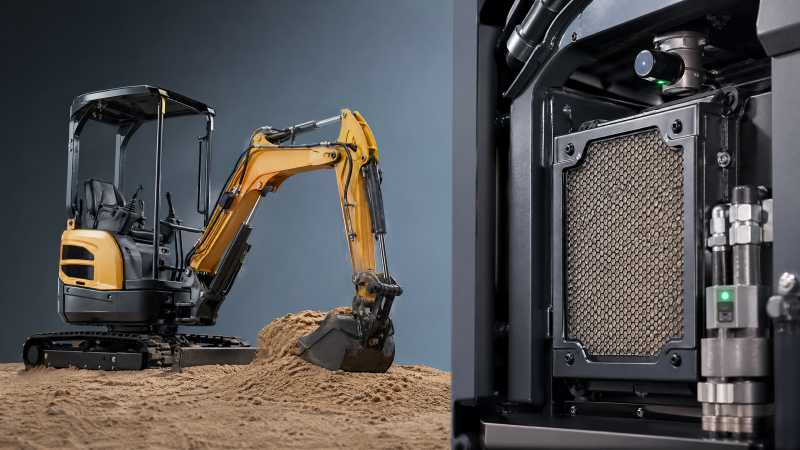
CONEXPO 2026—the 18th edition of the CONEXPO-CON/AGG International Construction & Heavy Equipment Exhibition—concluded in Las Vegas on April 28, 2026. The event signals a notable shift in procurement priorities among buyers from the Middle East and Latin America, particularly toward Chinese-engineered, intelligent, and environment-adapted construction equipment. Stakeholders in international trade, mechanical manufacturing, logistics, and after-sales service ecosystems should monitor evolving demand patterns for low-maintenance, high-resilience compact machinery.
Event Overview
The 18th CONEXPO-CON/AGG exhibition took place in Las Vegas from April 23 to April 28, 2026. Chinese exhibitors—including suppliers within Caterpillar’s China-based supply chain, Taiyang Wear Parts, and Haimu Technology—showcased AI-powered remote operation and maintenance systems, sand-dust-resistant hydraulic platforms, and modular tower crane control systems. Publicly reported data indicated that inquiry volume from Middle Eastern and Latin American procurement teams for Chinese-made compact construction equipment with ‘low maintenance + high environmental adaptability’ increased by 62% year-on-year; buyer sensitivity to delivery lead time rose, with ≤12 weeks now emerging as a threshold expectation.
Industries Affected
Direct Exporters & Trading Firms
These entities face recalibrated buyer expectations: shorter lead times and verified performance under arid or tropical conditions are now prerequisites—not differentiators. The 62% YoY increase in inquiries reflects not just volume growth but a structural shift toward technical specification alignment over price alone.
Component & Raw Material Suppliers
Suppliers providing hydraulic components, corrosion-resistant alloys, or embedded computing modules may see rising demand for certified, application-specific variants (e.g., sand-sealed actuators, thermal-hardened PCBs). This trend is tied directly to the showcased solutions—such as dust-resistant hydraulic platforms—and not to generic component categories.
Mechanical Equipment Manufacturers (OEMs & Tier-2)
Manufacturers producing compact excavators, mini-loaders, or tower cranes must assess whether their current product roadmaps include validated adaptations for high-particulate or high-humidity environments. The emphasis on modularity (e.g., modular tower crane controls) suggests growing buyer preference for field-upgradable, interoperable subsystems.
Distribution & After-Sales Service Providers
Channel partners operating in MENA or LatAm markets are increasingly expected to support remote diagnostics and over-the-air firmware updates—capabilities demonstrated by the AI-based运维 systems at the show. Local technical certification capacity and spare parts inventory planning for environment-specific wear items (e.g., sealed filters, reinforced seals) have become operational benchmarks.
What Relevant Enterprises or Practitioners Should Focus On
Monitor official export classification and tariff updates for smart-enabled construction equipment
Analysis shows that customs codes for AI-integrated machinery remain inconsistent across key import markets. Regulatory clarity—or ambiguity—around ‘smart’ functionality (e.g., whether remote diagnostics triggers ICT-related compliance) could affect clearance timelines and documentation requirements post-CONEXPO.
Track demand shifts toward specific configurations—not just models
Observably, buyer interest centers on defined technical attributes: sand resistance, modular control architecture, and ≤12-week delivery commitment. Companies should prioritize internal data collection on configuration-level inquiry rates (e.g., “mini-excavator + desert kit + cloud monitoring”) rather than aggregate model-level metrics.
Distinguish between procurement signals and commercial readiness
From industry perspective, the 62% YoY inquiry growth reflects strong market interest—but does not yet confirm order conversion or payment terms alignment. Firms should treat this as a signal requiring validation through follow-up with confirmed buyer RFQs, not as evidence of immediate sales scalability.
Prepare localized technical documentation and service training materials
Current more appropriate action is to begin drafting Arabic- and Spanish-language operation manuals, diagnostic flowcharts, and preventive maintenance checklists tailored to the showcased adaptations (e.g., filter replacement intervals under high-dust conditions). This supports faster post-show engagement and reduces implementation friction.
Editorial Observation / Industry Insight
This outcome is better understood as an early-stage market signal—not yet an established procurement norm. Analysis shows that the rise in inquiries correlates closely with the visibility of purpose-built, non-generic adaptations (e.g., anti-sand hydraulics), suggesting buyers are moving beyond cost-driven sourcing toward use-case-aligned evaluation. However, the absence of reported contract awards or shipment data means adoption remains in the qualification phase. Continued attention is warranted because such exhibitions often precede regulatory harmonization efforts and regional standard-setting initiatives—particularly where environmental resilience becomes codified in public infrastructure bidding criteria.
Conclusion
CONEXPO 2026 highlights a measurable pivot in emerging-market procurement behavior: technical fit and delivery reliability now co-anchor decision-making alongside cost. For stakeholders, this is not yet a new baseline—but rather a leading indicator of tightening specification expectations. It is more appropriately interpreted as a prompt for capability calibration than a trigger for immediate strategic overhaul.
Information Source
Main source: Official CONEXPO 2026 post-event summary (published April 29, 2026); exhibitor participation records and publicly disclosed inquiry metrics from participating Chinese enterprises. Note: Contract award status, regional tariff treatment of AI-integrated units, and long-term order fulfillment rates remain unconfirmed and require ongoing observation.
Send Your Inquiry
We welcome your cooperation and we will develop with you.
