


China’s LNG Carrier Construction Capacity Reaches Global Top Tier
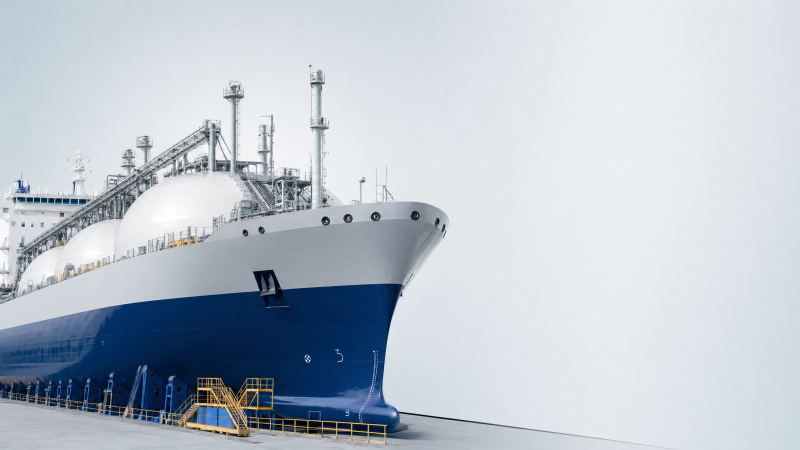
On April 8, 2026, China delivered its first domestically designed and built 180,000-cubic-meter LNG carrier in Nantong, Jiangsu — a milestone confirming that five Chinese shipyards now hold full LNG vessel delivery capability. This development is of direct relevance to international energy infrastructure developers, global shipping operators, and LNG terminal users — particularly those active in the Middle East, Southeast Asia, and Latin America, where natural gas import infrastructure is expanding rapidly.
Event Overview
On April 8, 2026, China completed and delivered its first indigenously designed 180,000-cubic-meter liquefied natural gas (LNG) transport vessel in Nantong, Jiangsu Province. The vessel is classified as one of the most technically demanding ship types, often described as “the crown jewel of shipbuilding.” With this delivery, five Chinese shipyards have now demonstrated verified capability to deliver LNG carriers. No further technical specifications, buyer identities, or contractual terms have been publicly confirmed.
Industries Affected by This Development
International Energy Infrastructure Developers
These entities — including EPC contractors and government-backed energy agencies building LNG receiving terminals — may face revised procurement options. China’s entry into the qualified LNG vessel supplier group expands the pool of potential partners for integrated offshore-to-onshore LNG infrastructure packages, especially where financing, localization, or geopolitical diversification are strategic priorities.
Global Shipping Companies Operating LNG Fleets
LNG carriers are long-life, high-value assets with narrow technical tolerances. The addition of five certified Chinese yards introduces new sourcing alternatives for charterers and owners evaluating mid- to long-term fleet expansion or replacement programs — particularly for vessels intended for regional trades or secondary markets where cost-efficiency and delivery lead time are material considerations.
LNG Terminal Operators and Offtakers
End-users securing long-term LNG supply — such as power utilities or industrial gas consumers — rely on stable, predictable vessel availability to match scheduled deliveries. A broader base of qualified builders supports more resilient vessel ordering pipelines, potentially improving scheduling flexibility and reducing bottlenecks tied to concentrated global construction capacity.
What Relevant Enterprises or Practitioners Should Monitor and Act On
Track official classification society certifications and delivery records
While five Chinese yards are reported to hold LNG vessel delivery capability, verification depends on publicly listed class approvals (e.g., ABS, DNV, LR) and actual handover documentation. Stakeholders should monitor registry updates from recognized classification societies rather than relying solely on domestic announcements.
Assess implications for regional LNG import infrastructure timelines
For projects under development in emerging markets — especially those involving Chinese engineering or financing support — this milestone may signal shorter vessel delivery windows or bundled shipyard–EPC offerings. Procurement teams should review current tender conditions and feasibility studies for possible recalibration of marine logistics assumptions.
Distinguish between qualification status and commercial competitiveness
Delivery capability does not equate to immediate price leadership, schedule reliability, or full compliance with all operator-specific technical requirements (e.g., membrane vs. GTT Mark III compatibility, dual-fuel engine integration). Buyers should treat this as an expanded vendor list — not a de facto shift in market pricing or performance benchmarks.
Review existing vessel chartering and newbuild contracting frameworks
Charterers and owners with upcoming fleet renewal cycles should evaluate whether updated yard capabilities justify revisiting contractual clauses related to builder selection, delivery guarantees, or technology acceptance protocols — especially if prior agreements excluded Chinese yards on principle rather than technical grounds.
Editorial Perspective / Industry Observation
Observably, this milestone reflects a structural upgrade in China’s heavy equipment manufacturing maturity — not merely incremental progress. However, it remains a capability signal rather than an immediate market-share inflection point: global LNG carrier orderbooks remain dominated by Korean and Japanese yards, and operational track records of newly qualified Chinese builders are still limited to a small number of deliveries. From an industry perspective, the significance lies less in near-term displacement and more in long-term optionality — particularly for buyers prioritizing supply chain resilience, regional alignment, or lifecycle cost over absolute first-mover technical differentiation. Continued observation is warranted on delivery consistency, class society audit outcomes, and adoption rates among non-Chinese charterers.
This development signals growing parity in foundational LNG vessel construction competence — but does not yet redefine global competitive dynamics. It is better understood as an enabler of diversified procurement strategies, not a trigger for wholesale reallocation of orders. Stakeholders should treat it as a validated expansion of the qualified supplier universe — one requiring case-by-case technical and commercial due diligence, not automatic reassessment of established sourcing hierarchies.
Source: Public delivery announcement issued on April 8, 2026, regarding the 180,000-cubic-meter LNG carrier built in Nantong, Jiangsu. No third-party verification data, orderbook details, or yard-specific certification lists were included in the initial release. Ongoing monitoring of classification society bulletins and maritime regulatory filings is recommended for confirmation of individual yard qualifications.
Send Your Inquiry
We welcome your cooperation and we will develop with you.
