


EU CE Machinery Directive AI Module Enforcement Deadline: Q3 2026
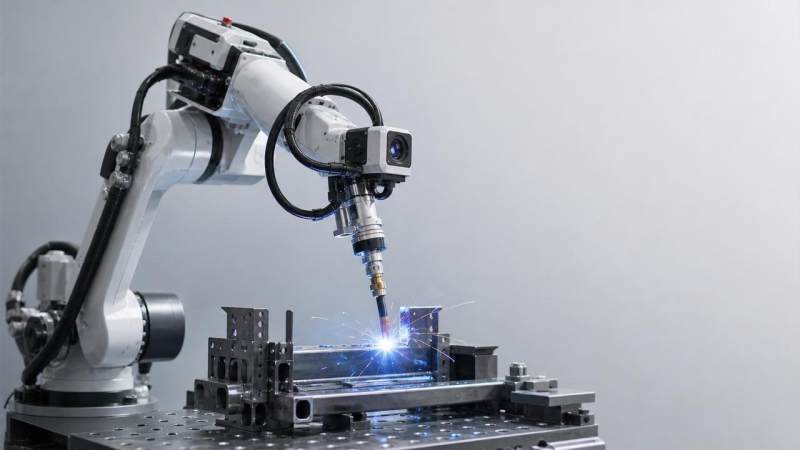
On 9 May 2026, the European Commission published the MDR/MD Directive AI Annex Guidance v2.1, setting a mandatory compliance deadline of 30 September 2026 for technical documentation updates covering AI-enabled mechanical products—including smart stacking robots, adaptive welding systems, and predictive maintenance-integrated equipment. This development directly impacts manufacturers exporting such products to the EU market and signals an immediate need for technical and regulatory readiness across multiple industrial supply chain roles.
Event Overview
The European Commission released the MDR/MD Directive AI Annex Guidance v2.1 on 9 May 2026. It mandates that all mechanical products incorporating AI functionality must have updated conformity technical documentation by 30 September 2026. Required updates include new sections on AI safety assessment, data traceability declaration, and human-machine collaborative failure analysis. Products with outdated documentation will lose CE marking validity, affecting eligibility for EU public procurement tenders and end-market sales.
Industries Affected by Segment
Direct Exporting Manufacturers
Manufacturers placing AI-integrated machinery on the EU market are directly responsible for conformity documentation. Their impact arises from legal liability for CE marking validity and contractual obligations to EU customers. Non-compliance may result in withdrawal from tender processes and inability to demonstrate compliance during market surveillance audits.
Contract Manufacturers & OEM Suppliers
Suppliers producing subassemblies or embedded AI modules (e.g., vision-guided motion controllers, real-time anomaly detection firmware) face upstream demand for AI-specific documentation support. Impact manifests in revised technical cooperation requirements—such as providing algorithm training data logs, model versioning records, or failure mode assumptions—to enable their customers’ full-system assessments.
Systems Integrators
Integrators combining third-party hardware, AI software, and control logic into turnkey solutions must now verify and document AI-related risks across the integrated stack. Their documentation burden increases significantly where AI functions span multiple vendors, requiring harmonized traceability and shared failure analysis frameworks.
Distribution & Aftermarket Service Providers
Distributors and service providers handling post-sale updates (e.g., AI model retraining, firmware patches) may be required to retain and disclose change logs affecting safety-critical AI behavior. This introduces new documentation retention and audit-readiness expectations beyond traditional maintenance records.
Key Focus Areas and Recommended Actions
Monitor official guidance revisions and notified body interpretations
The v2.1 guidance is explicitly labeled as non-binding but serves as the authoritative interpretation framework for notified bodies. Stakeholders should track upcoming clarifications—particularly on thresholds for ‘AI functionality’ applicability and acceptable formats for data traceability declarations—as these will shape implementation feasibility.
Prioritize documentation upgrades for high-volume or tender-sensitive product lines
Given the 30 September 2026 deadline, manufacturers should identify products currently under active EU tender consideration or with scheduled deliveries before Q4 2026. These represent the highest-impact candidates for immediate technical documentation revision, especially where AI features influence safety-related control functions.
Distinguish between regulatory signal and operational implementation
This requirement reflects a regulatory milestone—not yet a fully audited enforcement regime. While CE validity hinges on documentation completeness, practical verification timelines and sampling frequencies by market surveillance authorities remain unconfirmed. Companies should treat this as a formal readiness checkpoint rather than assume immediate, widespread field audits.
Initiate cross-functional alignment on AI documentation ownership and data governance
Updating technical documentation requires coordination across R&D (algorithm design), QA (validation test reports), IT (data lineage systems), and regulatory affairs (CE file structure). Firms should assign clear internal accountability for each new section—especially for data traceability and failure analysis—and assess whether existing data management tools meet the declared traceability standard.
Editorial Perspective / Industry Observation
Observably, this deadline represents a procedural hardening of the EU’s approach to AI-integrated physical systems—not a sudden policy shift, but a codification of expectations already emerging in recent notified body assessments. Analysis shows that the requirement focuses on documentation rigor rather than banning specific AI techniques, suggesting it functions primarily as a transparency and accountability mechanism. From an industry perspective, it is better understood as a signal of regulatory maturation: the EU is moving from principle-based AI ethics frameworks toward enforceable, product-specific technical obligations. Continuous monitoring remains essential, as subsequent guidance versions or delegated acts may refine scope, definitions, or verification methods.
Conclusion: The 30 September 2026 deadline marks a defined inflection point for CE compliance of AI-equipped machinery—not a broad market barrier, but a targeted documentation obligation with cascading responsibilities across manufacturing, integration, and distribution tiers. It is more accurately interpreted as a structured readiness milestone than an immediate enforcement trigger, and its primary near-term significance lies in aligning internal technical documentation practices with evolving EU regulatory expectations.
Source: European Commission, MDR/MD Directive AI Annex Guidance v2.1, published 9 May 2026.
Note: Further implementation details—including notified body assessment protocols and transitional arrangements for legacy certifications—are pending and require ongoing observation.
Send Your Inquiry
We welcome your cooperation and we will develop with you.
