


Tile Adhesive Failure Analysis: When HPMC Causes Weak Bonding or Poor Sag Control
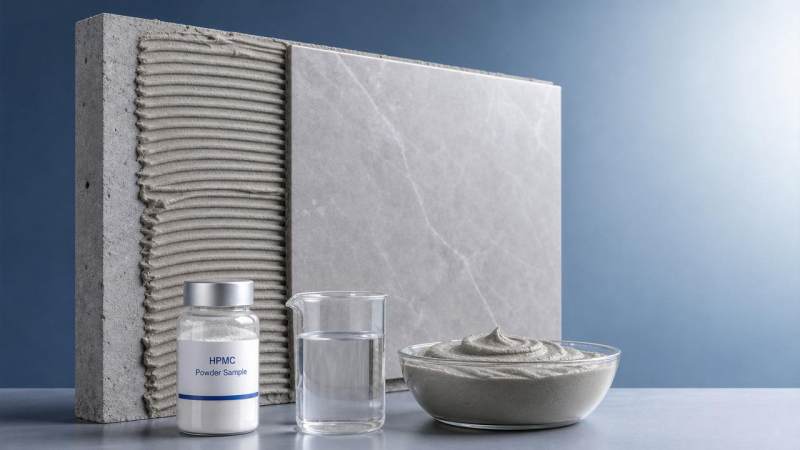
When Tile Adhesive Failure Starts With the Wrong HPMC Choice
Tile adhesive failure rarely begins at the jobsite alone. It often starts in formulation design, raw material variation, or weak consistency control.
That is why HPMC For Tile Adhesive deserves closer analysis than a simple viscosity comparison.
In practical use, weak bonding and poor sag control may look like separate defects. In many cases, they come from the same mismatch.
The mismatch may involve water retention, open time, wetting behavior, or compatibility with cement and polymer powder.
For construction chemical systems, the real question is not whether HPMC is included. The question is whether the grade fits the working conditions.
Jinan Ludong Chemical has built its cellulose ether business around this type of formulation reality.
With integrated production lines and viscosity control from 400 to 200,000 CPS, it reflects how broad the selection window can be.
That range matters because tile adhesive performance changes sharply across substrate type, tile size, climate, and installation method.
Why Different Installation Conditions Change the Performance Target
A wall application and a floor application do not stress the adhesive in the same way.
Large porcelain tiles demand longer open time and stronger wetting. Vertical placement puts more pressure on anti-sag behavior.
Absorbent substrates also behave differently from dense concrete or old tiled surfaces.
In dry and hot regions, water loss becomes faster. The same formula may show acceptable laboratory strength but poor on-site transfer.
This is where HPMC For Tile Adhesive becomes a balancing tool rather than a single-function additive.
Higher water retention may protect cement hydration, but excessive retention can also slow setting and affect early grab.
Better sag resistance may improve wall stability, yet overly thick rheology can reduce spreading comfort and wet-out efficiency.
The useful judgment is always conditional. Performance must be read against the application scene, not the datasheet alone.
Weak Bonding Often Appears First in These Real Jobsite Situations
Dense tiles on low-absorption surfaces
Porcelain tile systems expose weak wetting quickly. If the adhesive skins too fast, transfer drops before placement is complete.
Here, HPMC For Tile Adhesive must support open time without making the mix overly slippery or delayed in strength development.
Hot, windy, or highly absorbent environments
Rapid moisture loss changes the bond line before full contact is achieved. The issue may be blamed on cement quality, but retention is often central.
In this case, stronger water retention and stable batch consistency matter more than chasing very high viscosity alone.
Formulas with poor polymer-cellulose balance
Some failures come from treating HPMC and RDP as isolated ingredients. They are not.
If film formation, flexibility, and hydration control are not aligned, tensile adhesion may vary from dry state to heat aging or water immersion.
That is why suppliers with integrated cellulose ether and construction additive experience often provide better starting points for reformulation.
Poor Sag Control Usually Means the Rheology Was Judged Too Narrowly
Sag is not controlled by thickness feeling alone. A paste can seem rich in the bucket and still slide after the tile is pressed.
Wall tile installations reveal this quickly, especially with larger formats and heavier decorative finishes.
In these scenes, HPMC For Tile Adhesive needs to create a rheology profile with enough yield value and shape retention.
But the answer is not simply “choose the highest viscosity.” That shortcut causes many secondary problems.
Excessive viscosity can trap air, reduce spreadability, and make ridges tear during combing. Coverage then becomes less uniform.
A better approach is to judge sag together with slip resistance, trowel feel, water demand, and final transfer area.
In some formulations, combining the right cellulose ether grade with starch ether gives a more stable anti-sag effect.
That option is especially relevant when wall performance must improve without sacrificing worker handling.
Different Scenes Call for Different Priorities
The most useful comparison is not product against product. It is condition against requirement.
This comparison helps prevent a common mistake: using one successful wall formula as a universal answer for every tile adhesive line.
What Gets Misread During Raw Material Selection
One frequent error is to rely on nominal viscosity only. Two grades with similar viscosity can behave differently in water retention and workability.
Another mistake is to assess HPMC For Tile Adhesive under one curing schedule and assume equal field performance everywhere.
Real failures often emerge after storage variation, seasonal humidity shifts, or changes in cement source.
It is also risky to optimize only for material cost. A cheaper grade may increase rejection, rework, or jobsite adjustment time.
More reliable evaluation includes batch stability, dispersion speed, mixing feel, and tolerance to changing aggregate moisture.
In practice, products such as Hydroxypropyl Methyl Cellulose are more useful when selected through formulation behavior, not catalog labels alone.
How to Match HPMC Selection to the Actual Failure Pattern
- If tiles slip after placement, check anti-sag rheology and water demand together.
- If adhesion falls after delayed placement, review open time and surface skinning behavior.
- If the paste feels stiff but bonding stays weak, examine wetting and transfer instead of raising viscosity blindly.
- If production batches behave inconsistently, focus on cellulose ether quality stability and mixing reproducibility.
- If wet adhesion fails after immersion, assess polymer balance instead of adjusting only the HPMC dosage.
This method shifts the discussion from generic additive preference to defect-based correction.
For producers handling multiple construction grades, that shift is important. It reduces reformulation cycles and avoids misleading trial results.
A More Reliable Way to Improve Formulation Stability
Stable tile adhesive performance comes from controlled interactions, not from one aggressive parameter target.
In actual development, the better path is to define the primary failure scene first, then test the secondary trade-offs.
That means confirming whether the main problem is early skinning, weak transfer, tile slip, or inconsistent field handling.
From there, HPMC For Tile Adhesive can be matched more precisely by retention profile, rheology behavior, and compatibility with the full dry-mix system.
Suppliers with large-scale cellulose ether capacity and controlled production windows can support this process more effectively.
Jinan Ludong Chemical, with its integrated construction additive background, reflects that advantage in both specification range and formulation support logic.
The next useful step is straightforward: sort applications by substrate, tile format, climate exposure, and installation direction.
Then compare which HPMC For Tile Adhesive grade keeps bond strength, open time, and sag control in balance under those exact conditions.
Send Your Inquiry
We welcome your cooperation and we will develop with you.
