


When Wholesale RDP Saves More Than It Costs
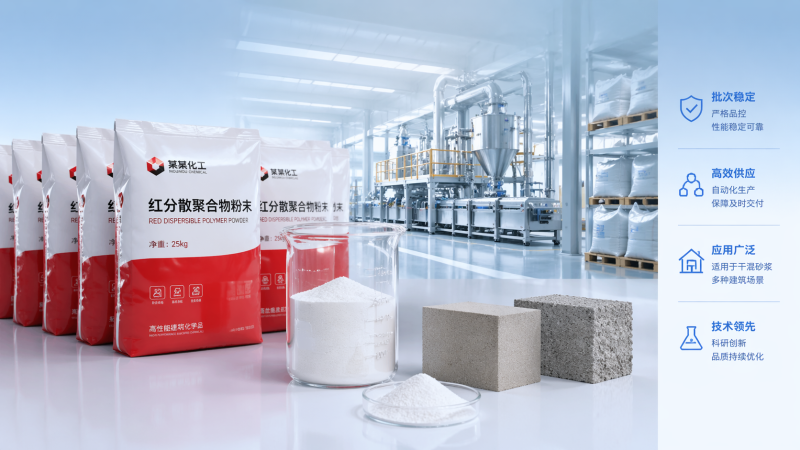
For buyers and technical teams balancing performance, consistency, and cost, Redispersible Polymer Powder wholesale can deliver far more value than its upfront price suggests. Backed by a trusted Redispersible Polymer Powder exporter, the right supply strategy improves mortar quality, reduces waste, and supports stable production. As a global HYDROXYPROPYL METHYL CELLULOSE supplier, Jinan Ludong Chemical helps decision-makers evaluate material efficiency with confidence.
In construction chemicals, the purchase price per ton is only one part of the equation. What matters more is how a powder performs across batching, storage, jobsite application, and finished mortar durability. For procurement managers, technical evaluators, quality teams, and business leaders, wholesale strategy can affect 4 critical outcomes at once: formulation stability, labor efficiency, complaint risk, and total production cost.
That is why many manufacturers and drymix mortar producers now assess RDP not as a commodity alone, but as a performance lever. When sourced from a capable supplier with stable output, traceable batches, and responsive technical support, wholesale purchasing often reduces hidden losses that are far more expensive than a small difference in initial quotation.
Why the Lowest Unit Price Often Becomes the Highest Real Cost
In tile adhesive, skim coat, EIFS, repair mortar, and self-leveling systems, polymer performance influences adhesion, flexibility, water retention balance, and workability. If batch consistency fluctuates, even by a small margin, plants may need repeated adjustments in dosage, mixing time, or companion additives. Over 30 to 90 days, that inconsistency can increase rejection rates, rework, and formulation troubleshooting hours.
A cheaper supply may look attractive on paper, but technical teams know the hidden costs. If a lower-grade powder causes poor dispersibility, reduced open time, or unstable bonding, the savings of 20 to 50 dollars per ton can be erased by higher additive consumption, customer complaints, or production downtime. In drymix operations running 10 to 50 tons per day, small formulation shifts can quickly accumulate into meaningful losses.
For quality and safety managers, stable raw material input is also a control issue. Better batch repeatability helps maintain tighter internal specifications for moisture, ash behavior, particle dispersion, and application response. This reduces the need for emergency corrections and lowers the probability of off-spec finished products leaving the factory.
Typical hidden cost drivers in wholesale procurement
- Repeated lab reformulation after each incoming lot, adding 1 to 3 days of delay per month.
- Higher dosage requirements to compensate for weak flexibility or adhesion performance.
- Production waste from caking, poor storage stability, or inconsistent redispersion.
- More field complaints related to tile slip, crack resistance, or reduced bond strength.
The table below shows how wholesale decisions affect total cost beyond the invoice value.
The key takeaway is simple: stable polymer input protects margins in several places at once. For many plants, total savings come from lower failure rates and better process control rather than from the cheapest quoted ton price.
What Technical Teams Should Evaluate Before Buying in Volume
Volume purchasing should begin with application-fit, not only commercial negotiation. A formulation for C1 or C2 tile adhesive, an exterior insulation system, or a repair mortar will not require exactly the same polymer profile. Technical teams should review redispersion behavior, anti-slip contribution, flexibility support, compatibility with cellulose ethers, and storage reliability under common warehouse conditions such as 5°C to 35°C.
For many buyers, supplier capability is as important as product performance. Jinan Ludong Chemical operates large-scale production and integrated services in cellulose ethers and construction chemical materials, with annual capacity reaching 45,000 tons. For manufacturers that need coordinated supply of HPMC, HPS, and polymer powder, that production base can simplify sourcing and shorten communication loops between procurement and formulation teams.
A practical evaluation process usually includes 3 stages: lab screening, pilot production, and supply verification. In stage one, buyers compare dosage windows and application response. In stage two, they verify mixing behavior and finished mortar consistency on actual equipment. In stage three, they confirm delivery rhythm, lot stability, packaging integrity, and documentation support.
Core technical checkpoints
1. Performance fit for the target mortar
Check whether the polymer supports the intended balance of adhesion, deformability, workability, and water resistance. A product suited for tile adhesive may need a different dosage range than one used in self-leveling compounds or putty systems.
2. Compatibility with other additives
Compatibility with HPMC or HPS is essential. Poor matching can reduce sag resistance, alter open time, or create undesirable flow changes. Buyers seeking a coordinated system may review options such as Redispersible Polymer Powder alongside cellulose ether strategy rather than treating each additive as separate.
3. Supply consistency and traceability
Ask whether lots are traceable and whether technical data remains stable across repeated orders. For wholesale contracts covering 3 to 12 months, consistency matters more than one-time sample performance.
The following table can help internal teams align technical and purchasing criteria before signing a supply plan.
This framework helps reduce internal disagreement. Technical teams can focus on formulation risk, while procurement compares commercial terms using criteria that actually affect operational cost.
How Wholesale Supply Improves Production Planning and Quality Control
A reliable wholesale arrangement does more than lower per-unit friction in purchasing. It improves planning visibility. Plants producing drymix mortar often schedule raw material inflow on 2-week, 4-week, or monthly cycles. When polymer delivery is stable, production managers can align HPMC, fillers, and cementitious materials with less buffer stock and fewer urgent substitutions.
For quality departments, wholesale consistency supports better incoming inspection standards. Instead of rebuilding acceptance criteria for every order, teams can use a more stable baseline for appearance, moisture-related behavior, dispersibility, and application performance. This shortens release time for inbound materials and helps maintain uniform finished product quality from batch to batch.
For enterprise decision-makers, there is also a working-capital benefit. If supplier reliability allows inventory to be managed closer to actual consumption, businesses may avoid tying up cash in excessive safety stock. Even reducing reserve stock by 10% to 15% can matter when multiple additives are purchased together across several product lines.
Operational advantages of coordinated supply
- Fewer emergency purchases, which often come with rushed pricing and uncertain quality.
- Lower formulation drift when RDP and cellulose ether sourcing are aligned.
- More predictable production scheduling for 20-ton, 25-ton, or larger batch runs.
- Clearer accountability between incoming quality checks and final application performance.
This matters especially when customers expect repeatable performance in tile bonding, anti-crack systems, and skim coat smoothness. Stable raw materials reduce the gap between lab design and field results, which is often where hidden commercial risk appears.
A note on supplier scale and integration
Ludong Chemical combines traditional process discipline with intelligent automated production and can flexibly support diverse customer requirements. Its HPMC viscosity control from 400 to 200,000 CPS is especially relevant for buyers building complete drymix systems, because polymer performance is rarely evaluated in isolation. The ability to discuss multiple additives with one technically informed supplier can reduce trial cycles and communication loss.
In practical terms, a better wholesale decision protects output consistency, narrows process variability, and supports safer scale-up from trial formula to commercial production.
Common Buying Mistakes and How to Avoid Them
One common mistake is treating all polymer powders as interchangeable. Even when two offers appear similar in basic description, they may behave differently in adhesion retention, flexibility, or water interaction. For technical assessors, the cost of assuming equivalence can show up 2 to 6 weeks later in field feedback, not during the first sample test.
Another mistake is evaluating only a single sample lot. A supplier may provide a good trial sample, but buyers should still confirm repeatability across several deliveries. A better practice is to review 2 to 4 lots under the same formulation before deciding on annual or semi-annual contracts. This reduces the risk of overcommitting based on limited data.
Procurement teams also sometimes overlook packaging, storage, and logistics details. In humid or high-temperature regions, warehousing conditions can influence powder stability. The difference between controlled storage and poor storage may directly affect flowability and usability, especially if materials stay in inventory for 30 to 90 days.
Risk checklist before finalizing a supplier
- Confirm whether lot-to-lot performance has been validated, not just sample approval.
- Check how the supplier handles technical feedback, replacement discussions, and lead-time changes.
- Review whether product fit has been tested in your actual mortar system, not only in generic lab conditions.
- Match purchase volume to realistic consumption so stock does not age unnecessarily in storage.
The next table summarizes practical buying priorities for different stakeholders involved in chemical material approval.
Avoiding these mistakes does not require a complex process. It requires disciplined comparison, real application testing, and a supplier relationship built around consistency rather than short-term price alone.
FAQ for Buyers Evaluating Wholesale RDP
How do I know whether wholesale purchasing is suitable for my plant?
If your consumption is regular, such as monthly use across tile adhesive, plaster, putty, or repair mortar lines, wholesale purchasing often makes sense. It becomes more valuable when annual planning, batch consistency, and coordinated additive sourcing are important. Plants with repeat production cycles usually benefit more than buyers making only occasional spot purchases.
What lead time should buyers usually expect?
Lead time depends on order scale, destination, and whether specification alignment has already been completed. In practice, buyers often plan around 1 to 4 weeks for routine supply discussions and shipment scheduling. The safer approach is to build procurement around forecast windows instead of waiting until stock reaches a critical minimum.
Which indicators matter most during sample testing?
Focus on actual formulation response: adhesion behavior, open time, anti-slip characteristics, compatibility with cellulose ethers, and batch repeatability. A sample that looks acceptable in isolation may still fail when tested in your full mortar system or under real production mixing conditions.
Can one supplier support multiple additives for drymix systems?
Yes, and this is often operationally useful. Suppliers with experience in HPMC, HPS, and polymer powder can help customers review interaction between additives instead of optimizing each raw material separately. That usually shortens test cycles and improves cross-functional communication between purchasing and technical teams.
When wholesale RDP saves more than it costs, the difference is usually found in consistency, lower waste, better application performance, and easier production control. Buyers who assess total operating impact rather than only invoice price are more likely to secure stable quality and healthier margins over time. If you are reviewing construction chemical raw materials for tile adhesive, putty, repair mortar, or related drymix systems, contact Jinan Ludong Chemical to get product details, discuss your formulation needs, and obtain a tailored supply solution.
Send Your Inquiry
We welcome your cooperation and we will develop with you.
