


Application
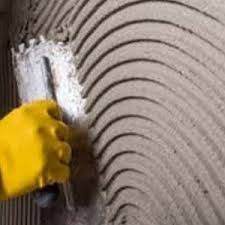
Tile adhesive needs to have a certain viscosity to ensure smooth application and bonding during construction. Hydroxypropyl methyl cellulose plays a thickening role in tile adhesive, increasing its viscosity, making it less likely to flow, and facilitating construction. At the same time, the thickened tile adhesive is less likely to penetrate into the gaps between tiles, reducing the amount of grout needed.
The main function of tile adhesive is to bond tiles, making them firmly adhere to walls or floors. Hydroxypropyl methylcellulose plays a bonding role in tile adhesive, which can enhance the adhesive force of the tile adhesive and make the tiles adhere more firmly to the wall. At the same time, due to the presence of active hydroxyl groups and ether bonds in the molecular structure of hydroxypropyl methylcellulose, these groups can react with the silicate on the surface of the tiles, further improving the bonding strength.
Hydroxypropyl methy lcellulose in tile adhesive also serves a water-retaining function. In a dry environment, tile adhesive is prone to losing water and hardening, which leads to a decline in its adhesive strength. However, hydroxypropyl methyl cellulose can effectively retain the moisture in the tile adhesive, slow down the water loss process, and ensure that the tile adhesive has good working performance during application. Additionally, the water-retaining effect can also extend the service life of the tile adhesive and enhance the bonding effect.
In some special tile adhesive formulations, hydroxypropyl methyl cellulose also serves an emulsifying function. It can act as an emulsifier to evenly disperse substances that are difficult to dissolve, such as silicone and paraffin, in the tile adhesive, enhancing the stability of the system. Additionally, the emulsifying effect can also improve the water resistance, weather resistance, and durability of the tile adhesive.
Send Your Inquiry
We welcome your cooperation and we will develop with you.
