


AMW 2026 Melbourne: Australia Launches Manufacturing Strategy, Green Lane for Chinese Machinery Exporters
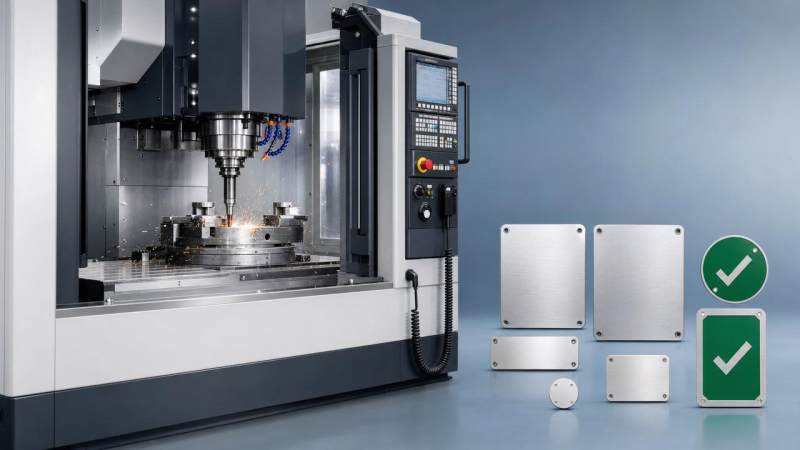
From May 12–15, 2026, the Australian Manufacturing Week (AMW 2026) will open in Melbourne under the theme ‘Resilient·Smart·Sustainable’. This event signals consequential shifts for exporters of machine tools, industrial automation systems, and robotics — particularly those based in China seeking access to Australian and New Zealand markets.
Event Overview
The Australian Manufacturing Week (AMW) 2026 takes place in Melbourne from May 12 to 15, 2026. Organized by the Australian Manufacturing Technology Institute Limited (AMTIL), the exhibition operates under direct support from the Australian federal government’s Advanced Manufacturing Strategy. A key development is the memorandum of understanding signed between AMTIL and the Chinese Society of Mechanical Engineering (CSME), establishing a fast-track pathway for Chinese exhibitors: pre-assessment of CE/AS/NZS compliance and local service registration. No further operational details — such as eligibility criteria, timeline reductions, or fee structures — have been publicly disclosed.
Which Subsectors Are Affected
Direct Trade Enterprises (e.g., Chinese OEMs exporting machine tools, CNC systems, collaborative robots)
These firms face revised market-entry conditions. The green lane does not replace certification but aims to front-load technical review and local regulatory alignment. Impact manifests in reduced time-to-market for compliant products — though only if enterprises proactively engage with the pre-assessment process before shipment or local deployment.
Supply Chain Service Providers (e.g., certification consultants, test labs, localization agents serving Chinese exporters)
Service demand may shift toward early-stage compliance scoping and documentation readiness for AS/NZS standards. Impact is procedural: increased need for bilingual technical coordination and familiarity with Australian conformity assessment frameworks — not just EU (CE) or domestic (GB) requirements.
Local Distributors & Integration Partners in Australia and New Zealand
These entities may experience accelerated onboarding of new Chinese supplier portfolios — especially where pre-validated compliance status enables faster quoting, commissioning, and after-sales support setup. However, no change is indicated in liability allocation or post-import verification obligations.
What Relevant Enterprises or Practitioners Should Focus On — And How to Respond Now
Monitor official implementation guidelines from AMTIL and CSME
The MoU confirms intent but not execution. Enterprises should track AMTIL’s official announcements for rollout timing, scope limitations (e.g., whether only certain product categories or tiers of CSME members qualify), and required documentation formats.
Prioritize AS/NZS-aligned technical documentation for high-potential export models
Rather than waiting for the green lane to activate, exporters should audit existing product files against AS/NZS 3000 (electrical safety), AS/NZS 4024 (machine safety), and relevant automation standards. Early alignment reduces friction during pre-assessment.
Distinguish policy signal from operational readiness
This initiative reflects strategic prioritization of bilateral manufacturing cooperation — not an automatic reduction in regulatory scrutiny. Certification bodies and customs authorities retain full authority over final compliance validation. Businesses must treat the green lane as a coordination mechanism, not a waiver.
Prepare internal cross-functional alignment between R&D, compliance, and export sales teams
Pre-assessment requires shared access to firmware versions, electrical schematics, risk assessments, and user manuals. Firms lacking integrated technical documentation workflows may face delays even within the fast-track process.
Editorial Perspective / Industry Observation
Observably, this development is best understood as a procedural signal — not yet an operational outcome. It indicates growing institutional recognition of Chinese manufacturing capabilities in precision equipment and automation, and a willingness to streamline interface points with Australian regulatory infrastructure. Analysis shows the green lane’s real-world impact hinges less on political intent and more on three factors: clarity of eligibility rules, capacity of designated pre-assessment entities, and consistency of AS/NZS interpretation across product categories. From an industry perspective, it marks the beginning of structured dialogue — not the end of compliance complexity.
Consequently, this initiative is currently more meaningful as a forward-looking indicator than as an immediate lever for market expansion. Its value lies in revealing where regulatory collaboration is becoming institutionally feasible — and where technical harmonization remains pending.
Concluding, AMW 2026’s green lane for Chinese machinery exporters reflects a targeted, government-backed effort to lower non-tariff barriers at the pre-market stage. It does not alter statutory compliance requirements, nor does it guarantee expedited customs clearance or certification issuance. Instead, it introduces a formalized coordination channel — one whose utility depends entirely on how effectively enterprises use it to anticipate, rather than react to, regulatory expectations.
Source: Public announcement by Australian Manufacturing Technology Institute Limited (AMTIL), confirmed via signed MoU with the Chinese Society of Mechanical Engineering (CSME); event dates and theme published on AMW 2026 official website. Note: Implementation details — including application procedures, timelines, and scope boundaries — remain pending official release and are subject to ongoing observation.
Send Your Inquiry
We welcome your cooperation and we will develop with you.
