


US Commerce Launches Anti-Subsidy Probe on Chinese High-Pressure Hydraulic Valves
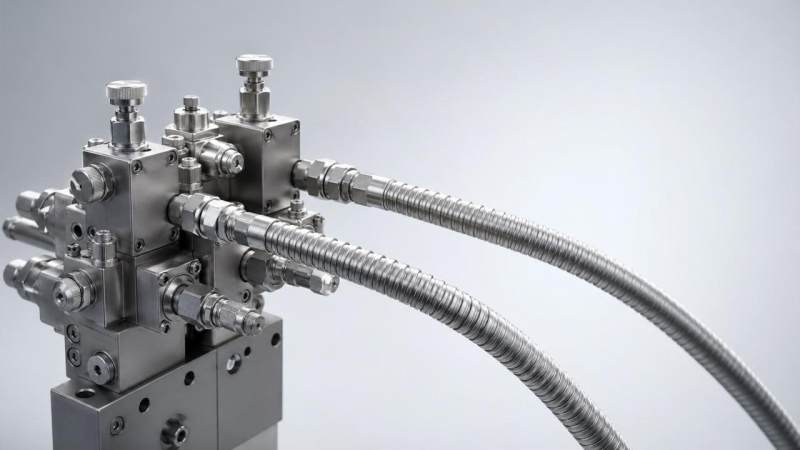
On April 30, 2026, the U.S. Department of Commerce initiated an anti-subsidy investigation into high-pressure hydraulic control valves for construction machinery originating from China (HS code 8481.80.90). This development directly affects manufacturers and exporters of hydraulic components used in excavators, loaders, and concrete pump trucks — sectors where precision fluid power systems are mission-critical.
Event Overview
The U.S. Department of Commerce officially launched an anti-subsidy investigation on April 30, 2026, targeting high-pressure hydraulic control valves for construction machinery imported from China, classified under HS code 8481.80.90. The investigation covers subsidy programs granted during calendar year 2025, including local government interest subsidies, export credit insurance premium rebates, and special funds for technological upgrading. A preliminary determination is scheduled for August 2026. If affirmative, countervailing duties ranging from 12.3% to 28.7% may be imposed.
Industries Affected by Segment
Direct Exporters and Trading Companies
Companies exporting these valves from China to the U.S. face immediate exposure to potential duty liabilities. Impact manifests primarily through increased landed costs, reduced price competitiveness, and possible renegotiation of existing supply contracts with U.S. equipment OEMs.
Component Manufacturers and Tier-2 Suppliers
Domestic Chinese manufacturers supplying valves to export-oriented assemblers or OEMs may see downstream order volatility. Since the investigation targets specific end-use applications (e.g., excavators, loaders), firms without diversified end-market exposure — particularly those reliant on U.S.-bound shipments — risk margin compression or production reallocation.
U.S.-Based Equipment OEMs and Integrators
OEMs incorporating these valves into final machinery may face cost pass-through pressures or sourcing delays. While not respondents in the investigation, they could experience upward pressure on procurement budgets or need to qualify alternative valve sources — especially if provisional duties take effect ahead of final determinations.
Logistics and Trade Compliance Service Providers
Firms offering customs brokerage, tariff classification support, or trade remedy advisory services may see increased demand for guidance on valuation adjustments, origin documentation, and subsidy-related reporting — particularly around the identified subsidy categories (e.g., local fiscal interest subsidies, export insurance rebates).
What Relevant Enterprises or Practitioners Should Monitor and Do Now
Track official timelines and scope clarifications
Monitor the U.S. Department of Commerce’s Federal Register notices for any expansion or narrowing of the product scope, clarification on covered subsidy programs, or procedural updates — especially regarding deadlines for respondent submissions and deadline extensions.
Review actual subsidy receipt and documentation
Exporters and manufacturers should inventory all 2025-year financial support received — specifically verifying whether local interest subsidies, export credit insurance rebates, or technical upgrade grants were formally disbursed and documented. This supports factual accuracy in potential responses or third-party verification requests.
Distinguish between policy signals and enforceable outcomes
The initiation of an investigation is a procedural step, not a finding of injury or subsidy. Until the preliminary determination in August 2026, no duties apply. Businesses should avoid premature operational shifts based solely on the probe’s launch — instead, align planning with the formal timeline and published legal criteria.
Prepare contingency options for key supply chain nodes
For companies with concentrated U.S. exports of HS 8481.80.90 valves, consider documenting current logistics routes, identifying alternate non-U.S. markets for near-term absorption, and initiating preliminary discussions with qualified non-Chinese valve suppliers — not as immediate replacements, but as validated fallback options should duties become effective.
Editorial Observation / Industry Perspective
Observably, this investigation functions primarily as a signal — one that reflects growing U.S. scrutiny of targeted industrial support mechanisms in China’s advanced manufacturing sectors, particularly where components intersect with strategic equipment categories like construction and infrastructure machinery. Analysis shows it is not yet an outcome: no duties are in place, and the probe remains at the preliminary stage. From an industry standpoint, the broader significance lies less in the immediate tariff risk and more in its alignment with ongoing U.S. trade enforcement patterns — suggesting continued attention toward hydraulic, motion control, and power transmission subcomponents in future cases. Sustained monitoring is warranted not only for this case, but also for related investigations involving adjacent parts (e.g., hydraulic pumps, servo valves) that may follow similar analytical logic.
Conclusion
This investigation marks a procedural milestone rather than an operational inflection point — yet its implications extend beyond tariff calculations. It underscores how targeted trade remedies can recalibrate sourcing strategies, compliance priorities, and cross-border R&D coordination for firms operating at the intersection of industrial policy and global supply chains. Currently, it is more appropriately understood as a structured warning requiring disciplined, evidence-based response — not a trigger for reactive restructuring.
Information Sources
Main source: U.S. Department of Commerce, Federal Register notice issued April 30, 2026.
Note: The preliminary determination date (August 2026), subsidy categories listed, and proposed duty range (12.3%–28.7%) remain subject to official confirmation in subsequent filings and notices.
Send Your Inquiry
We welcome your cooperation and we will develop with you.
