


Sany Heavy Industry Triggers ESG Disclosure Linkage on HKEX
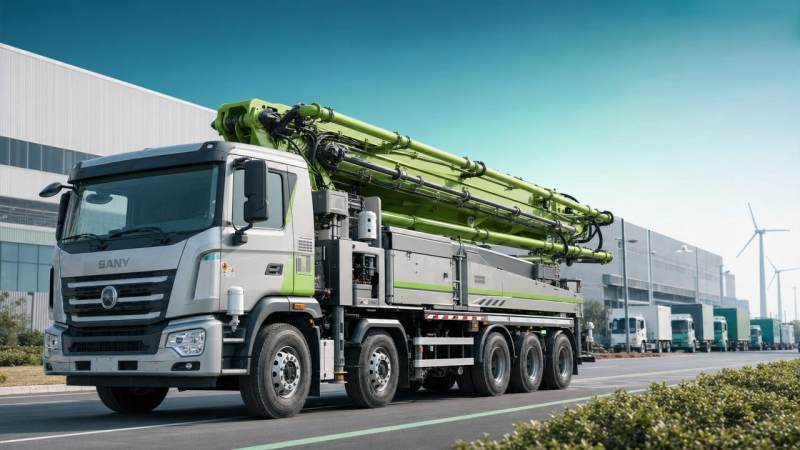
On April 28, 2026, Sany Heavy Industry (06031.HK) completed its first week of trading on the Hong Kong Stock Exchange, triggering a mandatory ESG disclosure linkage mechanism under Chapter 21 of the HKEX ESG Reporting Guide. This development directly affects construction machinery manufacturers, industrial equipment suppliers, and companies engaged in cross-border procurement or green certification — particularly those operating across A+H dual-listing platforms or supplying to Tier-1 OEMs.
Event Overview
Sany Heavy Industry (06031.HK) triggered HKEX’s ESG Guidance Clause 21 on April 28, 2026, following its first full trading week in Hong Kong. As confirmed, the company is now required — starting with its 2026 annual report — to disclose ‘supply chain carbon intensity’ (Scope 3 Categories 1 and 4) uniformly across both its A-share (Shanghai) and H-share (Hong Kong) financial reports, with third-party assurance mandated.
Industries Affected by This Development
Direct trading enterprises: Companies exporting heavy machinery components or finished equipment from China to EU, UK, or ASEAN markets face heightened due diligence expectations. Buyers increasingly require auditable Scope 3 Category 1 (purchased goods and services) and Category 4 (upstream transportation and distribution) data as part of tender eligibility or contract renewal processes.
Raw material procurement enterprises: Firms sourcing steel, castings, hydraulic components, or rare-earth magnets for OEMs must now prepare for upstream carbon data requests. Their ability to provide verified emissions factors — or participate in supplier carbon inventory pilots — will influence their inclusion in OEM-approved vendor lists.
Contract manufacturing enterprises: Tier-2 and Tier-3 manufacturers producing subassemblies for Sany, XCMG, or Zoomlion may receive new data collection templates or audit readiness questionnaires from their Tier-1 customers — especially if those Tier-1s are preparing for dual-reporting compliance.
Supply chain service providers: Logistics firms, freight forwarders, and warehousing operators serving heavy equipment supply chains may be asked to share fuel consumption logs, vehicle fleet emission profiles, or route-level transport emissions — particularly for inbound logistics supporting final assembly plants.
What Relevant Enterprises or Practitioners Should Focus On Now
Monitor official guidance updates from HKEX and CSRC
The HKEX ESG Guidance does not yet specify standardized calculation methodologies or boundary definitions for Scope 3 Category 1 & 4 in capital goods sectors. Enterprises should track upcoming technical supplements or sector-specific FAQs expected from HKEX or the China Securities Regulatory Commission (CSRC) in Q3–Q4 2026.
Identify high-impact procurement categories and upstream partners
Analysis shows that for construction machinery OEMs, over 70% of Scope 3 Category 1 emissions typically stem from structural steel, hydraulic systems, and powertrain components. Prioritizing carbon data collection from top 20 suppliers by spend — rather than blanket outreach — improves feasibility and resource allocation.
Distinguish policy signal from operational implementation
Observably, the current requirement applies only to A+H dual-listed entities like Sany, XCMG, and Zoomlion — not all domestic manufacturers. It does not yet mandate public disclosure of supplier-level data, nor does it impose direct penalties for delayed system deployment. The immediate obligation is reporting readiness in 2026 annual filings, not real-time data integration.
Initiate internal alignment between finance, procurement, and sustainability teams
Current more suitable preparation includes mapping existing ERP and procurement systems for spend data granularity, documenting current supplier engagement protocols, and assigning cross-functional ownership for carbon accounting workflows — ahead of formal third-party assurance scoping.
Editorial Perspective / Industry Observation
This event is best understood as a regulatory signal — not yet an enforcement outcome. From an industry perspective, it reflects HKEX’s phased approach to aligning with ISSB and EU CSRD expectations, using dual-listed blue-chip firms as pilot adopters. While no fines or delisting risks apply at this stage, the linkage clause establishes precedent: ESG disclosures on one exchange increasingly constrain reporting flexibility on another. The broader implication is not just about carbon metrics — it signals tightening convergence between financial reporting integrity and environmental accountability in cross-border capital markets.
Conclusion
This development marks an early-stage inflection point in how Chinese industrial enterprises manage cross-listing compliance — shifting ESG from voluntary disclosure toward integrated, auditable, and jurisdictionally coordinated reporting. It is not yet a binding standard for the entire sector, but rather a leading indicator of emerging expectations for transparency in upstream emissions. Enterprises should treat it as a structured preparation milestone — not an immediate compliance deadline — and prioritize scalable data governance over one-off reporting fixes.
Information Sources
Main source: HKEX ESG Reporting Guide (Revised Edition, effective January 1, 2026), Clause 21; Official announcement by Sany Heavy Industry (06031.HK) regarding H-share listing completion dated April 28, 2026. Ongoing monitoring is recommended for HKEX technical clarifications on Scope 3 calculation boundaries for manufacturing sectors, expected in late 2026.
Send Your Inquiry
We welcome your cooperation and we will develop with you.
