


Are Long-Lasting Lubricants Better for Heat?
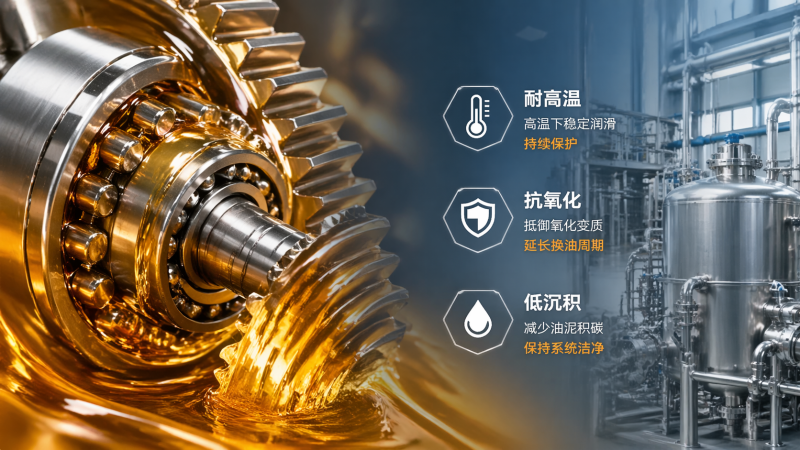
When equipment operates under heat, choosing long-lasting lubricants is not just about durability but also about stability, safety, and cost control. For technical evaluators, buyers, and quality managers, the short answer is this: long-lasting lubricants can perform better under heat, but only when their base oil, additive system, oxidation resistance, and application conditions are matched to the thermal load. A lubricant that simply “lasts longer” on paper is not automatically the best option for high-temperature service.
For industrial decision-makers, the more useful question is not whether a long-life lubricant is better in general, but whether it maintains viscosity, film strength, cleanliness, and protective performance at the operating temperature your equipment actually sees. That is where evaluation becomes practical, measurable, and commercially meaningful.
Are long-lasting lubricants actually better for heat?
In many cases, yes—but only conditionally. Heat is one of the main causes of lubricant degradation. As temperature rises, oxidation accelerates, viscosity can shift, additives may deplete faster, and deposits such as varnish or sludge can form. A high-quality long-lasting lubricant is usually formulated to resist these effects better than a standard product, which means it may provide:
- Better oxidation stability at elevated temperatures
- Longer service intervals
- More stable viscosity over time
- Reduced deposit formation
- Lower wear under continuous thermal stress
However, “long-lasting” is not a guarantee of superior high-temperature performance in every system. Some lubricants are designed for extended drain intervals under moderate operating conditions, not for severe heat. Others may tolerate high bulk temperatures but struggle in localized hot spots, such as bearings, gear teeth, compressors, or hydraulic systems with poor cooling.
So the correct decision standard is performance under specific thermal conditions, not marketing language.
What matters most when evaluating lubricant performance under heat?
For technical assessment teams and quality managers, these are the most important criteria:
1. Oxidation resistance
This is often the first indicator to check. A lubricant exposed to heat reacts with oxygen faster, causing acid formation, viscosity increase, sludge, and varnish. Long-lasting lubricants with strong oxidation resistance generally provide more stable operation and cleaner systems.
2. Viscosity stability
If the lubricant becomes too thin at high temperature, it may lose film strength and fail to protect moving parts. If it thickens excessively due to oxidation, circulation and efficiency suffer. The ideal lubricant maintains its designed viscosity range throughout service.
3. Volatility and evaporation loss
At higher temperatures, more volatile components can evaporate. This shortens lubricant life, increases consumption, and may create safety or cleanliness concerns. Low-volatility formulations are often better suited to hot-running equipment.
4. Deposit control
High heat often leads to carbon deposits, sludge, and varnish, especially in systems with long operating cycles. These deposits reduce heat transfer, restrict flow, and increase maintenance frequency. A truly heat-capable long-life lubricant should minimize deposit buildup.
5. Additive durability
Anti-wear, anti-oxidation, corrosion inhibition, and detergency additives all matter. Under heat, additives can deplete faster. The performance life of the lubricant depends not only on the base oil but also on how long the additive package remains effective.
6. Compatibility with seals, materials, and process conditions
A lubricant may perform well thermally but still create problems if it is incompatible with elastomers, coatings, filters, or process residues. Procurement and QA teams should verify material compatibility before approving a switch.
How can buyers and technical teams tell if a lubricant is truly suitable for high-temperature service?
A practical evaluation should go beyond product brochures. The best approach is to combine lab data, field conditions, and lifecycle cost analysis.
Ask suppliers for evidence such as:
- Oxidation stability test results
- Viscosity index and viscosity retention data
- Flash point and evaporation loss data
- Deposit or cleanliness performance data
- Wear protection under elevated temperature conditions
- Recommended temperature range for continuous and peak operation
Then compare those numbers with your real operating environment:
- Normal operating temperature
- Peak temperature excursions
- Duty cycle length
- Load intensity
- Contamination risk
- Maintenance interval expectations
This is especially important in industries where process consistency matters as much as mechanical reliability. In formulation-driven sectors, material stability under heat is also critical. For example, manufacturers that work with specialty additives often apply the same logic to raw material selection, whether evaluating lubricants or process-performance materials from a hydroxypropyl methyl cellulose supplier. In detergent and chemical applications, consistent thermal and rheological behavior can influence both processing efficiency and end-product quality. A relevant example is Detergent-grade HPMC, which is selected not just for basic functionality, but for how reliably it performs in demanding formulation environments.
When are long-lasting lubricants worth the higher purchase cost?
This is one of the most important questions for procurement professionals and business decision-makers. The upfront unit price is only one part of the total cost. In high-temperature operations, the real financial comparison should include:
- Drain interval extension
- Reduced downtime
- Lower labor for maintenance
- Less lubricant consumption
- Reduced component wear and replacement cost
- Lower cleaning frequency due to fewer deposits
- More stable production output
A more expensive long-life lubricant may be the better choice when equipment downtime is costly, access for maintenance is difficult, or thermal stress causes frequent fluid breakdown. In those conditions, the return on investment can be substantial.
On the other hand, if the equipment operates at modest temperatures, runs intermittently, or has low replacement risk, a premium long-lasting lubricant may offer limited additional value. That is why a segmented equipment strategy often works best: premium products for thermally severe assets, and standard products where operating conditions are less demanding.
What risks should quality and safety managers watch for?
Even a technically strong lubricant can underperform if applied incorrectly. Common risks include:
- Using a long-life lubricant outside its actual temperature range
- Assuming extended service life without oil analysis
- Mixing incompatible lubricant chemistries
- Ignoring contamination from dust, water, process residues, or metal particles
- Overlooking ventilation or cooling deficiencies that create local overheating
From a safety and compliance perspective, heat-related lubricant breakdown can also increase the risk of smoke, odor, deposits, fire hazards, and unplanned shutdowns. That makes routine monitoring essential. Good practice includes periodic sampling, viscosity checks, acid number monitoring, wear particle tracking, and visual inspection for discoloration or residue formation.
How does formulation quality affect high-temperature reliability?
High-temperature performance is not only about selecting the right lubricant category. It is also about manufacturing consistency and formulation control. For industrial buyers, supplier capability matters. Variations in raw materials, process control, or additive blending can lead to inconsistent field performance, even within the same product class.
This is why experienced buyers often prefer suppliers with strong production systems, scalable output, and stable quality management. The same sourcing principle applies across industrial chemicals and construction-related formulation materials. Companies such as Jinan Ludong Chemical Co., Ltd. emphasize integrated production, controlled quality, and flexible supply capability in cellulose ether manufacturing, helping customers reduce variability in demanding applications. Whether evaluating lubricants or materials like Detergent-grade HPMC, consistent production standards are closely tied to predictable performance.
A practical decision framework for enterprises
If your team is deciding whether long-lasting lubricants are better for heat, use this checklist:
- Define actual operating and peak temperatures.
- Identify whether oxidation, evaporation, wear, or deposits are the main failure mode.
- Request technical data tied to thermal performance, not just service-life claims.
- Compare total lifecycle cost instead of purchase price only.
- Validate compatibility with equipment materials and maintenance practices.
- Run a controlled field trial on critical assets if the decision is high-impact.
- Establish monitoring intervals to confirm real performance after implementation.
This approach helps technical evaluators, purchasers, and plant managers make a decision that is defensible both technically and commercially.
Conclusion
Long-lasting lubricants can be better for heat, but only when they are specifically engineered for high-temperature service and matched to real operating conditions. The best choice is not the lubricant with the longest advertised life—it is the one that delivers stable viscosity, strong oxidation resistance, low deposit formation, and measurable cost savings in your equipment.
For target readers such as technical evaluators, procurement teams, decision-makers, and quality or safety managers, the smartest path is to evaluate thermal performance, supplier consistency, and lifecycle value together. When that assessment is done properly, long-lasting lubricants can improve reliability, reduce maintenance burden, and support safer, more predictable operations.
Send Your Inquiry
We welcome your cooperation and we will develop with you.
