


AutoChina 2026 Highlights Smart Chassis & X-by-Wire Systems
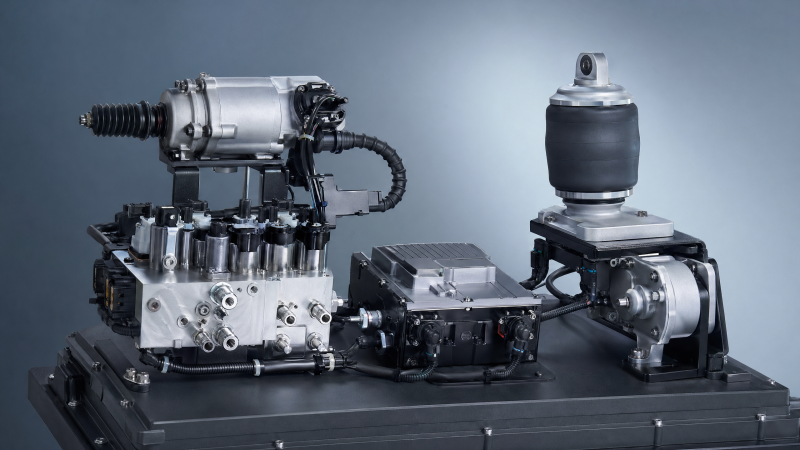
On April 24, 2026, the 19th Beijing International Automotive Exhibition (AutoChina 2026) opened in Beijing under the theme ‘Lead the Era, Intelligence for the Future.’ Smart chassis technologies—including steer-by-wire, electro-hydraulic composite braking, and intelligent suspension actuators—emerged as key procurement priorities for overseas buyers from Europe, North America, ASEAN, and the Middle East. These high-precision mechatronic systems are increasingly relevant to specialized vehicle OEMs, AGV integrators, port machinery manufacturers, and unmanned operation platform developers—making their supply chain implications significant for global industrial automation and mobility sectors.
Event Overview
The 19th Beijing International Automotive Exhibition (AutoChina 2026) commenced on April 24, 2026, in Beijing. Under the official theme ‘Lead the Era, Intelligence for the Future,’ the event featured domestic Chinese suppliers showcasing advanced electromechanical control systems, including steer-by-wire, electro-hydraulic composite braking, and intelligent suspension actuators. Public reports confirm active procurement discussions involving buyers from Europe, ASEAN, and the Middle East, with particular interest in applications across special-purpose vehicles, automated guided vehicles (AGVs), port handling equipment, and unmanned operational platforms.
Impact on Specific Industry Segments
Direct Trading Enterprises
These firms—especially those engaged in cross-border B2B trade of automotive or industrial control components—are affected due to rising inbound inquiry volume and shifting technical specification expectations. Impact manifests in increased demand for documentation supporting functional safety (e.g., ISO 26262 alignment), localized after-sales support capacity, and dual-language technical datasheets.
Component Manufacturing Enterprises
Manufacturers supplying precision actuators, valve blocks, motor-control units, or embedded controllers face pressure to demonstrate production scalability and compliance traceability. The emphasis on ‘localization support capability’ signals growing buyer preference for regional service hubs—not just FOB pricing—potentially affecting facility investment decisions and partner selection criteria.
System Integrators & OEMs (Non-Automotive)
Integrators serving AGV, logistics automation, and off-highway equipment markets are directly impacted: improved domestic maturity of these subsystems reduces lead times and total cost of ownership versus legacy imported alternatives. This may accelerate design-in cycles for Chinese-sourced control modules—but only where interoperability (e.g., CAN FD, ASAM standards) and validation data are transparently provided.
Supply Chain Service Providers
Logistics, customs brokerage, and technical certification agencies must adapt to evolving classification needs. Steer-by-wire and electro-hydraulic braking systems sit at the intersection of automotive, industrial machinery, and safety-critical electronics—requiring nuanced tariff code application and conformity assessment pathways (e.g., CE, GCC, KC marking readiness).
Key Considerations for Relevant Enterprises and Practitioners
Monitor Official Export Classification & Regulatory Updates
Analysis shows that steer-by-wire and related electro-mechanical systems may undergo reclassification under national export control lists—particularly where torque resolution, fail-operational architecture, or real-time latency specs meet thresholds defined in emerging dual-use technology guidelines. Enterprises should track announcements from China’s Ministry of Commerce and MIIT.
Prioritize Technical Interoperability Documentation
Observably, overseas buyers are requesting interface specifications (e.g., signal mapping, diagnostic protocols, calibration procedures) earlier in evaluation cycles—not just at PO stage. Firms should prepare standardized technical disclosure packages aligned with ISO 8855, SAE J1939, or ASAM standards where applicable.
Distinguish Between Market Signal and Commercial Readiness
From industry perspective, strong exhibition interest does not yet indicate broad production ramp-up or long-term contract commitments. Current engagement remains largely exploratory; enterprises should treat initial inquiries as qualification groundwork—not near-term revenue signals—until purchase orders or joint development agreements materialize.
Prepare for Regional After-Sales Infrastructure Requirements
Current more actionable than speculative expansion is auditing existing spare parts logistics networks and identifying local partners capable of technical troubleshooting. Buyers explicitly cited ‘localization support capability’—not just price—as a differentiator, suggesting that service response time and engineer availability will influence final sourcing decisions.
Editorial Perspective / Industry Observation
This development is better understood as an early-stage supply chain inflection point—not yet a mature market shift. Analysis shows that while domestic smart chassis subsystems have reached functional parity in several mid-tier performance bands, full system-level validation (e.g., ASIL-D compliance, fleet durability data) remains concentrated among a limited number of Tier 1 suppliers. Observably, AutoChina 2026 served less as a product launch platform and more as a technical credibility checkpoint for international procurement teams assessing near-shore alternative sources. The broader implication lies not in immediate substitution, but in accelerated due diligence timelines and expanded technical due diligence scopes for future sourcing cycles.
Conclusion
AutoChina 2026’s spotlight on smart chassis and x-by-wire systems reflects a structural adjustment in global industrial control component sourcing—not a sudden disruption. It signals growing recognition of Chinese suppliers’ capabilities in high-precision mechatronics, particularly for non-passenger-vehicle applications. However, current evidence supports interpreting this as a strengthening of optionality within diversified procurement strategies—not as a wholesale shift in incumbent supply chains. Rational assessment requires distinguishing between exhibition momentum and verifiable commercial traction.
Information Sources
Main source: Official press release and exhibitor briefing materials from AutoChina 2026 Organizing Committee (April 24, 2026). Note: Long-term adoption rates, export policy adjustments, and certification pathway developments remain subject to ongoing observation and are not confirmed at time of publication.
Send Your Inquiry
We welcome your cooperation and we will develop with you.
