


China's First 100,000-User Hydrogen-Blended Natural Gas Project Launches
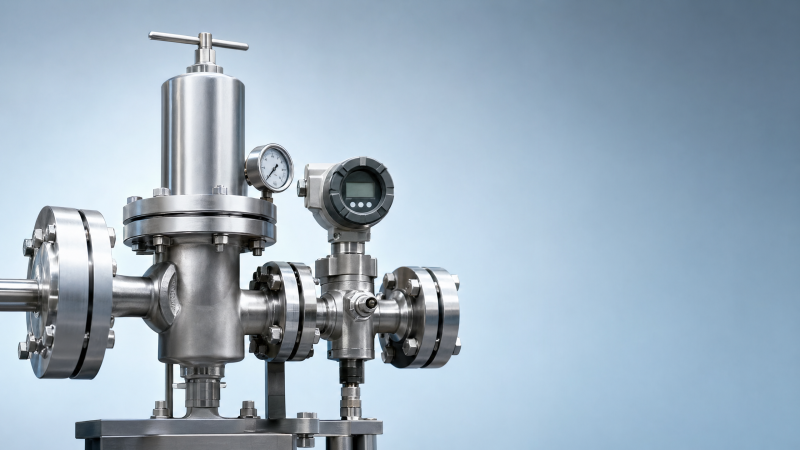
On April 24, 2026, China launched its first large-scale hydrogen-blended natural gas demonstration project serving 100,000 households in Weifang, Shandong Province — a milestone with direct implications for manufacturers of hydrogen-compatible pressure control equipment, specialty valves, and smart pressure regulation systems.
Event Overview
On April 24, 2026, the Weifang municipal government initiated China’s first 100,000-user-level natural gas blending with hydrogen demonstration project. The initial hydrogen blending ratio is set at 3%, with plans to incrementally increase it to 10%. The project is designed to operate without requiring end-user replacement of existing gas appliances. However, upstream infrastructure — including pressure regulation stations, flow meters, safety shut-off valves, and hydrogen-compatible sealing components — must meet new operational requirements under hydrogen-containing gas conditions.
Industries Affected by This Development
Manufacturers of specialized valves and pressure regulation equipment: These firms face immediate technical validation demand, as the project specifies performance requirements for hydrogen-tolerant materials and dynamic response under blended-gas flow. Impact manifests in product qualification timelines, material testing protocols, and certification documentation needed for future grid integration.
Producers of hydrogen-compatible sealing components and gasket materials: Hydrogen embrittlement and permeation resistance become critical selection criteria. Affected suppliers must verify compatibility with 10% H2/NG mixtures under real-world pressure cycling and temperature ranges — not just laboratory benchmarks.
Suppliers of smart pressure regulation units and integrated metering systems: These systems require recalibration and firmware updates to maintain accuracy and safety thresholds across varying hydrogen concentrations. Impact centers on software validation, sensor drift compensation, and cybersecurity readiness for remote monitoring interfaces.
Export-oriented manufacturers targeting EU, Japan, and Middle Eastern markets: The Weifang project serves as an independently verifiable domestic reference case for international regulatory acceptance. Its documented operational data may support conformity assessments (e.g., CE, JIS, SASO) where hydrogen blending standards remain under development.
What Relevant Enterprises or Practitioners Should Focus On Now
Monitor official technical specifications released by project operators
The Weifang project’s publicly issued interface requirements — particularly for valve actuation timing, leak rate limits, and material certifications — will define near-term procurement and compliance priorities. Early access to these documents informs internal design reviews and test planning.
Track hydrogen concentration ramp-up schedule and associated verification milestones
The phased increase from 3% to 10% hydrogen introduces distinct validation windows. Firms supplying components should align their third-party testing and documentation submission cycles with each phase’s commissioning deadlines — not only the final target.
Distinguish between policy intent and field-deployable readiness
While national energy strategy supports hydrogen blending, this project remains a demonstration, not a commercial rollout. Suppliers should avoid assuming automatic scale-up; instead, treat Weifang as a controlled environment for evidence generation — not a de facto standard.
Prepare technical documentation packages aligned with international hydrogen infrastructure frameworks
Documentation should explicitly map test results to clauses in ISO 15998, EN 1594, or ASME B31.12 where applicable — enabling faster review by overseas regulators or system integrators evaluating Chinese-made components.
Editorial Perspective / Industry Observation
Observably, this initiative functions less as an immediate market signal and more as a technical benchmarking exercise. Analysis shows that its primary value lies in generating operationally grounded performance data under defined boundary conditions — something lacking in most prior pilot projects. From an industry perspective, the Weifang project is better understood as a reference point for component qualification than as a near-term volume driver. Its relevance for global supply chains stems from its potential to serve as a replicable, jurisdictionally neutral validation template — especially where regional regulations remain fragmented or under revision.
Conclusion
This project marks the first publicly confirmed, multi-ten-thousand-household deployment of hydrogen-blended natural gas in China. Its significance resides not in immediate commercial scale, but in establishing a real-world testbed for hydrogen-compatible mechanical components — with implications for domestic manufacturing standards and export-oriented technical certification pathways. Currently, it is more appropriately understood as a technical inflection point than a market inflection point.
Information Sources
Main source: Official announcement issued by Weifang Municipal Government on April 24, 2026.
Note: Further details on technical specifications, third-party verification procedures, and international alignment efforts remain pending public release and are subject to ongoing observation.
Send Your Inquiry
We welcome your cooperation and we will develop with you.
