


Common Formulation Problems with Detergent-grade HPMC
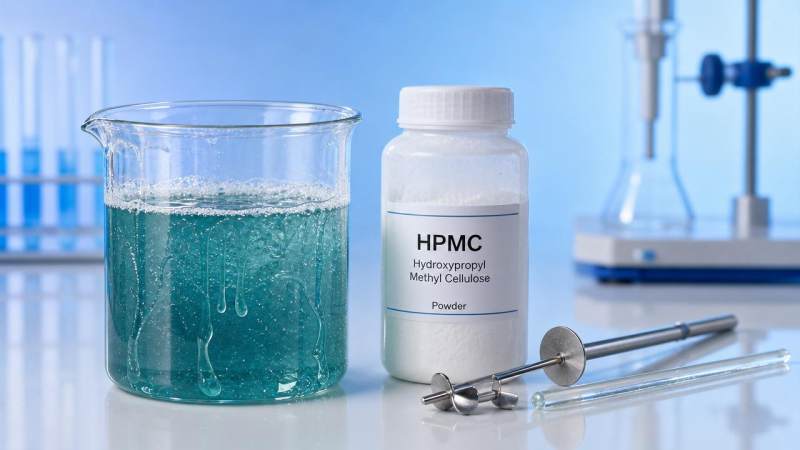
Why formulation issues with Detergent-grade HPMC are getting more attention
Detergent-grade HPMC can improve thickening, suspension, and formula stability, but common formulation problems still affect product consistency, production efficiency, and end-use performance.
As detergent systems become more concentrated, multifunctional, and cost-sensitive, small mistakes in polymer selection create larger downstream risks.
This makes Detergent-grade HPMC a strategic formulation variable rather than a simple thickener.
In liquid cleaners, dishwashing products, and household care formulas, stability expectations are increasing while processing windows are narrowing.
That shift explains why common formulation problems with Detergent-grade HPMC now deserve closer technical review.
Current signals show higher performance demands in detergent formulations
Recent formulation trends point to stronger demand for predictable rheology, faster hydration, and better compatibility with surfactant packages.
Detergent brands increasingly seek stable viscosity across temperature shifts, transport stress, and longer storage periods.
At the same time, reformulation cycles are shortening because cleaning products must adapt to changing raw material supply and cost pressure.
Under these conditions, Detergent-grade HPMC problems appear earlier during pilot batching and scale-up.
A formula may look acceptable in the lab, yet fail after high-speed mixing, winter storage, or fragrance addition.
The most visible trend signals
- Higher concentration formulas need tighter viscosity control.
- More active ingredients increase incompatibility risks.
- Faster production lines reduce tolerance for hydration delays.
- Global sourcing creates broader variation in auxiliary materials.
- Consumers expect stable appearance and pouring behavior.
What is driving common Detergent-grade HPMC formulation problems
Most problems do not come from one cause alone.
They usually result from the interaction between HPMC grade, water quality, surfactant system, mixing sequence, and target viscosity.
These factors explain why Detergent-grade HPMC should be evaluated as part of the entire formula architecture.
The most frequent Detergent-grade HPMC problems and what they reveal
1. Slow hydration and lump formation
This is one of the most common Detergent-grade HPMC issues.
Powder added too quickly into water can form surface gels, trapping dry particles inside.
The result is visible lumps, wasted mixing time, and uneven viscosity development.
A controlled feeding rate and proper agitation pattern usually reduce this problem.
2. Unstable viscosity after storage
A fresh batch may pass inspection but lose body after days or weeks.
This often points to incompatibility with surfactants, salts, preservatives, or fragrance solvents.
In some cases, the selected Detergent-grade HPMC viscosity range is unsuitable for the total solids level.
3. Suspension failure in opaque or particle-containing detergents
When pigments, abrasives, or actives settle, the issue is not always insufficient polymer dosage.
Poor yield value and weak network structure can also cause separation.
Detergent-grade HPMC must provide both thickness and suspension balance.
4. Excessive stringiness or poor pouring behavior
Some formulations become visually thick but feel unpleasant during dosing.
This can happen when Detergent-grade HPMC creates high low-shear viscosity without adequate flow control.
Consumers may interpret this as poor quality, even if cleaning power remains acceptable.
5. Clarity loss or haze increase
Transparent liquid detergents require special control over polymer grade and additive compatibility.
Haze may result from incomplete dissolution, insoluble interactions, or unstable fragrance incorporation.
This issue often becomes more severe under low-temperature storage.
How these Detergent-grade HPMC issues affect production and business performance
Formulation problems extend beyond laboratory inconvenience.
They can influence batch release speed, line efficiency, complaint rates, and reformulation cost.
A detergent that thickens inconsistently may require repeated adjustment, extra labor, and additional raw material correction.
If settling appears in distribution, brand trust can decline quickly.
For companies building integrated material solutions, consistency across cellulose ether supply is especially important.
Jinan Ludong Chemical Co., Ltd. focuses on large-scale cellulose ether production with controlled viscosity ranges from 400 to 200,000 CPS.
That capability supports better matching between application requirements and formulation targets.
What deserves closer attention during formulation design
- Choose the Detergent-grade HPMC grade based on the full surfactant system, not viscosity alone.
- Test hydration behavior under actual plant mixing conditions.
- Check stability after adding fragrance, dye, preservative, and salt.
- Measure viscosity at different shear rates, not one single point.
- Run hot and cold storage tests before commercial launch.
- Review water hardness and electrolyte effects early in development.
In broader formulation programs, complementary additives may also influence system balance.
For some adjacent applications, Redispersible Polymer Powder appears in material portfolios supporting multifunctional performance design.
Practical response strategies are shifting from correction to prevention
The most effective approach is to prevent Detergent-grade HPMC problems before they reach full-scale production.
This requires structured screening instead of reactive troubleshooting.
This preventive mindset is becoming essential as detergent formulas move toward higher concentration and narrower tolerance windows.
A stronger next step for more reliable Detergent-grade HPMC performance
Common Detergent-grade HPMC formulation problems usually signal mismatches between material behavior and formula design.
The key is to analyze changes in hydration, viscosity, suspension, and compatibility as one connected system.
With cellulose ether specialists, integrated production capability, and flexible viscosity control, technical evaluation becomes more precise.
When reviewing detergent performance targets, start by checking whether the selected Detergent-grade HPMC truly matches surfactants, process conditions, and storage expectations.
That step often reduces rework, improves batch consistency, and supports more dependable product quality over time.
Send Your Inquiry
We welcome your cooperation and we will develop with you.
