


Common Redispersible Polymer Powder Selection Mistakes
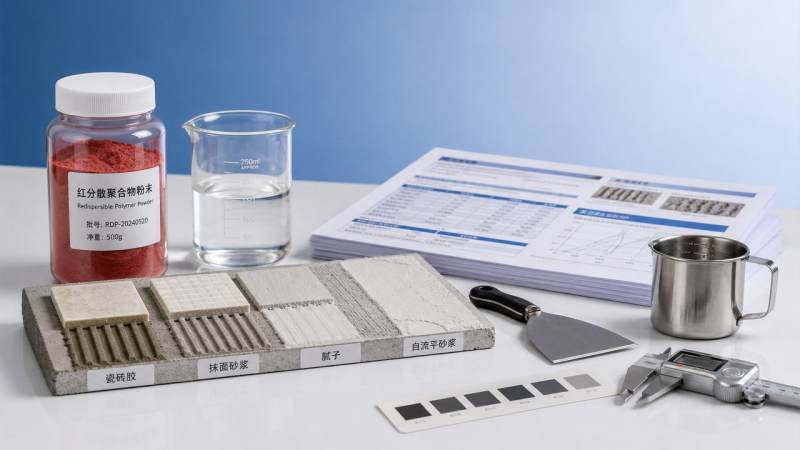
Choosing the right Redispersible Polymer Powder is rarely as simple as comparing product sheets or picking the lowest quote. In practice, many selection problems come from a mismatch between the powder and the real application, not from a defect in the material itself.
For buyers and researchers in construction chemicals, the core issue is straightforward: a suitable Redispersible Polymer Powder should improve adhesion, flexibility, workability, and durability in the final dry-mix system. If those performance targets are unclear, selection mistakes become almost unavoidable.
The most common errors include focusing too much on price, treating all RDP grades as interchangeable, ignoring cement system compatibility, and failing to test under realistic site conditions. These mistakes often increase overall project cost, even when the initial material price looks attractive.
This article explains where those decisions go wrong, what informed buyers should evaluate first, and how to build a more reliable selection process for mortar, tile adhesive, skim coat, EIFS, and related construction applications.
What Searchers Usually Want to Know About Redispersible Polymer Powder
People searching for common Redispersible Polymer Powder selection mistakes are usually not looking for a basic definition. They want to avoid performance failure, reduce procurement risk, and understand how to compare one grade against another in a practical way.
Most information researchers also care about three connected questions: which properties matter most, why one RDP works in one formula but not another, and how to prevent expensive trial-and-error during sourcing or product development.
That means the most useful discussion is not broad chemistry theory. It is a decision-focused explanation of application matching, test priorities, formulation interaction, supplier evaluation, and long-term performance implications.
Mistake 1: Selecting by Price First Instead of End-Use Performance
One of the most frequent procurement mistakes is treating Redispersible Polymer Powder as a commodity. Buyers compare quotations, see similar-looking specifications, and assume the lowest-cost option will deliver acceptable results in a dry-mix formula.
This approach often creates hidden costs. A lower-priced RDP may reduce bond strength, hurt sag resistance, weaken flexibility, or increase water demand. Those changes can affect installation quality, customer complaints, and reformulation time far more than the saved purchase price.
In tile adhesives, for example, poor selection may show up as reduced open time, lower wetting ability, or insufficient adhesion after aging. In skim coat or repair mortar, it can appear as cracking tendency, poor spreadability, or weak substrate bonding.
The better approach is to calculate value by performance in the finished system. Ask what level of adhesion, deformation resistance, water resistance, and workability the application actually requires, then compare RDP options against those targets.
Mistake 2: Assuming All RDP Grades Are Functionally Interchangeable
Not all Redispersible Polymer Powder products are designed for the same use. Different polymer chemistries, protective colloid systems, glass transition characteristics, and additive packages can lead to very different performance profiles.
A grade optimized for flexible tile adhesive may not be the best choice for self-leveling compounds. A powder suitable for general-purpose mortar may not provide enough crack resistance for exterior insulation systems or sufficient water resistance for demanding environments.
This is why technical datasheets should be read as a starting point, not a final answer. Similar bulk density or ash content does not automatically mean similar real-world behavior. Formulators need to understand the intended application class behind the product design.
Experienced suppliers usually classify RDP according to recommended use scenarios. That guidance matters because application-specific fit is often more important than broad claims such as “good adhesion” or “high flexibility.”
Mistake 3: Ignoring the Full Formula Instead of Evaluating the Whole System
Redispersible Polymer Powder does not work alone. Its performance depends on cement type, fillers, sand grading, cellulose ether, starch ether, defoamer, retarders, and many other formulation variables.
A common mistake is to assess RDP as an isolated ingredient, then expect identical behavior across very different recipes. In reality, one powder may perform well with one cement and filler balance but produce weaker workability or slower strength development in another system.
For this reason, selection should always be based on the final dry-mix design. Buyers and developers should ask: how does the RDP interact with water retention agents, rheology modifiers, and the binder-to-filler ratio?
In many construction formulations, cellulose ether plays a major role in water retention and application feel. When reviewing mortar system compatibility, some buyers also compare supporting additives such as Hydroxypropyl Methyl Cellulose to improve formulation balance rather than treating each raw material decision separately.
Mistake 4: Paying Too Little Attention to Application Requirements
Another major error is selecting a Redispersible Polymer Powder before defining the real service conditions. Laboratory performance can look acceptable, but if the actual use environment is more demanding, the chosen grade may fail in the field.
Important questions include whether the product will be used indoors or outdoors, on walls or floors, in wet areas or dry zones, over smooth substrates or porous ones, and under static or dynamic loading conditions.
Each scenario changes the performance priorities. Exterior systems may require better weather resistance and flexibility. Tile adhesives may need stronger slip resistance and open time control. Repair mortar may need impact resistance and better substrate accommodation.
Without this application mapping step, buyers may choose a technically decent powder that is simply wrong for the service environment. That is not a quality problem; it is a selection problem.
Mistake 5: Looking at Datasheets but Not Asking the Right Technical Questions
Datasheets are helpful, but they rarely answer every practical selection question. Many buyers read only a few visible values and never investigate the test conditions, performance limits, or formulation assumptions behind them.
For example, a listed minimum film-forming temperature or ash content is not enough to predict on-site mortar behavior. It is more useful to ask how the product affects tensile adhesion, deformability, water absorption, and workability in representative applications.
Other useful questions include whether the grade is intended for C1 or C2 adhesive systems, how it performs under freeze-thaw or heat aging, and what dosage range is normally recommended for target performance levels.
Good supplier communication is often a differentiator. A capable manufacturer should be able to discuss not just product numbers, but formulation logic, test references, and the likely trade-offs involved in your use case.
Mistake 6: Underestimating Dosage Sensitivity
Some buyers assume that once the correct Redispersible Polymer Powder grade is selected, dosage becomes a minor issue. In fact, dosage strongly influences both technical performance and formulation cost efficiency.
Using too little RDP can lead to inadequate adhesion, poor flexibility, low abrasion resistance, or insufficient cohesion. Using too much may increase cost unnecessarily and can sometimes alter workability, setting behavior, or other balance points in the system.
The right dosage depends on the target application, binder content, substrate, and performance class. A high-performance tile adhesive naturally requires a different optimization range than a basic skim coat.
That is why serious evaluation should compare not only product price per ton, but also performance per effective dosage. A slightly more expensive grade may achieve the same result at a lower addition level, creating better total economics.
Mistake 7: Skipping Realistic Testing and Relying Only on Bench Assumptions
One of the costliest mistakes is approving a Redispersible Polymer Powder based only on supplier claims or limited laboratory impressions. Small-scale screening is useful, but it cannot replace application-relevant validation.
Testing should simulate realistic conditions as closely as possible. That includes substrate type, water addition range, mixing procedure, curing condition, ambient temperature, and aging sequence. Otherwise, results may look stable in the lab but fail during actual installation.
Researchers should also test the most critical failure points for the intended application. For tile adhesives, that may include open time adhesion, slip, tensile adhesion after water immersion, and heat aging. For renders or repair systems, crack resistance and flexibility may be more important.
If possible, compare at least two or three candidate grades under the same formula framework. Relative comparison often reveals meaningful differences more clearly than absolute data from separate test environments.
Mistake 8: Neglecting Production Stability and Batch Consistency
Even when a Redispersible Polymer Powder performs well in development trials, problems can emerge later if production consistency is weak. Batch variation can create unpredictable application feel and unstable performance in finished products.
This matters especially for buyers serving multiple markets or manufacturing at scale. A formula that performs well only with one ideal batch is not commercially reliable. Stable supply should be part of selection criteria from the beginning.
Ask suppliers about production capacity, quality control procedures, and how they manage consistency across shipments. A technically acceptable product becomes much more valuable when backed by dependable manufacturing systems and reproducible output.
For companies seeking integrated dry-mix support, consistency across related additives is also important. In some sourcing strategies, evaluating polymer powder alongside products such as Hydroxypropyl Methyl Cellulose can help improve formulation continuity and supply-chain coordination.
Mistake 9: Failing to Match Supplier Capability With Project Needs
Another overlooked issue is supplier fit. Buyers sometimes choose a seller based only on catalog range or short-term availability, without checking whether the supplier can support formulation guidance, technical troubleshooting, and scaling needs.
For information researchers and sourcing teams, supplier capability matters because construction chemical performance often depends on iterative optimization. Responsive technical support can shorten development cycles and help avoid avoidable reformulation costs.
Useful evaluation points include manufacturing scale, export experience, test support, customization flexibility, and familiarity with regional standards. A supplier that understands mortar applications usually provides more actionable recommendations than one offering only general product descriptions.
In this sense, selecting Redispersible Polymer Powder is partly a material decision and partly a partnership decision. The wrong supplier can make even a good product harder to use effectively.
How to Make a Better Redispersible Polymer Powder Selection Decision
A more reliable selection process starts with the application, not the quotation sheet. Define the target performance first: adhesion class, flexibility needs, water resistance, substrate conditions, climate exposure, and desired workability characteristics.
Then review candidate RDP grades based on intended use compatibility, recommended dosage range, and expected interaction with the rest of the formula. Avoid assuming that a product successful in one system will automatically work in another.
Next, run comparative testing under realistic conditions. Measure the properties that matter most for final acceptance, not just easy laboratory indicators. Keep detailed notes on both mechanical performance and application feel, since both influence market acceptance.
Finally, include supply reliability, technical support, and batch consistency in the final judgment. The best Redispersible Polymer Powder is not just the one with good paper data; it is the one that performs reliably in your real product and business context.
Final Takeaway
The biggest Redispersible Polymer Powder selection mistakes usually come from oversimplifying a system-dependent material. Price-first buying, poor application mapping, limited testing, and weak supplier evaluation all increase the risk of disappointing field performance.
For information researchers and buyers, the most effective mindset is to treat RDP as a performance driver within a full formulation, not as a standalone commodity. That shift leads to better comparisons, clearer technical questions, and more confident decisions.
If you define the end-use target clearly, test under realistic conditions, and work with suppliers that understand dry-mix construction chemistry, you can avoid most common selection errors and choose a Redispersible Polymer Powder that delivers stable long-term value.
Send Your Inquiry
We welcome your cooperation and we will develop with you.
