


Redispersible Polymer Powder Cost vs Performance in Dry Mix
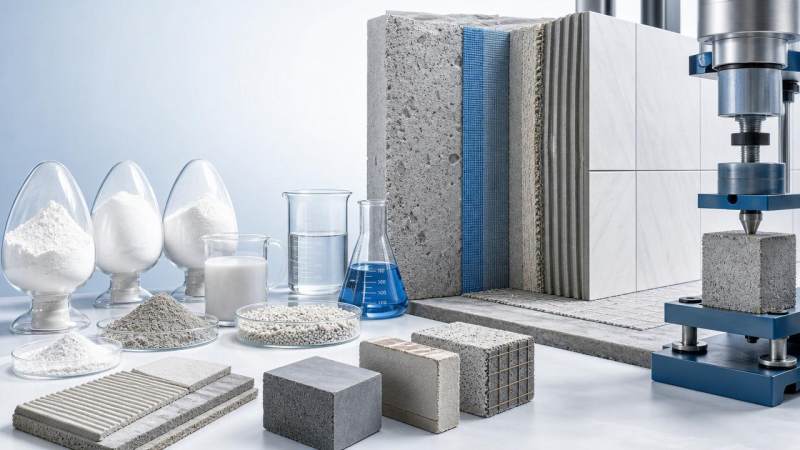
Why Redispersible Polymer Powder Cost vs Performance Matters in Dry Mix
For procurement planning, Redispersible Polymer Powder cost and performance must be evaluated together, not separately, in dry mix product design.
A lower price per ton may look attractive, yet weak film formation can increase dosage, defects, and customer complaints.
A better balance improves adhesion, flexibility, crack resistance, and construction efficiency while keeping total formulation cost under control.
Jinan Ludong Chemical Co., Ltd. supports this balance through global-scale production, stable quality control, and practical construction additive solutions.
Its portfolio includes HPMC, HPS, and RDP, helping dry mix systems achieve reliable workability and consistent site performance.
Different Dry Mix Scenarios Need Different Cost-Performance Judgments
Not every dry mix product requires the same polymer grade, dosage strategy, or performance target.
The right decision depends on substrate condition, weather exposure, application thickness, and required mechanical properties.
In practical terms, Redispersible Polymer Powder should be selected according to end-use risk, not only purchase price.
This approach avoids over-specification in simple systems and under-specification in demanding applications.
Key evaluation factors before comparing offers
- Minimum effective dosage in the target formula
- Adhesion to cementitious or gypsum-based substrates
- Flexibility after curing and crack resistance
- Water resistance and open time behavior
- Storage stability and batch consistency
- Compatibility with cellulose ether and fillers
Tile Adhesive Formulations: Price Pressure Meets Bonding Risk
Tile adhesive is one of the clearest cases where Redispersible Polymer Powder cost cannot be judged by invoice value alone.
Insufficient polymer quality may reduce initial adhesion, deformability, and water retention synergy with cellulose ether.
That can cause tile slip, poor wetting, and weaker bonding on dense substrates.
In standard wall tile systems, moderate dosage may be enough when substrate conditions are stable and tile size is limited.
For large-format tiles or low-absorption surfaces, stronger polymer performance usually reduces failure risk more effectively than chasing the cheapest grade.
Core judgment points for tile adhesive
- Tile size and water absorption level
- Indoor or outdoor application conditions
- Required slip resistance and open time
- Bonding to concrete, screed, or old surfaces
EIFS and External Insulation: Weather Exposure Changes the Equation
Exterior insulation and finish systems demand more than basic bonding strength.
Temperature cycling, moisture, and movement require flexible polymer films with durable adhesion.
Here, Redispersible Polymer Powder performance has a direct influence on long-term system reliability.
A low-cost option may appear competitive during sourcing, yet repairs and reputation costs can far exceed initial savings.
For base coats and bonding mortars in EIFS, stable redispersion, tensile strength, and flexibility deserve priority.
What matters most in exterior systems
- Freeze-thaw and humidity resistance
- Compatibility with insulation boards
- Resistance to microcracking under movement
- Stable field application across seasons
Self-Leveling and Repair Mortars: Workability Can Change Total Cost
In self-leveling compounds and repair mortars, application behavior often matters as much as cured strength.
Poorly selected polymer can affect flow, edge quality, cohesion, and substrate wetting.
That increases labor time, rework, and on-site adjustment, all of which raise actual system cost.
A consistent grade with balanced flexibility and adhesion can support smoother spreading and fewer visible defects.
This is where the true value of Redispersible Polymer Powder becomes measurable beyond material price.
How Scenario Differences Affect Redispersible Polymer Powder Selection
Practical Ways to Improve Cost Performance Without Downgrading Quality
The best sourcing strategy is not always selecting the highest-grade polymer or the lowest-priced offer.
It is usually a controlled optimization process based on formulation targets and application risks.
Useful optimization actions
- Test minimum effective dosage under realistic site conditions.
- Check synergy with HPMC and mineral fillers before changing grade.
- Compare total applied cost, not only raw material price.
- Review batch consistency and storage stability from the supplier.
- Separate standard products from high-risk specialty applications.
Ludong Chemical offers this advantage through integrated production and stable capacity reaching 45,000 tons annually.
Its controlled manufacturing supports predictable additive behavior across different dry mix product categories.
Common Misjudgments When Comparing Redispersible Polymer Powder Offers
One frequent mistake is comparing price per kilogram without comparing effective dosage at equal performance.
Another is ignoring site conditions such as temperature, humidity, and difficult substrates.
Some formulations also fail because compatibility with cellulose ether was not checked after changing polymer source.
Short-term savings may disappear if reduced workability causes slower application or more rejects.
It is also risky to assume one polymer grade will perform equally well in tile adhesive, repair mortar, and EIFS systems.
Choosing the Next Step Based on Application Reality
A sound Redispersible Polymer Powder decision starts with identifying the actual service demands of each dry mix application.
Then compare candidate grades by dosage efficiency, construction behavior, adhesion, and durability in the intended use case.
When performance targets are clear, cost control becomes more accurate and more sustainable.
For projects needing stable supply, consistent quality, and technical coordination, Ludong Chemical provides practical support across major construction additive systems.
To evaluate a suitable dry mix solution, review formulation goals and test samples with Redispersible Polymer Powder in the exact performance scenario.
Send Your Inquiry
We welcome your cooperation and we will develop with you.
