


Common mistakes with polymer powder in tile adhesive
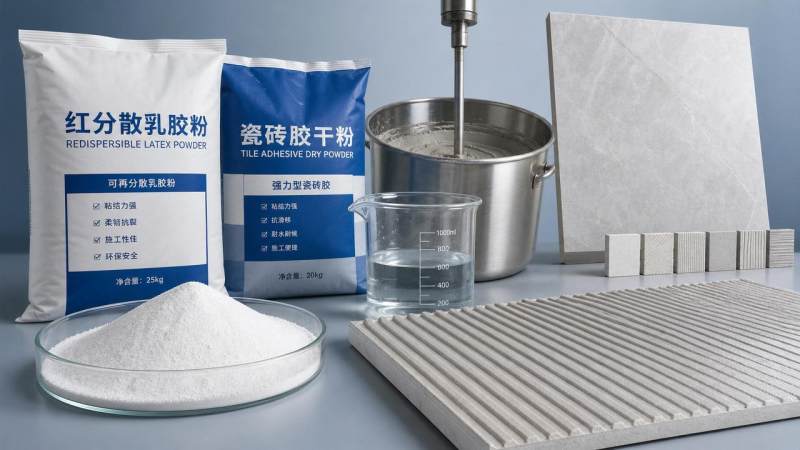
Using Redispersible Polymer Powder for tile adhesive incorrectly can lead to weak bonding, poor flexibility, slipping tiles, and costly rework on site. For applicators and operators, understanding the most common mistakes is essential to achieving stable performance and consistent installation quality. This article explains where problems usually start and how better material selection, mixing, and application practices can improve tile adhesive results.
Why a checklist matters when using Redispersible Polymer Powder for tile adhesive
Tile adhesive performance depends on formulation balance, site conditions, and application discipline. Small errors with polymer dosage or water control often create large failures after curing.
A checklist helps identify preventable mistakes before they affect open time, sag resistance, bond strength, and flexibility. It also supports more consistent use of Redispersible Polymer Powder for tile adhesive across batches.
Core checklist: common mistakes and how to avoid them
- Check polymer grade compatibility before production. Not every redispersible powder fits every cement system, filler ratio, or tile adhesive class requirement.
- Avoid underdosing the polymer. Too little Redispersible Polymer Powder for tile adhesive reduces adhesion, impact resistance, deformation capacity, and overall durability.
- Prevent overdosing during formulation adjustment. Excess polymer may increase cost, soften the mortar, alter setting behavior, and affect compressive performance.
- Control moisture during storage. Polymer powder exposed to humidity can agglomerate, disperse poorly, and deliver unstable bonding in finished tile adhesive.
- Confirm dry-mix uniformity before packing. Incomplete blending causes local performance variation, uneven water demand, and inconsistent workability on site.
- Measure water accurately during mixing. Excess water weakens the adhesive matrix and lowers anti-slip behavior, while insufficient water hurts wetting and spreadability.
- Respect the recommended slaking time. Skipping rest time can prevent full hydration and proper polymer activation within the tile adhesive system.
- Do not remix with extra water after pot life decline. This common correction reduces final strength and damages the designed performance profile.
- Prepare the substrate carefully. Dust, oil, chalking, loose particles, or high suction surfaces can defeat a good Redispersible Polymer Powder for tile adhesive formula.
- Apply within the open time window. Once skinning starts, transfer efficiency drops sharply and the tile may not achieve full contact.
- Match the trowel notch to tile size and back pattern. Poor rib geometry leaves voids and lowers effective bond area.
- Watch temperature, wind, and humidity on site. Harsh conditions accelerate water loss and can compromise polymer film formation.
Where problems usually start in formulation
Wrong polymer type for the target adhesive class
One major mistake is choosing polymer powder only by price. Different RDP grades provide different adhesion, flexibility, hydrophobicity, and workability responses.
For wall tiles, non-slip behavior matters. For large porcelain tiles, deformability and improved wetting are more critical. Redispersible Polymer Powder for tile adhesive must match the application target.
Ignoring synergy with cellulose ether and fillers
Polymer powder does not work alone. HPMC, cement, calcium carbonate, sand grading, and additives all affect the final adhesive profile.
A formulation with strong water retention but poor polymer balance may hold moisture well yet still fail under movement. This is why laboratory validation matters before scale-up.
In some production environments, support additives from broader dry-mix expertise can improve process understanding. Related cellulose solutions such as Detergent-grade HPMC also reflect how additive quality control influences consistency across chemical applications.
Application mistakes in different tile adhesive scenarios
Large-format porcelain tiles
Porcelain has low water absorption, so bond formation is less forgiving. If Redispersible Polymer Powder for tile adhesive is too low, wetting and adhesion may fail.
Back-buttering is often necessary. Without enough coverage, hollow spots remain under the tile, increasing crack risk and reducing long-term load resistance.
Vertical wall installation
Slip control becomes the main concern on walls. Too much water, poor trowel angle, or delayed tile placement can overcome the anti-sag design of the adhesive.
Even with good Redispersible Polymer Powder for tile adhesive, poor site handling can cause downward movement, uneven joints, and weak transfer to the tile back.
Exterior or wet-area projects
Outdoor façades, balconies, and wet rooms require better flexibility and water resistance. Basic interior-grade formulations often fail under thermal cycling or moisture exposure.
When conditions are severe, adhesive design should consider substrate movement, freeze-thaw stress, and tile size. Polymer selection becomes a structural performance issue, not just a workability choice.
Often overlooked risk points
- Using expired material. Aged powder may still look normal, but dispersion behavior and protective colloid performance can already be degraded.
- Ignoring cement variability. Different cement sources can shift setting, compatibility, and bonding behavior in the same tile adhesive recipe.
- Testing only initial bond strength. Good early values do not guarantee flexibility, water immersion resistance, or heat aging durability.
- Overlooking site climate. Fast surface drying shortens open time and can hide transfer problems until tiles debond later.
- Assuming all substrates behave equally. Gypsum board, concrete, old tiles, and cement render need different preparation and sometimes primers.
Practical execution advice for more stable results
Start with a validated dry-mix design and lock key raw material specifications. Record polymer grade, dosage, cement source, filler distribution, and target water ratio.
Use standard mixing procedures on site. Add powder to measured water, mix thoroughly, allow slaking, then remix briefly without adding more water.
Run simple control checks during application. Monitor open time, wetting ability, tile pull-off behavior, and surface skinning under actual temperature and airflow conditions.
For product consistency, work with suppliers that maintain controlled production and broad construction additive expertise. Knowledge of polymer and cellulose interaction supports more reliable tile adhesive performance.
This is especially useful when optimizing systems that also involve cellulose technologies from companies with integrated production capabilities, including products like Detergent-grade HPMC in other chemical fields.
Summary and next steps
Most failures linked to Redispersible Polymer Powder for tile adhesive come from predictable mistakes: wrong grade selection, poor storage, inaccurate water addition, weak substrate preparation, and missed open time.
A practical checklist reduces these risks and improves repeatability from formulation to tile placement. Review raw materials, verify compatibility, standardize mixing, and confirm site conditions before each application stage.
When performance problems appear, trace them systematically instead of changing only dosage. In tile adhesive systems, durable results come from balanced chemistry, disciplined execution, and continuous quality control.
Send Your Inquiry
We welcome your cooperation and we will develop with you.
