


Detergent-grade HPMC for cleaning products: common formulation mistakes
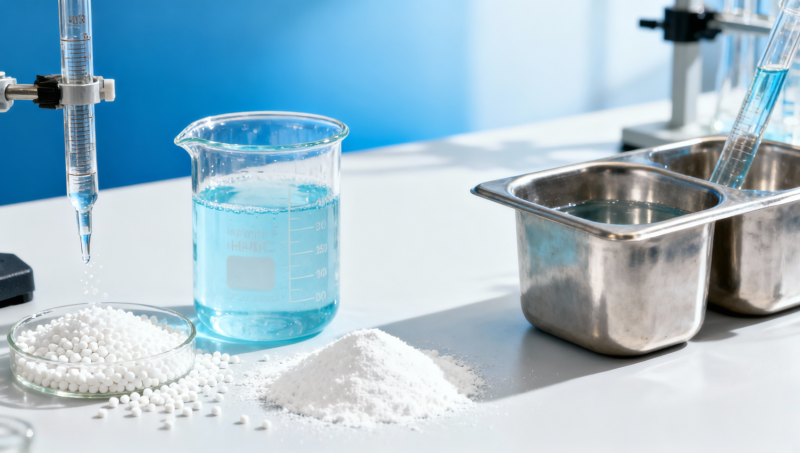
Choosing Detergent-grade HPMC for cleaning products is not just about viscosity or HYDROXYPROPYL METHYL CELLULOSE price. Many formulation failures come from mismatched grades, poor solubility control, and overlooked compatibility issues. For technical and commercial evaluators seeking a reliable Detergent-grade HPMC factory, this guide explains the most common mistakes, how HYDROXYPROPYL METHYL CELLULOSE water-soluble performance affects cleaning systems, and what to check before scaling production.
When cleaning product formulations fail, the root cause is often not the surfactant package alone. In many cases, Detergent-grade HPMC is selected using overly simple criteria such as nominal viscosity, basic cost comparison, or supplier claims without application verification. For technical reviewers, quality teams, procurement managers, and decision-makers, the practical conclusion is clear: the wrong HPMC grade can reduce stability, create dissolution defects, weaken user experience, and increase production risk even if the raw material price looks competitive.
This means the key question is not “Which HPMC is cheapest?” but rather “Which grade performs reliably in this specific cleaning system, process, and storage condition?” Understanding the most common formulation mistakes helps both technical and commercial teams avoid expensive rework, customer complaints, and scale-up delays.
What buyers and formulators usually get wrong first
The most common early mistake is treating all detergent-grade cellulose ethers as interchangeable. In reality, cleaning products can differ significantly in pH, surfactant type, electrolyte load, fragrance content, preservatives, solvents, and processing temperature. A grade that works in one liquid cleaner may perform poorly in another.
For target readers such as technical evaluators and enterprise decision-makers, the main concerns usually include:
- Whether the HPMC dissolves consistently without fish eyes or lumping
- Whether it remains stable in surfactant-rich or salt-containing systems
- Whether viscosity stays within specification during storage and transport
- Whether the formulation process is suitable for large-scale production
- Whether the supplier can deliver batch-to-batch consistency and technical support
- Whether the final cost is truly optimized after considering rework, rejects, and complaint risk
These are the issues that should drive formulation and purchasing decisions far more than list price alone.
Mistake 1: Choosing Detergent-grade HPMC by viscosity number alone
Viscosity is important, but it is only one part of the evaluation. A product labeled at a certain CPS may still perform differently depending on particle size distribution, substitution level, dissolution behavior, and compatibility with the rest of the formula.
In cleaning products, teams often assume a higher viscosity grade automatically means better thickening or better stability. That assumption can cause several problems:
- Slow hydration and poor dispersion during mixing
- Uneven final texture
- Excessive air entrapment
- Poor pourability or dispensing performance
- Unexpected viscosity drift after adding salts or surfactants
A more reliable approach is to evaluate Detergent-grade HPMC by actual end-use performance:
- Initial wetting and dispersion speed
- Time to full hydration
- Viscosity profile after full maturation
- Stability under expected pH and electrolyte conditions
- Appearance, clarity, and flow in the finished product
For procurement and management teams, this matters because a lower-priced grade that causes longer mixing time or production instability often becomes more expensive in total manufacturing cost.
Mistake 2: Ignoring HYDROXYPROPYL METHYL CELLULOSE water-soluble behavior during processing
One of the most overlooked issues is how HYDROXYPROPYL METHYL CELLULOSE water-soluble performance changes in real production conditions. On paper, the material is water soluble. In practice, the hydration pathway depends heavily on how it is added, the water temperature, agitation intensity, and what else is already inside the tank.
Typical processing errors include:
- Adding HPMC too quickly into water, causing agglomeration
- Charging powder into a system already rich in surfactants or salts
- Using unsuitable water temperature for proper dispersion and hydration
- Insufficient shear in the early wetting stage
- Not allowing enough maturation time before final viscosity adjustment
These mistakes often create “insoluble” particles that are not true insolubles, but partially hydrated lumps formed by poor addition technique. This leads to inconsistent texture, filtration issues, poor appearance, and customer dissatisfaction.
To reduce risk, formulators should confirm:
- Recommended addition sequence
- Ideal water phase conditions before powder charging
- Required hydration time
- Whether pre-dispersion or staged addition is necessary
- Whether the selected grade is optimized for detergent systems rather than general industrial use
Mistake 3: Overlooking compatibility with surfactants, salts, and additives
Many cleaning products are chemically complex systems. An HPMC grade may look acceptable in a simple water test but behave very differently once anionic, nonionic, or amphoteric surfactants are introduced. The same applies to builders, electrolytes, fragrances, dyes, solvents, and preservatives.
Common compatibility-related failures include:
- Unexpected thinning after surfactant addition
- Phase instability over time
- Stringiness or poor consumer feel
- Cloudiness in products requiring better visual clarity
- Reduced foam profile or altered application behavior
For quality control and safety management teams, compatibility is not just a performance issue. It also affects shelf-life confidence, packaging performance, and complaint rates in distribution channels.
This is why bench testing should simulate the full commercial formula as early as possible. Testing HPMC in water alone provides only limited value. If the final cleaner contains salt, active matter, fragrance, preservative, and color, the screening test should include them too.
Mistake 4: Failing to evaluate pH and storage stability realistically
Some formulations perform well immediately after production but lose consistency during storage. This often happens because the selected Detergent-grade HPMC was not tested under realistic pH, temperature, and storage duration conditions.
Questions that should be asked before approval include:
- Does viscosity remain stable after 1, 2, and 3 months?
- How does the product behave under high-temperature warehousing or cold transport?
- Is there any syneresis, separation, or sedimentation over time?
- Does pH drift affect polymer performance?
- Will repeated freeze-thaw or temperature cycling change texture?
For business evaluators and distributors, this is especially important because performance failure in the warehouse or end market can damage both brand trust and channel relationships. Stability data is often more valuable than a small unit-price advantage.
Mistake 5: Not matching the HPMC grade to the manufacturing process
A good laboratory result does not guarantee smooth production. Some HPMC grades are more forgiving in plant conditions than others. If the factory uses different mixers, charging methods, batch sizes, or water qualities than the lab, the outcome can change significantly.
Typical scale-up problems include:
- Powder floating on the liquid surface
- Long dissolution time in large tanks
- Viscosity variation between batches
- Operator-dependent results
- Reduced throughput because of extended mixing cycles
For enterprises selecting a Detergent-grade HPMC factory, it is wise to ask for process-oriented support, not just a technical data sheet. A supplier that understands industrial production can help define suitable addition methods, hydration windows, and grade selection based on actual plant constraints.
Manufacturers with broader cellulose ether expertise may also help customers compare related performance needs across product lines. In some industrial sourcing discussions, buyers reviewing thickening and film-forming technologies may also encounter products such as Redispersible Polymer Powder for other formulation applications. While not a substitute for detergent-grade HPMC in cleaning systems, this reflects the value of working with suppliers that understand multiple functional material categories and can support cross-segment technical evaluation.
Mistake 6: Comparing only HYDROXYPROPYL METHYL CELLULOSE price, not total formulation cost
Price-based sourcing is one of the most common commercial mistakes. A lower quoted HYDROXYPROPYL METHYL CELLULOSE price may seem attractive, but the true cost should include:
- Required dosage to reach target viscosity
- Mixing time and energy consumption
- Batch rejection risk
- Process consistency
- Finished product stability
- Complaint handling and return costs
For decision-makers, the right metric is cost-in-use, not just cost-per-kilogram. If a slightly higher-quality HPMC reduces dosage, shortens mixing time, and improves batch success rate, the overall economics may be better.
This is particularly relevant for companies preparing export products or private-label cleaning products, where consistency and reduced claim risk matter more than saving a small amount on raw material purchase.
How to evaluate a reliable Detergent-grade HPMC factory before scaling up
When choosing a supplier, buyers should look beyond a sample that works once in the lab. A reliable Detergent-grade HPMC factory should be able to support stable commercialization.
Important evaluation points include:
- Consistency of viscosity control across batches
- Range of available grades for different cleaning systems
- Ability to provide technical guidance on dissolution and processing
- Production capacity and supply reliability
- Traceability, quality documentation, and specification discipline
- Willingness to support application testing under customer conditions
Jinan Ludong Chemical Co., Ltd., established in 2020, operates as a large-scale global manufacturing enterprise in cellulose ethers, integrating production, trading, and service support. With annual production capacity reaching 45,000 tons and HPMC viscosities controllable from 400 to 200,000 CPS, such manufacturing capability is relevant to customers who prioritize supply continuity, specification control, and the ability to match grades to different industrial requirements.
For distributors and commercial teams, supplier evaluation should also include responsiveness, export coordination, and technical communication quality. These are practical indicators of whether future scale-up issues can be solved quickly.
A practical checklist before approving a grade
Before final selection, technical and commercial teams should align on a structured approval checklist:
- Test the grade in the full formula, not just in water.
- Verify dissolution behavior under actual plant mixing conditions.
- Check viscosity development over time, not just immediately after mixing.
- Run compatibility tests with surfactants, salts, preservatives, and fragrance.
- Evaluate pH tolerance and storage stability.
- Compare cost-in-use instead of only unit price.
- Confirm supplier batch consistency and capacity.
- Request technical guidance for scale-up and troubleshooting.
Following these steps can prevent many of the most common formulation mistakes and make supplier comparison more objective.
Final takeaway for technical and commercial decision-makers
The biggest mistakes with Detergent-grade HPMC for cleaning products usually come from oversimplified selection. Viscosity alone is not enough. Price alone is not enough. A reliable choice depends on solubility behavior, additive compatibility, pH and storage stability, and fit with the real manufacturing process.
For technical evaluators, the best decision comes from realistic formula testing and process validation. For procurement and business leaders, the best decision comes from balancing raw material cost with production efficiency, finished-product stability, and supplier reliability. When these factors are assessed together, it becomes much easier to identify the right grade, reduce formulation risk, and scale cleaning products with confidence.
Send Your Inquiry
We welcome your cooperation and we will develop with you.
