


Polyvinyl Alcohol for adhesive: film strength or faster dissolution?
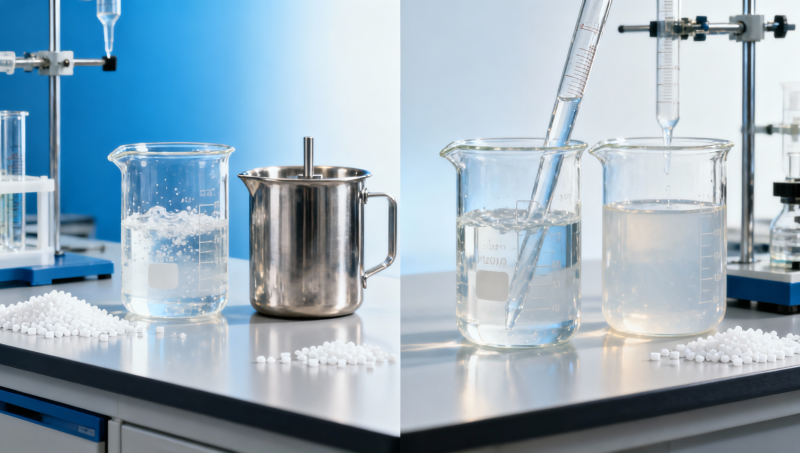
When selecting Polyvinyl Alcohol for adhesive applications, buyers often face a core trade-off: higher film strength or faster dissolution. For technical evaluators, procurement teams, and distributors, understanding this balance is essential to product performance, process efficiency, and cost control. As a reliable Polyvinyl Alcohol supplier, Ludong Chemical helps global customers assess formulation needs with practical insight and stable material support.
In most adhesive projects, the right answer is not simply “choose the strongest grade” or “choose the fastest dissolving one.” The better choice depends on how the adhesive is processed, the required bonding performance, production temperature limits, batch consistency expectations, and the total cost of manufacturing. For technical and commercial decision-makers, the practical goal is to match PVA properties to the real application rather than over-specify one parameter and create problems elsewhere.
What is the real decision behind film strength vs. faster dissolution?
For most buyers, this is actually a formulation efficiency question. Higher film strength is often associated with better cohesion, stronger dried adhesive layers, and more reliable end-use performance. Faster dissolution, however, improves manufacturing convenience, reduces mixing time, lowers energy consumption, and supports smoother production scheduling.
The trade-off usually comes from the relationship between degree of polymerization, alcoholysis level, viscosity, and solubility behavior. In simple terms:
- Grades with stronger film-forming performance may require more demanding dissolution conditions.
- Grades that dissolve faster can simplify processing but may not always deliver the same dry-film toughness, water resistance, or mechanical stability.
- The “best” grade depends on whether your adhesive process is limited by production speed, temperature, equipment, or final bond requirements.
This is why technical assessment should not isolate a single property. A PVA grade must be evaluated as part of the complete adhesive system.
What technical evaluators and QC teams should check first
For laboratories, quality managers, and safety or process control personnel, the fastest way to make a sound decision is to assess the following factors in order of importance:
1. Final adhesive performance target
Ask what matters most after drying or curing:
- Bond strength
- Film toughness and flexibility
- Peel resistance
- Water sensitivity or resistance
- Substrate compatibility
If end-use strength and film integrity dominate the requirement, stronger film-forming grades deserve priority. If the application is less demanding and production simplicity matters more, faster-dissolving grades may offer better value.
2. Dissolution conditions in actual production
Many purchasing mistakes happen because a material performs well in theory but not in the plant. Review:
- Available mixing temperature
- Agitation intensity
- Tank size and feed sequence
- Time allowed for solution preparation
- Risk of gel particles or incomplete dissolution
If your line cannot support high-temperature dissolution or long hydration time, choosing a high-strength grade without checking process fit can increase rejects and downtime.
3. Viscosity stability and batch consistency
For distributors and enterprise buyers, consistency often matters as much as headline performance. Stable viscosity and predictable dissolution behavior improve formulation repeatability, especially in large-volume adhesive production. Batch-to-batch variation can lead to changing mixing times, unstable coating behavior, or inconsistent bond performance.
4. Compatibility with other formulation ingredients
PVA rarely works alone. It is often used together with fillers, plasticizers, defoamers, preservatives, starch derivatives, or other modifiers. Compatibility issues can affect clarity, viscosity buildup, foam, storage stability, and film properties. Evaluation should therefore include the full formula rather than single-material testing only.
When should you prioritize film strength?
Prioritizing film strength is usually the right decision when adhesive performance in service is more important than preparation speed. Typical cases include:
- Adhesives requiring strong dry cohesion
- Applications sensitive to cracking or brittle films
- Systems needing better mechanical integrity on porous substrates
- Formulations where the adhesive layer contributes significantly to final product durability
In these scenarios, stronger film formation can help the adhesive resist handling stress, improve bonding reliability, and support a more robust finished product. This may be especially relevant for manufacturers supplying demanding industrial or construction-related downstream users, where failure risk has a higher cost than slower dissolution.
However, stronger film grades should still be checked against:
- Production energy consumption
- Longer dissolution cycles
- Potential difficulty in cold-water processing
- Higher operational complexity
If these costs are acceptable, the performance gain may justify the choice.
When is faster dissolution the better business decision?
Faster dissolution should be prioritized when process efficiency directly affects profitability or production reliability. This is often the case when:
- Adhesive is prepared frequently in small or medium batches
- Production cycles are tight
- Heating capacity is limited
- Operators need simpler handling
- The end-use does not require maximum film strength
From a commercial perspective, faster dissolution can create several measurable benefits:
- Shorter preparation time
- Lower steam or electricity use
- Reduced labor burden
- Lower risk of undissolved particles
- Better throughput planning
For distributors and procurement teams, these operational benefits may outweigh a modest loss in film strength, especially in price-sensitive adhesive markets. In many cases, the most economical grade is not the cheapest per ton, but the one that reduces total process cost.
How decision-makers can compare options without overtesting
Business evaluators and plant managers usually do not need a long list of lab data. They need a practical comparison framework. A useful approach is to score candidate grades across five dimensions:
- Required bond performance
- Dissolution time and temperature demand
- Formula compatibility
- Production risk
- Total cost in use
Instead of asking “Which PVA grade is best?” ask:
- Which grade meets the minimum technical target with the lowest processing burden?
- Will the stronger film actually improve the end product enough to justify slower preparation?
- Will faster dissolution reduce hidden costs such as energy, labor, or rejection rate?
- Can the supplier provide stable quality at commercial scale?
This is where supplier capability matters. A manufacturer with controlled production, consistent viscosity management, and scalable supply can reduce evaluation risk. For buyers looking for dependable material support, Polyvinyl Alcohol should be assessed not only by datasheet values, but also by how reliably it performs across repeated batches and different customer production conditions.
Common mistakes buyers make when selecting PVA for adhesives
- Focusing on one property only: High film strength alone does not guarantee better plant performance.
- Ignoring real dissolution conditions: Lab success under ideal heating may not match factory reality.
- Choosing by price per kilogram only: Lower unit price can lead to higher total manufacturing cost.
- Skipping compatibility tests: Interactions with additives can change viscosity and application behavior.
- Underestimating consistency: Unstable batches create long-term production and quality problems.
A better sourcing strategy is to combine technical validation with business practicality. That means selecting a grade that works reliably in both formulation and operations.
Why supplier stability matters in adhesive applications
For industrial buyers, the material itself is only part of the decision. The supplier’s production strength, quality management, and delivery capability directly influence procurement confidence. Ludong Chemical, as a large-scale global manufacturing enterprise in cellulose ethers and related chemical solutions, emphasizes integrated production capability, controlled processes, and flexible support for different customer needs. For buyers managing multiple formulations or regional distribution, this kind of manufacturing stability can help reduce supply risk and support long-term planning.
In adhesive applications, a dependable supplier should help customers do more than buy material. They should support selection logic, application matching, and stable supply performance. That is especially important when a business needs to balance technical suitability with commercial scalability.
Conclusion: choose based on application value, not a simple property preference
For adhesive formulations, the question is rarely just “film strength or faster dissolution?” The real decision is which balance delivers the best result for your production process, product requirements, and business model.
If your adhesive must deliver stronger dry-film performance and end-use durability, prioritize film strength—provided your process can handle the dissolution conditions. If manufacturing efficiency, lower energy demand, and easier operation are more critical, faster dissolution may be the smarter option. The best choice is the one that meets technical needs while controlling operational cost and risk.
For technical teams, purchasers, and distribution partners, sound evaluation comes from testing the material in real process conditions, comparing total cost in use, and working with a supplier that can provide consistent quality. That is the most practical way to make a confident adhesive-grade selection.
Send Your Inquiry
We welcome your cooperation and we will develop with you.
