


Redispersible Polymer Powder for construction: what changes bond strength?
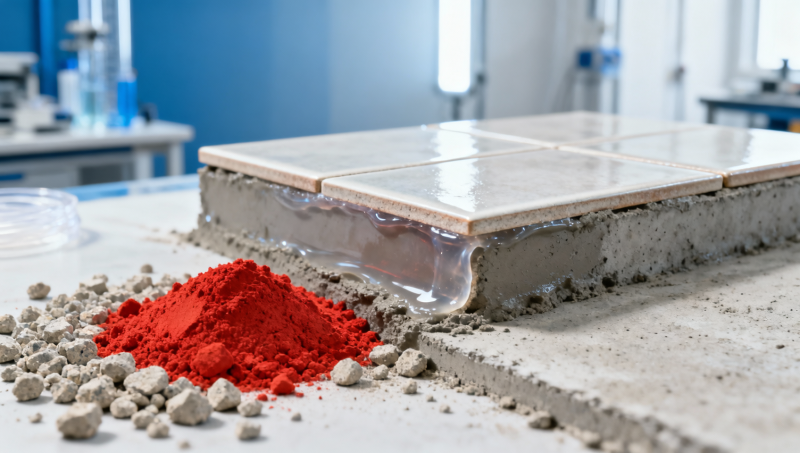
In construction formulations, Redispersible Polymer Powder for construction can significantly influence bond strength, flexibility, and durability. But what exactly causes these changes? From raw material selection and dosage control to compatibility with HYDROXYPROPYL METHYL CELLULOSE water-soluble systems, this article explores the key factors technical evaluators, buyers, and quality teams should understand when assessing performance, cost, and supplier reliability.
Why does bond strength change when Redispersible Polymer Powder is used in construction systems?
Bond strength is not determined by Redispersible Polymer Powder for construction alone. It results from the interaction between polymer chemistry, cement hydration, substrate absorption, filler gradation, water demand, and curing conditions. In drymix mortar, even a small formulation adjustment within a typical range such as 1%–5% polymer addition by total dry weight can shift adhesion, open time, and tensile performance in visible ways.
For technical evaluation teams, the first question is usually whether the polymer forms a continuous film after water evaporation and cement setting. That film improves cohesion inside the mortar matrix and adhesion at the interface. If film formation is incomplete because of low dosage, unsuitable minimum film-forming temperature, or poor compatibility, bond strength may fall instead of rise.
For commercial evaluators and decision-makers, another key point is consistency from batch to batch. A lab result from one trial is useful, but stable production performance over 3 stages matters more: pilot verification, line-scale production, and jobsite feedback. Inconsistent particle size distribution, moisture pickup during storage, or unstable ash content can create fluctuations that directly affect customer complaints and claim risk.
In practical construction chemistry, bond strength also changes because different application systems stress the interface differently. Tile adhesive, EIFS base coat, self-leveling compounds, repair mortar, and putty each impose different demands on tensile adhesion, flexibility, and water retention. That is why procurement should never compare RDP prices without comparing end-use performance targets.
What happens at the interface?
When the mortar is mixed with water, Redispersible Polymer Powder re-disperses into fine polymer particles. As hydration proceeds and water evaporates, these particles coalesce into a polymer film. That film bridges pores, improves particle packing, and enhances contact with substrates such as concrete, AAC blocks, cement board, or ceramic tile backs.
The result is often a better balance between rigid mineral bonding and flexible organic bonding. This balance matters because high cement strength alone does not guarantee good adhesion under thermal movement, impact, or wet-dry cycling. In many construction systems, especially exterior applications, the polymer contribution becomes more important after 24–72 hours and under long-term aging conditions.
- Mineral phase contributes compressive structure and early rigid skeleton.
- Polymer phase contributes flexibility, crack-bridging, and adhesion to low-absorption or smooth surfaces.
- Cellulose ether contributes water retention and workability, which indirectly protects bond development.
Which technical factors most strongly affect bond strength?
If your team is screening suppliers, there are usually 5 core technical factors to review before making a judgment: polymer base type, dosage level, ash content, particle size and re-dispersibility, and compatibility with the full mortar recipe. These factors explain most of the bond strength variation seen between trial samples that look similar on paper but behave differently on-site.
Among them, dosage is the easiest to change but not always the cheapest lever. Increasing polymer from 1.5% to 3.0% may improve adhesion and flexibility, yet the return depends on the substrate, cement ratio, filler system, and target standard. Beyond a certain point, more polymer can raise cost faster than performance, especially if sand grading or water retention is still poorly optimized.
Compatibility with cellulose ether is equally important. In many cement-based and gypsum-based formulations, water retention, anti-sag behavior, and open time are strongly influenced by HPMC or related ethers. A balanced system may also involve Methyl Hydroxyethyl Cellulose (MHEC) when formulators need adjusted rheology, better workability, or application-specific water control.
The table below summarizes the most common variables that change bond strength and how different teams should interpret them during product evaluation, quality review, and procurement comparison.
For quality and safety teams, the message is clear: bond strength should be reviewed as a system outcome, not as a standalone polymer claim. A good supplier should support comparative lab screening, provide stable production lots, and communicate which variables are formulation-sensitive rather than promising universal performance across all mortar types.
Why raw material selection matters before dosage optimization
Many buyers start with dosage because it directly affects cost per ton. However, raw material selection comes first. A well-matched polymer chemistry at 2% can outperform a poorly matched polymer at 4%. In construction chemicals, the wrong choice often shows up as weak wet adhesion, low flexibility after curing, or poor retention of performance after heat and moisture cycling.
That is one reason integrated suppliers are valuable. Jinan Ludong Chemical Co., Ltd. focuses on cellulose ethers, RDP, and HPS within construction solutions rather than offering isolated materials without system understanding. With annual capacity reaching 45,000 tons and HPMC viscosity control from 400 to 200,000 CPS, the company is positioned to support both formulation matching and supply continuity for global customers.
How should buyers compare RDP options for tile adhesive, putty, and repair mortar?
Different applications place different stress on bond strength, so a single evaluation template is not enough. In tile adhesive, anti-slip, open time, and adhesion after aging matter. In wall putty, crack resistance, smoothness, and workable spreading are more visible. In repair mortar, high adhesion to concrete and durability under movement or weathering become more critical.
Commercial teams often compare offers mainly by price per kilogram, but distributors and plant managers know the real comparison should be cost per qualified ton of finished mortar. If one lower-cost polymer forces higher dosage, more rework, or inconsistent setting, the delivered cost advantage may disappear within 1–2 production cycles.
The next table helps technical and business evaluators compare selection priorities by application. It can also be used as a 4-point pre-purchase checklist during supplier discussions and sample validation.
This comparison shows why “best RDP” is not a useful buying term in construction chemicals. The right selection depends on substrate, climate, application method, and the target balance between cost and field reliability. In many systems, the most valuable supplier is the one that helps reduce reformulation time from several rounds to 2–3 focused trials.
A practical procurement checklist for technical and commercial teams
- Confirm the target application and substrate set before asking for samples. A tile adhesive sample is not automatically suitable for repair mortar.
- Request a recommended dosage window, such as a lower, medium, and higher trial point, instead of one single number.
- Test the polymer with your own cement, fillers, and cellulose ether system for at least 24 hours, 72 hours, and after aging if relevant.
- Ask about packaging, storage protection, and normal delivery cycle, especially if humidity and overseas transport are involved.
Where formulation flexibility is needed, some manufacturers also compare HPMC with Methyl Hydroxyethyl Cellulose (MHEC) to fine-tune water retention and application feel. This should be evaluated as part of a complete system, not as a standalone substitution decision.
What risks do quality teams and decision-makers often overlook?
One common mistake is assuming higher bond strength in early testing always means better long-term durability. In reality, construction systems must often withstand wet-dry cycles, thermal variation, substrate movement, and variable site mixing practices. A brittle formula may perform well at day 1 or day 3 but show debonding or cracking later.
Another overlooked risk is moisture sensitivity during storage and transportation. Redispersible Polymer Powder for construction is a dry powder, but handling conditions matter. Warehousing over several weeks in humid environments can affect flowability and re-dispersion. For distributors and exporters, packaging integrity and stock rotation every quarter can be just as important as initial laboratory data.
Decision-makers should also watch for incomplete formulation evaluation. Bond strength can drop because of excessive water addition at the jobsite, poor substrate preparation, or sand variability. If the supplier only discusses the polymer but cannot support total system troubleshooting, the buyer may carry more technical risk than expected during customer rollout.
For quality control teams, a robust incoming review usually includes 3 layers: document consistency, physical handling checks, and application validation. Even when exact acceptance criteria differ by factory, this layered approach helps reduce disputes between procurement, production, and technical service teams.
Frequent misconceptions in construction chemical purchasing
Misconception 1: the lowest unit price gives the lowest total cost
A lower price may still increase total cost if dosage rises, mixing behavior worsens, or end-user complaints increase. In B2B distribution, poor repeatability can damage channel trust far faster than a small raw material saving can improve margins.
Misconception 2: bond strength depends only on RDP
Bond strength depends on the full formulation system, including cement type, filler grading, cellulose ether, water ratio, and curing conditions. RDP is critical, but it is not isolated from the rest of the mortar design.
Misconception 3: one sample test is enough for approval
A practical approval process should include at least small-batch verification, production-line observation, and repeat testing after storage. This is especially important for exporters, brand owners, and plants supplying multiple climate regions.
FAQ: how to assess Redispersible Polymer Powder for construction with less trial-and-error?
The questions below reflect typical concerns from technical evaluators, procurement managers, quality personnel, and distributors. They are useful when preparing sample requests, comparing quotations, or planning pilot validation for construction chemical products.
How much Redispersible Polymer Powder should be added to improve bond strength?
There is no universal dosage because the right range depends on the application and the complete mortar recipe. In many drymix systems, trial windows such as 1%–5% of dry formulation weight are used for screening. The correct approach is to compare at least 3 dosage points against the same substrate, cement, and curing conditions, then balance adhesion gains against cost and workability.
What should buyers check besides bond strength test values?
Buyers should review re-dispersibility, consistency between lots, compatibility with HPMC or related cellulose ether, workability, open time, and storage stability. A procurement decision based on one adhesion value alone may miss problems that appear after shipping, large-scale mixing, or climate change between seasons.
Which scenarios are more sensitive to polymer selection?
Tile adhesives for low-absorption tiles, exterior insulation systems, flexible repair mortars, and renovation work over old substrates are usually more sensitive to polymer selection. In these cases, the interface is exposed to movement, humidity, or difficult surfaces, so the polymer contribution to adhesion and flexibility becomes more critical.
How long does supplier validation usually take?
For many B2B buyers, a practical validation cycle takes 7–15 days for sample preparation and basic testing, then 2–4 weeks if plant trials, repeat batches, or customer-side review are required. The timeline depends on whether the formula is being optimized from scratch or compared against an existing benchmark.
Why choose a solution-oriented supplier for RDP and related construction additives?
In construction chemicals, buyers rarely need one isolated raw material. They need reliable formulation support, stable delivery, and a supplier that understands how RDP interacts with HPMC, HPS, fillers, and cementitious systems. That is especially true when the goal is not only to raise bond strength, but to control the full balance of adhesion, workability, durability, and cost.
Jinan Ludong Chemical Co., Ltd., established in 2020, focuses on the production, trading, and integrated services of cellulose ethers and related construction additives. Its product scope includes HPMC, redispersible polymer powder, and HPS, supported by comprehensive production lines and a combination of traditional process knowledge with intelligent automated production. For buyers, this means better coordination between material selection and application requirements.
The company’s annual production capacity reaches 45,000 tons, and its HPMC viscosity range of 400 to 200,000 CPS helps support varied construction and chemical grade needs. For technical evaluators and distributors, that manufacturing scale matters because it can support supply continuity, formulation matching, and multi-market demand without relying only on short-term spot sourcing.
If you are comparing Redispersible Polymer Powder for construction and need support with parameter confirmation, sample selection, dosage recommendations, delivery cycle planning, packaging details, or quotation alignment, the next step should be a formulation-based discussion rather than a price-only inquiry.
What you can discuss with us now
- Target application review for tile adhesive, wall putty, repair mortar, EIFS, or other drymix systems.
- Recommended trial dosage range and compatibility with your HPMC, HPS, or other additives.
- Sample support, routine delivery timing, packaging options, and storage handling suggestions for domestic or export supply.
- Quotation discussion based on technical targets, not only unit price, to improve final procurement value.
For companies that need dependable construction additive sourcing with technical coordination, a structured conversation around formula, substrate, and test target is the fastest way to reduce trial-and-error and identify the right RDP solution.
Send Your Inquiry
We welcome your cooperation and we will develop with you.
