


Why HYDROXYPROPYL METHYL CELLULOSE price can vary so much
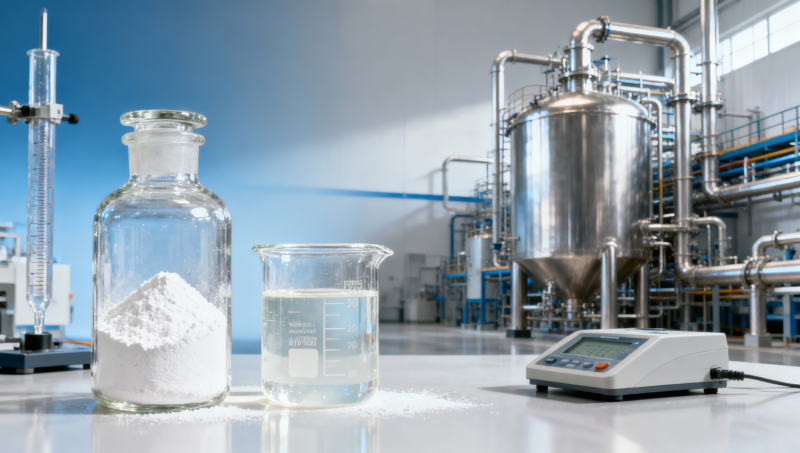
Why does HYDROXYPROPYL METHYL CELLULOSE price vary so widely across suppliers and grades? For technical buyers, quality managers, and distributors, the answer often lies in raw materials, viscosity range, purity, application performance, and factory capability. As a global Detergent-grade HPMC factory and supplier of Redispersible Polymer Powder for construction, Ludong Chemical helps decision-makers better understand how HYDROXYPROPYL METHYL CELLULOSE water-soluble performance and production standards directly influence cost and long-term value.
If you are comparing HPMC quotations and seeing large price gaps, the short answer is this: not all HPMC is equivalent, even when the product name looks the same on paper. In practice, price differences usually reflect a combination of raw material quality, substitution consistency, viscosity control, application-specific performance, manufacturing stability, testing standards, packaging, and supplier service capability. For technical evaluators, business buyers, and distributors, the key is not finding the lowest number per ton, but identifying which offer delivers stable performance, lower usage risk, and better total procurement value.
What buyers are really asking when they compare HPMC prices
Most professional buyers are not simply asking, “Why is one HPMC cheaper than another?” What they really want to know is:
- Will the lower-priced grade perform consistently in production or on-site application?
- Does the quoted viscosity truly match the delivered batch?
- Is the product designed for construction, detergent, chemical, or another specific use?
- Will lower purity or weaker water-soluble performance cause complaints, rework, or instability?
- Can the supplier support large-volume orders with reliable lead time and quality documentation?
These are the right questions. HYDROXYPROPYL METHYL CELLULOSE price is not just about chemistry cost; it is about performance risk, process control, and supply assurance.
Raw materials have a direct impact on HYDROXYPROPYL METHYL CELLULOSE price
One of the biggest reasons HPMC prices vary is the starting raw material and how strictly it is controlled. High-quality cellulose feedstock, cleaner reagents, and tighter process standards generally increase production cost. However, they also improve product stability, purity, and consistency.
Lower-cost material may look attractive in procurement, but it can introduce issues such as:
- inconsistent viscosity
- poor dissolution behavior
- higher impurity levels
- less predictable thickening or water retention performance
- batch-to-batch variation in end-use results
For quality managers and technical teams, this matters because even a small change in cellulose ether quality can affect mortar workability, tile adhesive open time, putty smoothness, detergent thickening, or coating stability. In many cases, a lower quoted price hides a higher operational cost later.
Viscosity range and grade segmentation strongly affect cost
Another major factor is viscosity. HPMC is not a single standardized product. It is supplied across different viscosity ranges and grades for different application systems. A manufacturer with strong process control can offer precise viscosity targeting, such as from 400 to 200,000 CPS, while maintaining consistency from batch to batch.
Why does this matter for price?
- Higher-control production typically requires better reaction management and testing
- Specialized grades for construction, detergent, or chemical applications often need tailored performance
- Tighter viscosity tolerance reduces formulation risk for the customer
In other words, two suppliers may both offer “HPMC,” but one may be selling a broad-tolerance commodity grade while another supplies a more controlled product for demanding formulations. That difference naturally shows up in pricing.
Purity and substitution consistency are often hidden price drivers
Many buyers focus on viscosity first, but purity and substitution uniformity are equally important. A product can meet a nominal viscosity target and still perform poorly if its chemical substitution is unstable or if impurities interfere with dissolution and film-forming behavior.
For technical assessment teams, these hidden factors can influence:
- water retention in dry-mix mortar
- slip resistance and sag control
- thickening efficiency in detergent systems
- surface smoothness and anti-splash behavior
- compatibility with other additives
This is why apparently similar HPMC grades can produce very different real-world results. Better purity and process consistency usually cost more, but they also reduce formulation adjustment time and product complaint risk.
Application performance matters more than the basic specification sheet
One common mistake in HPMC sourcing is buying only by a few headline specifications. In reality, end-use performance is what determines value. Construction-grade HPMC, for example, may be evaluated by water retention, workability, anti-sag performance, open time, and ease of application. Detergent-grade material may be judged by dissolution speed, transparency, salt tolerance, and thickening behavior.
This is where practical supplier capability becomes important. A factory that understands downstream use can help match the right grade to the right formulation, reducing over-specification and under-performance at the same time.
For example, some purchasing teams compare HPMC alongside complementary additives used in broader formulation systems, including materials connected to construction performance or industrial process support such as Lubricants. This wider view can improve overall product selection, especially for distributors and procurement managers handling multiple categories.
Factory capability and quality systems explain many supplier price differences
Price differences are also shaped by manufacturing scale, automation level, quality control systems, and service reliability. A modern producer with integrated production lines, laboratory testing, and stable capacity usually carries a different cost structure than a small trader or outsourced packer.
For enterprise buyers, this distinction is critical. A qualified large-scale manufacturer can offer advantages such as:
- more stable batch consistency
- better traceability and documentation
- reliable lead times for contract supply
- technical support during product selection or trial stages
- stronger ability to meet customized viscosity or application requirements
Jinan Ludong Chemical Co., Ltd., established in 2020, is a large-scale global manufacturing enterprise focused on cellulose ethers, production-trading integration, and comprehensive construction solutions. With annual production capacity of 45,000 tons and HPMC viscosities controllable from 400 to 200,000 CPS, such manufacturing scale and process flexibility can help customers balance price with stable long-term supply.
Why the cheapest HPMC can become the most expensive option
For business evaluators and decision-makers, the most important principle is total cost of ownership. A lower unit price may result in higher actual cost if it causes:
- higher dosage requirements
- more reformulation time
- production instability
- customer complaints
- returns, rework, or field failure
This is especially true in construction chemicals, where small additive differences can affect application performance at scale. If a lower-cost HPMC causes reduced water retention or inconsistent thickening, the indirect cost can easily exceed the original procurement savings.
For distributors, the risk is also commercial. Inconsistent quality can damage customer trust, increase claims, and make repeat business harder to secure.
How to evaluate whether an HPMC price is reasonable
A practical evaluation should go beyond the quote sheet. Buyers should compare suppliers using a structured checklist:
- Confirm application grade: construction, detergent, chemical, or other end use
- Check viscosity range and tolerance: not just nominal CPS
- Assess dissolution and water-soluble performance: especially for process-sensitive formulations
- Review purity and batch consistency: ask for COA, testing methods, and retention samples
- Request trial support: validate real formulation performance, not only lab data
- Evaluate production capacity: can the supplier support long-term stable supply?
- Consider technical service: can they help optimize dosage and application results?
When these factors are reviewed together, a higher price may prove more economical, while a low quote may reveal hidden technical or supply-chain risk.
What this means for technical teams, quality managers, and procurement leaders
For technical evaluators, the main task is to connect HPMC specification with actual application performance. For quality and safety managers, the focus should be consistency, traceability, and controlled manufacturing. For procurement and business leaders, the goal is balancing unit price with long-term supply reliability and downstream commercial value.
That is why HYDROXYPROPYL METHYL CELLULOSE price can vary so much: the market is comparing products that may share a name, but differ significantly in quality level, production control, and practical usefulness.
Conclusion
HYDROXYPROPYL METHYL CELLULOSE price varies widely because HPMC itself varies widely in raw material quality, viscosity control, purity, application performance, factory capability, and service support. For serious buyers, the best decision is rarely based on price alone. It comes from understanding whether the product will perform reliably, reduce operational risk, and support long-term business needs.
If you want to make a smarter comparison, evaluate HPMC based on end-use performance, consistency, and supplier strength rather than headline cost only. That approach leads to better technical outcomes, more stable quality, and stronger procurement value over time.
Send Your Inquiry
We welcome your cooperation and we will develop with you.
