


Lubricants bulk order costs that rarely appear in the quote
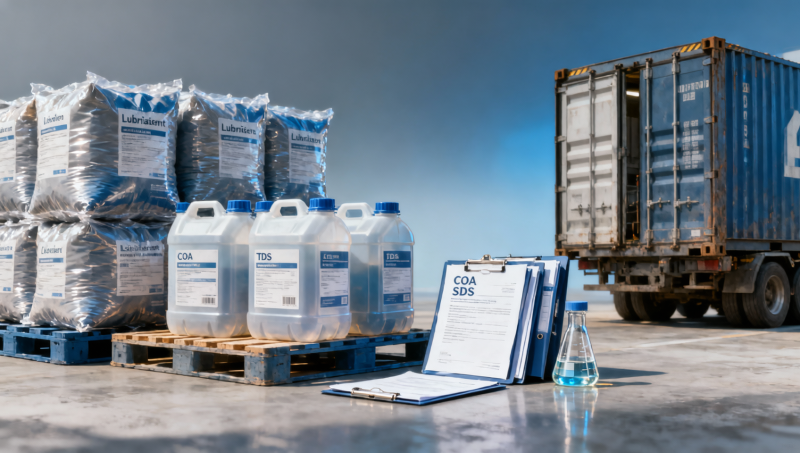
When evaluating Lubricants bulk order pricing, the quoted figure often hides cost drivers tied to raw material quality, packaging, compliance, freight, and performance consistency. For buyers comparing a Detergent-grade HPMC factory, a Polyvinyl Alcohol supplier, or checking HYDROXYPROPYL METHYL CELLULOSE price, understanding these less-visible expenses is essential to avoid margin loss, supply risk, and costly procurement mistakes.
Why the quoted lubricants bulk order price is only the starting point
In chemical procurement, the visible unit price rarely reflects the full landed cost. This is especially true when lubricants, additives, and formulation-support materials are sourced in bulk across regions, packaging types, and performance grades. Technical evaluators often focus on specification matching, while commercial teams compare line-item quotations. The problem is that many hidden costs emerge only after sample approval, production scheduling, shipping confirmation, or customer complaint handling.
For B2B buyers, 5 core cost layers usually sit behind the quote: raw material variability, production consistency, packaging configuration, compliance documentation, and logistics risk. A low ex-works figure can become a high total procurement cost if the batch requires rework, extra testing, delayed customs clearance, or replacement shipments. In projects with 2–4 week delivery windows, even a small mismatch in viscosity stability or moisture control can disrupt downstream manufacturing plans.
This is why supplier capability matters as much as invoice price. Jinan Ludong Chemical Co., Ltd. operates large-scale cellulose ether manufacturing and integrated trading services with annual production capacity reaching 45,000 tons. Its HPMC series can be controlled from 400 to 200,000 CPS, which is relevant for buyers who need stable rheology, repeatable dissolution behavior, and controlled batch-to-batch performance in chemical applications.
For decision-makers, the practical question is not “Who gave the lowest quote?” but “Which supplier gives the lowest total risk-adjusted cost over 3 stages: qualification, delivery, and use?” That shift in evaluation helps purchasing teams avoid hidden expenses that rarely appear on the first quotation sheet.
What experienced buyers usually examine beyond price
- Whether the quoted grade uses consistent raw material sourcing or changes according to market pressure.
- Whether packing is suitable for 25 kg bags, jumbo bags, palletized export loads, or moisture-sensitive routes.
- Whether standard documents such as COA, SDS, TDS, and batch traceability records are available before shipment.
- Whether production lead time remains stable during peak purchasing cycles or when monthly demand increases suddenly.
Which hidden cost drivers most often damage margin?
The first hidden driver is raw material quality spread. Two bulk orders may show nearly identical technical labels, yet their processing behavior can differ because of purity, substitution level, moisture content, or particle size distribution. In lubricants-related chemical systems, inconsistent auxiliary materials can affect dispersion, thickening, anti-sag behavior, or storage stability. That may not appear in the quote, but it appears later in complaint rates, extra trial runs, and production downtime.
The second driver is packaging and handling cost. A supplier may quote an attractive product price but use packing that increases breakage, moisture uptake, pallet instability, or warehouse handling time. For international shipments lasting 15–35 days, weak packaging can increase caking, contamination risk, and unloading losses. These costs are operational, not just financial, and they directly affect distributors and plant inventory teams.
The third driver is compliance and documentation readiness. If documents are incomplete, customs review can be delayed, or plant approval can be postponed. Safety managers and QC departments often need SDS, labeling alignment, lot identification, and sometimes application-specific declarations before release into production. A 1-day document gap can extend to a 7-day receiving delay if the internal approval chain is strict.
The fourth driver is performance consistency across lots. A supplier may pass the first sample but fail to maintain the same result over 3 consecutive shipments. For evaluators comparing detergent-grade HPMC factory options or reviewing HYDROXYPROPYL METHYL CELLULOSE price, long-term reproducibility matters more than a single favorable trial. This is where automated production control and integrated production lines can reduce variance and procurement uncertainty.
A practical cost map for bulk chemical buyers
The table below summarizes common cost items that rarely appear in the initial quote but frequently affect total purchasing cost in chemical supply chains.
For procurement teams, this table shows why a quote should be compared against the full supply scenario. If one supplier is 2% cheaper on paper but creates a 5–8 day receiving delay or extra QC burden, the lower quote becomes commercially weaker.
Risk signals during supplier review
- Specification sheets show only broad ranges without defining test methods or batch controls.
- The supplier cannot explain lead time differences between sample, trial order, and repeat order.
- Freight terms appear flexible, but no practical support is offered for export packing or document preparation.
- Technical communication is fragmented between sales, QC, and production departments.
How should technical and commercial teams evaluate suppliers together?
A recurring B2B problem is that technical teams and commercial teams evaluate different realities. Technical staff prioritize performance, viscosity profile, compatibility, and process fit. Commercial evaluators prioritize price, Incoterms, payment terms, and supply continuity. In successful chemical sourcing, these two views must be merged into one procurement scorecard with at least 4 dimensions: technical fit, quality assurance, delivery reliability, and total cost.
For example, when a buyer compares a Detergent-grade HPMC factory, a Polyvinyl Alcohol supplier, or a multifunctional additives partner, the supplier should be reviewed not only on current quote value but also on the ability to scale from sample quantities to container-level orders. Common transitions include 1–5 kg lab trial, 200–500 kg pilot run, and multi-ton monthly procurement. Each stage reveals different hidden costs and process requirements.
Jinan Ludong Chemical combines production, trading, and integrated services, which is valuable when a buyer needs coordinated support rather than isolated product supply. Its production model integrates traditional process discipline with intelligent automation, helping customers reduce variability risk in routine and larger-volume orders. This is particularly useful for distributors and industrial buyers balancing technical acceptance with long-term supply planning.
When formulation systems involve more than one powder additive, procurement teams also benefit from suppliers that understand cross-product application logic. In some construction and chemical systems, buyers may review complementary materials such as Redispersible Polymer Powder alongside HPMC or related cellulose ethers to optimize performance, storage, and cost structure together rather than item by item.
Supplier comparison table for total-cost evaluation
Use the following comparison logic when a quoted lubricants bulk order price looks competitive but the supply conditions are not fully transparent.
A balanced evaluation model helps enterprise decision-makers avoid the common mistake of approving the lowest quote without measuring internal handling cost. In many chemical purchasing cases, the supplier with the most predictable execution creates the best annual cost position.
A 4-step internal review process
- Confirm product function and key process parameters before asking for final pricing.
- Request sample, technical data, and at least one clear batch consistency reference.
- Compare landed cost under the same packing, lead time, and document scope.
- Approve supplier only after technical, QC, and commercial sign-off are aligned.
What should QC, safety, and distributors check before placing a bulk order?
Quality and safety teams should treat a lubricants bulk order as a controlled chemical supply event, not only a commercial purchase. Before release, at least 6 review points are practical: identification, specification fit, packaging condition, storage recommendation, document completeness, and traceability. These checks matter even more when goods are shipped internationally or stored for several weeks before use.
Distributors and regional agents should also evaluate turnover risk. A cheaper product can become expensive if the shelf handling window is narrow, local relabeling is needed, or downstream customers require repeated technical explanations. In many markets, the hidden cost is not the product itself but the after-sales burden created by unclear documentation and inconsistent field performance.
For warehouse and safety management, storage conditions such as dry environment control, sealed packaging, and FIFO discipline are basic but important. A moisture-sensitive powder stored under unstable conditions for 30–90 days may no longer behave like the approved sample. That gap becomes a quality claim, even when the root cause is storage mismatch rather than formula design.
For application-oriented buyers, cross-checking related materials is also useful. If the project requires formulation synergy, products such as Redispersible Polymer Powder can be reviewed in parallel with cellulose ethers to reduce compatibility surprises during scale-up and customer validation.
Pre-order checklist that reduces downstream loss
- Verify whether the quoted specification includes acceptable tolerance ranges, not just nominal values.
- Confirm bag type, sealing method, pallet arrangement, and whether export wrapping is included.
- Request COA, SDS, TDS, and labeling format before shipment booking, not after dispatch.
- Ask for normal lead time and peak-season lead time separately; a 7-day promise may become 21 days under load.
- Clarify claim-handling steps, including sample retention, response timeline, and replacement conditions.
Common mistakes that increase hidden procurement cost
A frequent mistake is approving a supplier based on one successful sample without confirming repeatability over at least 2–3 lots. Another is comparing prices under different packaging assumptions, which makes freight and handling costs impossible to judge fairly. Some buyers also skip document review until the cargo is already on the water, which shifts a preventable issue into an urgent logistics problem.
Commercially, another costly mistake is treating MOQ as the main negotiation point while ignoring schedule flexibility. A lower MOQ may look attractive, but if the supplier cannot support replenishment within the required 2–4 week planning cycle, the buyer may still face emergency sourcing at a higher overall cost.
FAQ for buyers comparing lubricants bulk order costs and chemical suppliers
How can I compare suppliers if all quotes look similar?
Put all suppliers on the same evaluation basis: same Incoterm, same packing unit, same testing scope, same document list, and same expected lead time. Then compare 4 items together: specification stability, delivery window, compliance response speed, and issue-handling process. Similar prices often hide very different execution risks.
What lead time should bulk chemical buyers usually expect?
Lead time depends on product grade, order volume, and packaging. In many chemical supply scenarios, standard preparation may fall within 7–15 days, while larger or customized export orders may require 2–4 weeks. Buyers should always ask for both normal and peak-period lead times to avoid relying on best-case assumptions.
Why does batch consistency matter more than a low sample price?
Because the real financial exposure appears during repeat orders. A low sample price does not protect against line stoppage, reformulation cost, rejected finished goods, or distributor complaints. For technical and commercial teams, consistency across multiple shipments is usually a better predictor of annual procurement cost than the first sample quote.
What documents should be requested before confirming the order?
At minimum, request TDS, SDS, COA format, packaging details, storage advice, and lot identification logic. If the supply chain crosses borders or regulated industries, ask early about label content and document timing. This reduces internal approval delay and helps safety teams prepare receiving control in advance.
Why work with a supplier that understands cost, consistency, and delivery together?
Chemical procurement works best when technical performance, commercial planning, and delivery execution are managed together. Jinan Ludong Chemical offers a combination of manufacturing scale, integrated solutions, and application-relevant product experience in cellulose ethers and related materials. With annual capacity of 45,000 tons and controllable HPMC viscosity from 400 to 200,000 CPS, the company is positioned to support buyers who need stable supply rather than isolated spot-price transactions.
For technical evaluators, the value lies in clearer parameter discussion, product matching, and batch consistency support. For commercial teams, the value lies in practical coordination around lead time, packing, and shipment planning. For QC and safety teams, the value lies in better preparation of technical documents, traceability, and storage-related communication. For distributors, the value is lower after-sales friction and more predictable repeat sales support.
If you are assessing lubricants bulk order costs, comparing a Detergent-grade HPMC factory, reviewing HYDROXYPROPYL METHYL CELLULOSE price, or building a broader chemical sourcing plan, a detailed discussion before quotation can prevent expensive misunderstandings later. Many hidden costs can be reduced simply by aligning specification, packing, documents, and delivery expectations at the start.
Contact us to discuss specific parameters, application fit, sample support, packing options, normal and peak lead times, documentation scope, and quotation structure. A focused pre-order review can help your team choose the right grade, reduce supply risk, and make bulk purchasing decisions with more confidence.
Send Your Inquiry
We welcome your cooperation and we will develop with you.
