


Do automotive lubricants affect fuel economy over time?
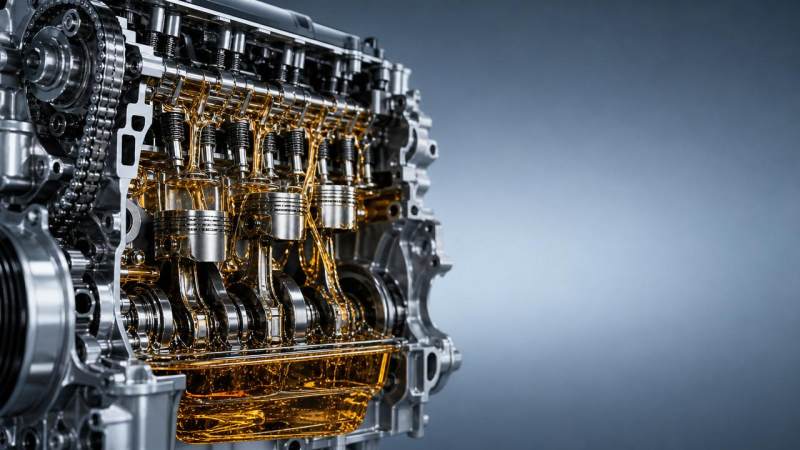
Do Lubricants for automotive really influence fuel economy as vehicles age? The answer is more complex than many drivers expect. From viscosity stability and friction reduction to contamination control and oil degradation, lubricant performance can affect how efficiently an engine runs over time. This article explores the key factors behind that relationship and what they mean for long-term vehicle efficiency.
For information researchers, procurement teams, and technical buyers in the chemicals value chain, this topic goes beyond routine maintenance. Fuel economy over 50,000 km, 100,000 km, or even 200,000 km is shaped by lubricant chemistry, additive balance, service intervals, and contamination management. In practical terms, the right lubricant strategy can support lower friction, cleaner engine internals, and more stable thermal behavior as vehicles age.
Within the broader chemicals industry, understanding formulation stability is essential. Manufacturers such as Jinan Ludong Chemical Co., Ltd. operate in a field where performance consistency, controlled viscosity ranges, and industrial-scale production matter. Although Ludong Chemical is known for cellulose ether solutions used in construction and industrial systems, the same disciplined approach to chemical production, process control, and application-specific performance is highly relevant when evaluating high-function materials across sectors, including lubricants for automotive use.
How Lubricants for automotive influence fuel economy over time
Fuel economy is affected by many variables, but lubricants for automotive applications play a measurable role because they directly influence friction, pumping losses, deposit control, and wear progression. The impact is often modest in the short term, yet over 5,000 km to 15,000 km service intervals and repeated heat cycles, small differences can accumulate.
Viscosity stability and internal drag
Engine oil must maintain a stable viscosity across cold starts, highway temperatures, and stop-and-go traffic. If a lubricant thickens excessively at low temperatures, the engine needs more energy during startup. If it thins too much at operating temperatures around 90°C to 120°C, the oil film may weaken, increasing metal-to-metal contact and friction losses.
Modern low-viscosity grades such as 0W-20, 5W-20, and 5W-30 are often selected to reduce hydrodynamic resistance. However, fuel economy gains depend on matching the lubricant to engine design, tolerances, and duty cycle. An oil that is too thin for a high-mileage engine may reduce protection, offsetting any efficiency benefit within 10,000 km to 20,000 km.
Why viscosity loss matters in aging engines
As engines age, clearances may change and blow-by may increase. Shear stress can permanently reduce viscosity in lower-quality oils, especially under turbocharged or high-load operation. Once that happens, lubricants for automotive engines may no longer provide the same film strength, and fuel efficiency can decline because friction and wear rise together.
Additives, cleanliness, and oxidation control
Base oil quality is only part of the story. Additive systems usually include detergents, dispersants, anti-wear agents, antioxidants, and friction modifiers. These chemicals help control soot, sludge, varnish, and oxidation over service periods that may range from 6 months to 12 months in normal operation.
When oxidation resistance is poor, oil thickens, deposits form, and ring movement can become less efficient. That increases friction and can affect combustion sealing. In real operating conditions, even a 1% to 3% efficiency difference over long mileage can matter for fleet operators or cost-sensitive vehicle owners.
The table below outlines the main lubricant-related mechanisms that can influence long-term fuel economy and what buyers should examine when comparing products.
The key takeaway is that fuel economy is rarely determined by viscosity grade alone. Buyers should assess a full formulation package, including oxidation stability, detergent performance, and contamination tolerance, especially for engines exposed to high temperatures, short trips, or extended drain practices.
Friction modifiers and boundary lubrication
At startup and under mixed lubrication conditions, friction modifiers become especially important. These additives create a thin protective layer on metal surfaces, reducing boundary friction where full oil film separation is not yet established. In urban driving with 10 to 20 starts per day, that effect may be more relevant than in stable highway use.
Not all lubricant chemistries perform equally well over time. Additive depletion can gradually reduce this low-friction benefit, which is why drain interval discipline matters. For information researchers comparing lubricants for automotive fleets, retention of performance after repeated thermal cycles is a stronger indicator than initial performance alone.
What changes as vehicles age and mileage increases
A new engine and a 150,000 km engine do not place the same demands on lubricants. Over time, seal behavior, piston ring wear, injector condition, and combustion by-products can all shift. These changes alter how a lubricant flows, degrades, and protects, which in turn influences fuel economy.
High mileage engines often need a different balance
In high-mileage engines, oil consumption may rise and compression efficiency may change. In such cases, a very low-viscosity formulation that worked well at 20,000 km may not be the best choice at 180,000 km. The objective shifts from chasing the lowest possible drag to balancing friction control with sealing, wear protection, and volatility management.
This is where technical evaluation becomes more nuanced. Lubricants for automotive service should be selected according to engine age, manufacturer recommendation, load profile, ambient climate, and maintenance history. A one-grade-fits-all mindset can create long-term inefficiencies.
Common operating patterns that accelerate lubricant stress
- Short trips under 15 minutes, where oil rarely reaches full operating temperature
- Frequent idling in urban traffic, increasing oxidation and fuel dilution risk
- Turbocharged use with repeated high-temperature cycles above 100°C
- Dusty or humid environments that challenge air filtration and contamination control
Each of these patterns can reduce lubricant life and gradually affect fuel efficiency. For that reason, real-world service conditions are often more important than the label claim on the container.
The following comparison helps researchers understand how lubricant selection priorities tend to evolve with mileage and operating condition.
This staged approach helps avoid a common mistake: assuming the newest or thinnest product automatically delivers the best long-term efficiency. In aging vehicles, a stable and appropriate lubricant can outperform a theoretically more efficient oil that degrades too quickly in service.
Chemical contamination and degradation pathways
Lubricants can degrade through oxidation, nitration, additive depletion, water ingress, fuel dilution, and particulate loading. These pathways are chemical and mechanical at the same time. Fuel dilution can lower viscosity; oxidation can raise it; insolubles can increase abrasive wear. All three pathways can reduce engine efficiency over periods as short as a few thousand kilometers.
For buyers in the chemicals sector, this is a useful reminder that long-term performance is a formulation management issue. The same technical mindset used in rheology control or viscosity consistency in other specialty chemicals applies here as well. In industrial materials, for example, stable thickening behavior and application performance are also central concerns when evaluating products such as Methyl Hydroxyethyl Cellulose (HEMC) for process-sensitive formulations.
How to evaluate lubricants for automotive applications as a buyer or researcher
For information-oriented buyers, the right question is not simply whether a lubricant affects fuel economy, but under what conditions, by how much, and for how long. A sound assessment method should combine formulation review, service interval analysis, and operational fit.
A practical 5-point evaluation framework
- Confirm the viscosity grade recommended by the engine manufacturer.
- Review oxidation resistance and shear stability claims over the target drain interval.
- Assess detergent and dispersant performance for the expected contamination profile.
- Match the lubricant to climate, load, and driving cycle, not just laboratory expectations.
- Monitor used oil condition or service behavior after 5,000 km to 10,000 km where possible.
This framework is particularly useful for fleet managers, maintenance coordinators, and technical sourcing teams that compare multiple products. It shifts the decision from basic branding to measurable chemical performance and operational suitability.
What to ask suppliers
When screening lubricants for automotive use, ask for viscosity retention behavior, volatility tendencies, drain interval guidance, and storage stability. Also confirm compatibility with turbocharged engines, direct injection systems, or emission after-treatment devices where relevant. Four to six focused technical questions can reveal more than a general brochure.
Common misconceptions that distort fuel economy decisions
One misconception is that any synthetic oil automatically improves fuel economy indefinitely. In reality, performance retention depends on additive chemistry, contamination resistance, and actual operating conditions. Another misconception is that longer drain intervals always save money. If oil degradation accelerates after a threshold, delayed replacement can increase fuel use and wear-related costs.
A third misconception is ignoring the age of the engine. A lubricant that supports excellent efficiency in a new engine may be less suitable after 120,000 km if consumption rises or deposits are already present. Decisions should follow engine condition, not marketing simplicity.
Why chemical manufacturing discipline matters in performance materials
Although automotive lubricants and cellulose ethers serve different end uses, they share a common industrial logic: consistency matters. In both cases, buyers value controlled production, dependable viscosity behavior, and flexible supply capability. That is why the broader chemicals manufacturing background of a supplier is relevant in technical procurement discussions.
Jinan Ludong Chemical Co., Ltd., established in 2020, has developed large-scale production, trading, and integrated service capabilities centered on cellulose ethers. Its product portfolio includes HPMC, RDP, and HPS, while annual production capacity has reached 45,000 tons. For B2B buyers, these details reflect an emphasis on process stability, scalable manufacturing, and application-focused chemical solutions.
That manufacturing discipline is important when evaluating any specialty chemical for performance-sensitive applications. Whether the requirement involves rheology control in dry-mix systems or consistency across viscosity ranges from 400 to 200,000 CPS, technical reliability supports better downstream results. The same procurement mindset also helps researchers compare materials such as Methyl Hydroxyethyl Cellulose (HEMC) in related industrial formulation contexts.
Procurement signals that deserve attention
- Stable production capacity and clear product segmentation
- Ability to support multiple application scenarios with technical consistency
- Practical communication on viscosity ranges, handling, and service response
- Integrated supply and trading support for global B2B operations
For information researchers, these signals help separate commodity-style selling from solution-oriented chemical supply. In long-cycle industrial purchasing, that distinction often matters as much as unit price.
Actionable recommendations for long-term efficiency
If the goal is to preserve fuel economy over time, use lubricants for automotive applications that match the engine design and operating profile, not just the initial efficiency target. Monitor service intervals realistically, especially when the vehicle exceeds 100,000 km or operates in severe urban, dusty, or high-load conditions.
Focus on three priorities: viscosity stability, deposit control, and contamination management. These factors are often more decisive over 12 months or 20,000 km than a small theoretical fuel-saving claim made at the start of a drain interval.
For businesses evaluating chemical products and performance materials, a supplier with scalable manufacturing, controlled production systems, and application-oriented support can reduce technical risk in procurement. If you want to explore material performance, compare industrial formulation options, or discuss solution-based chemical sourcing, contact us now to get a tailored recommendation and learn more about suitable products for your application.
Send Your Inquiry
We welcome your cooperation and we will develop with you.
