


Why tile adhesive needs redispersible polymer powder now
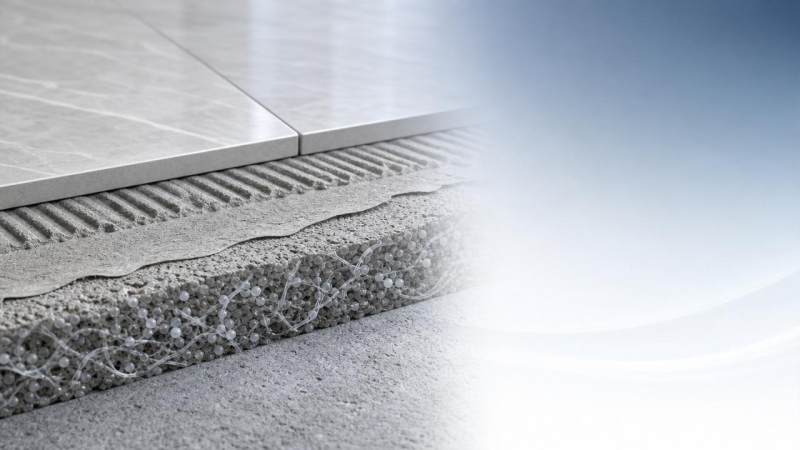
Modern tile installation demands stronger bonding, better flexibility, and longer durability than ever before. That is why Redispersible Polymer Powder for tile adhesive has become essential in today’s construction industry. For researchers comparing materials and performance, understanding how this additive improves adhesion, water resistance, and workability is the key to choosing reliable tile adhesive solutions.
For most information-oriented readers, the core answer is straightforward: tile adhesive now needs redispersible polymer powder because modern substrates, larger tiles, thinner application methods, and stricter durability expectations have pushed cement-only systems beyond their practical limits.
In other words, the issue is no longer whether polymer modification is useful. The real question is how Redispersible Polymer Powder for tile adhesive changes performance, where it creates measurable value, and how to judge whether a formulation is truly fit for service.
Why traditional tile adhesive formulations are no longer enough
Older tile setting methods relied heavily on thick cement mortar beds, smaller ceramic tiles, and relatively stable substrates. Under those conditions, basic mineral bonding often delivered acceptable results, even when performance margins were limited.
Today, however, installation conditions are far more demanding. Projects increasingly use porcelain tiles, large-format panels, low-absorption surfaces, heated floors, lightweight walls, renovation substrates, and faster installation schedules that leave less room for failure.
These changes matter because plain cement-based adhesive has inherent limitations. It can offer compressive strength, but it does not naturally provide enough flexibility, tensile adhesion, deformation tolerance, or water resistance for many current tile applications.
Without polymer modification, tile adhesive is more likely to become brittle after curing. That brittleness increases the risk of debonding when the substrate shrinks, expands, vibrates, or experiences thermal cycling during long-term service.
Another challenge is reduced adhesion to difficult surfaces. Dense porcelain tiles and smooth substrates absorb little water, which makes mechanical anchoring harder. As tile absorption falls, the adhesive needs stronger film-forming and interfacial bonding support.
Workability also becomes a competitive factor. Contractors expect smooth spreading, good wetting, anti-sag behavior on walls, and adequate open time. A product that bonds well in the lab but performs poorly during installation may still fail commercially.
What redispersible polymer powder actually does inside tile adhesive
Redispersible polymer powder is a spray-dried polymer emulsion powder that redistributes in water during mixing. Once blended into cement-based systems, it forms a polymer network that works alongside cement hydration products.
This combined structure is the reason it has become so important. Cement contributes rigidity and strength, while the polymer phase improves flexibility, cohesive strength, adhesion to challenging surfaces, and resistance to crack initiation.
When water evaporates and hydration progresses, the polymer particles coalesce into a continuous film. That film bridges pores and microcracks, strengthening contact between adhesive and substrate as well as adhesive and tile.
The result is not simply “stronger glue.” It is a more balanced material system. Good Redispersible Polymer Powder for tile adhesive improves bonding under dry and wet conditions, reduces brittle behavior, and helps the adhesive tolerate real jobsite movement.
This mechanism is especially important for porcelain tile systems. Because porcelain has low porosity, cement alone struggles to create durable interfacial contact. The polymer helps wet the surface and maintain effective adhesion over time.
In practical terms, the additive changes both fresh-state and hardened-state behavior. Researchers and specifiers should assess both sides, since installation quality and long-term service life are equally important in tile adhesive selection.
Why the demand is rising now rather than remaining optional
The short answer is that construction expectations have shifted faster than traditional formulations. Redispersible polymer powder is no longer a premium extra in many cases; it has become a functional necessity for meeting performance targets.
One major reason is tile evolution. Large-format and thin porcelain tiles are heavier, stiffer, and less forgiving than conventional ceramic formats. They place higher stress on the adhesive layer during placement, curing, and service.
Another reason is substrate complexity. Installers now work over concrete, cement board, gypsum-based boards, insulation layers, old tiles, and mixed renovation surfaces. Each substrate responds differently to moisture, movement, and load transfer.
There is also less tolerance for callback risk. Commercial and residential buyers increasingly expect tiled surfaces to remain stable in bathrooms, kitchens, facades, balconies, and heated systems without hollow spots, slips, or edge lifting.
At the same time, labor efficiency matters more than before. Adhesives must support easier mixing, smoother troweling, wider open time windows, and more reliable tile positioning. Polymer modification helps improve that installation consistency.
For these reasons, Redispersible Polymer Powder for tile adhesive has moved from a formulation option to a central performance component in many modern construction systems, especially where durability and compliance standards are high.
Which performance improvements matter most to researchers and buyers
Information-seeking readers are usually not looking for generic claims. They want to know which improvements are practical, measurable, and relevant to actual project risk. Several performance areas deserve the most attention.
First is adhesion strength, particularly tensile adhesion after standard curing, water immersion, heat aging, and freeze-thaw exposure where applicable. A reliable adhesive must maintain bond integrity under more than ideal dry laboratory conditions.
Second is deformability and crack resistance. Tile systems are exposed to shrinkage, thermal movement, structural vibration, and substrate deflection. Polymer modification helps the adhesive absorb stress rather than transferring it directly into failure zones.
Third is water resistance. Bathrooms, kitchens, exteriors, and wet service environments challenge cementitious materials continuously. A better polymer network can reduce water sensitivity and help preserve bond quality after repeated moisture exposure.
Fourth is open time and workability retention. Adhesive that skins over too quickly may lose bonding efficiency before the tile is placed. Polymer support helps maintain usable surface tack and installation reliability within the intended working window.
Fifth is anti-slip performance on vertical applications. Wall tile systems require controlled rheology and good initial grab. While multiple additives contribute, polymer modification often plays an important role in balanced placement behavior.
Finally, overall durability matters more than any single test number. The best formulations do not only pass initial benchmarks; they sustain performance across varying jobsite conditions, substrate differences, and environmental cycles over time.
How to judge the value of Redispersible Polymer Powder for tile adhesive
Not all polymer powders produce the same result. Buyers comparing sources should avoid assuming that any RDP will automatically provide equivalent tile adhesive performance. Polymer chemistry, dosage, compatibility, and formulation design all matter.
A useful first step is to define the target application. Interior wall tile, floor tile, porcelain tile, large-format systems, exterior use, and heated floor use each place different demands on adhesion, flexibility, and water resistance.
Next, review the balance between polymer and other key additives. Tile adhesive performance depends on the interaction of RDP with cellulose ether, fillers, cement type, retarders, and rheology modifiers, not on one ingredient in isolation.
For example, cellulose ethers such as HPMC influence water retention and workability, while polymer powder enhances film formation and flexibility. Poor balance between these components can create either weak bonding or difficult application behavior.
Manufacturers with integrated additive expertise often have an advantage because they understand formulation synergy rather than just single-product supply. This matters when customers need repeatable results across different climates and raw material conditions.
As a broader example of formulation specialization across construction and chemical applications, some suppliers also serve adjacent sectors with products such as Detergent-grade HPMC, showing diversified cellulose ether capabilities.
When evaluating value, readers should also consider consistency. A technically sound product loses practical value if batch variation affects viscosity behavior, dispersibility, or final adhesive strength from one production lot to another.
What problems can happen when polymer content is too low or poorly matched
One common mistake is selecting a low-cost adhesive formulation with insufficient polymer loading for the tile type or service environment. The short-term savings may be outweighed by performance failures and expensive remediation later.
Low polymer content can result in inadequate adhesion to dense tiles, reduced flexibility, poorer impact tolerance, and lower retention of bond strength after water exposure. These weaknesses may not appear immediately during installation.
Another problem is mismatch between polymer type and formulation needs. A powder optimized for one mortar application may not deliver ideal open time, wetting, or deformation behavior in tile adhesive systems.
Improper compatibility with cellulose ether can also affect fresh-state properties. The adhesive may feel too sticky, too short, too loose, or difficult to spread, reducing labor efficiency and increasing the probability of inconsistent tile coverage.
In hardened systems, weak polymer performance may contribute to edge lifting, hollow bonding areas, wall slip complaints, or brittle failure under thermal cycling. These are exactly the risks modern buyers want to avoid.
That is why technical evaluation should go beyond brochure claims. Looking at standard test data, application feedback, formulation guidance, and supplier manufacturing stability provides a much better basis for decision-making.
Why supplier capability matters as much as the raw material itself
For information researchers, one key insight is that additive quality is tied to production capability. A reliable supplier is not only selling a powder; it is supplying consistency, technical understanding, and support for application success.
Jinan Ludong Chemical Co., Ltd., established in 2020, operates as a large-scale global manufacturing enterprise focused on cellulose ethers, trading, and integrated services for construction-related solutions and material performance needs.
Its portfolio includes HPMC, redispersible polymer powder, and hydroxypropyl starch ether, which reflects the multi-additive nature of modern dry-mix systems. That breadth is useful because tile adhesive performance depends on formulation interaction.
The company emphasizes both traditional process knowledge and intelligent automated production, aiming to meet diverse global customer needs with flexibility. For buyers, this combination often signals stronger control over repeatability and scalable supply.
Its annual production capacity of 45,000 tons, including HPMC series with controllable viscosities from 400 to 200,000 CPS, also suggests a capacity base that can support customers needing stable volume and tailored performance windows.
For researchers, this matters because a supplier with integrated production lines can often support product selection more effectively than a trader offering limited insight into manufacturing control or additive compatibility behavior.
In some cases, buyers comparing broader chemical expertise may also encounter products such as Detergent-grade HPMC, but tile adhesive decisions should remain focused on construction performance requirements first.
How to think about application scenarios when selecting a tile adhesive system
Different use cases require different performance priorities. Readers can make better judgments by linking polymer needs to the actual service conditions rather than asking whether one universal adhesive can do everything well.
For interior ceramic wall tile in dry areas, moderate polymer modification may be sufficient if the substrate is stable and tile absorption is not extremely low. Cost efficiency may weigh more heavily here.
For porcelain wall and floor tile, polymer demand is typically higher. Low tile absorption and greater stress concentration mean the adhesive must deliver stronger interfacial bonding and more dependable deformation tolerance.
For large-format tiles, the challenge includes weight, dimensional rigidity, and coverage quality. The adhesive must wet effectively, resist sag where relevant, and maintain bond integrity over a broad contact area.
For wet areas and exterior use, resistance to water, temperature variation, and long-term environmental stress becomes critical. This is where polymer quality and proper formulation balance can significantly affect service reliability.
For renovation over existing substrates, flexibility and adhesion versatility become especially important. Legacy surfaces are often uneven, mixed, or movement-prone, making polymer modification central rather than secondary.
What readers should conclude before comparing suppliers or formulations
If you are researching modern tile adhesive materials, the main conclusion is clear: redispersible polymer powder is essential because current tile systems demand more than cement alone can consistently deliver.
The additive improves adhesion, flexibility, water resistance, crack tolerance, and installation behavior in ways that directly address today’s most common failure risks. Its importance rises further with porcelain, large-format, exterior, and renovation applications.
However, the best decision is not simply to choose any adhesive that mentions polymer content. Real value depends on polymer type, dosage, compatibility with cellulose ethers, manufacturing consistency, and fit with the intended application scenario.
That is why technical buyers and researchers should compare performance evidence, not just marketing language. Ask how the adhesive behaves after water exposure, under movement stress, during open time, and across different substrate conditions.
When those questions are answered well, the role of Redispersible Polymer Powder for tile adhesive becomes easy to understand: it is not just an additive for improvement, but a key enabler of reliable modern tile installation.
Send Your Inquiry
We welcome your cooperation and we will develop with you.
