


EU Launches Anti-Circumvention Probe on Chinese Hydraulic Components
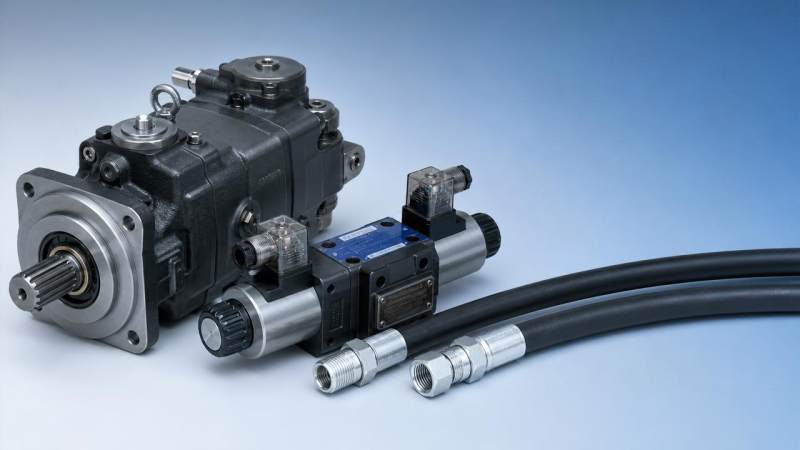
The European Commission launched an anti-circumvention investigation on May 6, 2026, targeting hydraulic pumps, hydraulic valves, and other key components originating from China — particularly those routed through third countries such as Vietnam and Turkey for simple assembly before export to the EU. This action directly affects enterprises in construction machinery, agricultural equipment, material handling systems, and industrial hydraulics supply chains, due to its implications for customs clearance, compliance costs, and traceability requirements.
Event Overview
On May 6, 2026, the European Commission officially published notice of an anti-circumvention investigation concerning hydraulic components classified under HS codes 8412 and 8481. The probe focuses on whether Chinese-origin hydraulic pumps and valves are being transshipped via third countries — including but not limited to Vietnam and Turkey — through minimal assembly or processing to avoid existing EU anti-dumping duties. Over 200 types of mechanical core parts fall within the scope of this investigation.
Which Subsectors Are Affected
Direct Trading Enterprises
Companies exporting hydraulic components from China to the EU — or importing them into the EU — face immediate uncertainty in customs classification, duty applicability, and documentation validity. Impact manifests in delayed clearance, increased scrutiny of origin declarations, and potential retroactive duty assessments if circumvention is confirmed.
Component Manufacturing Enterprises
Firms engaged in final assembly or sub-assembly of hydraulic systems — especially those relying on Chinese-sourced core parts (e.g., pumps, directional control valves) integrated abroad — must now verify whether their production steps meet EU thresholds for substantial transformation. Minimal assembly operations may no longer suffice to confer new country-of-origin status.
Supply Chain & Logistics Service Providers
Third-party logistics operators, freight forwarders, and customs brokers handling shipments involving HS 8412/8481 goods from China via intermediate jurisdictions will experience heightened documentation demands. They must ensure traceability across tiers — including raw material sourcing, work-in-process records, and final assembly location — to support origin claims.
OEMs and Equipment Integrators
Manufacturers integrating hydraulic components into larger machinery (e.g., excavators, harvesters, forklifts) must reassess supplier declarations and audit trails. EU importers may require deeper process transparency — beyond commercial invoices — to demonstrate compliance with origin rules during post-clearance audits.
What Relevant Enterprises or Practitioners Should Focus On and How to Respond Now
Monitor Official Updates and Scope Clarifications
The European Commission’s Notice of Initiation outlines preliminary scope but leaves room for technical interpretation — especially regarding what constitutes ‘simple assembly’. Stakeholders should track upcoming notices on sampling, questionnaire deadlines, and any expansion of product coverage under HS 8412/8481.
Review Current Origin Declarations and Process Documentation
Enterprises using Chinese hydraulic components should immediately audit existing origin certificates, bills of materials, and process flow records — particularly for shipments routed through Vietnam, Turkey, or other common transit hubs. Focus on documenting labor content, value addition, and technical complexity of assembly steps.
Distinguish Between Policy Signal and Enforceable Requirement
This investigation is a procedural step — not a final determination. It does not yet impose new duties or penalties. However, it signals increased EU enforcement attention on indirect trade routes for sensitive mechanical parts. Businesses should treat it as a trigger for internal compliance review, not as an immediate operational halt.
Prepare Proactive Engagement with EU Importers and Customs Advisors
Suppliers should initiate transparent dialogue with EU-based customers about current origin substantiation methods. Where gaps exist, consider engaging qualified EU customs consultants to pre-assess assembly processes against EU substantial transformation criteria — ahead of formal Commission inquiries.
Editorial Perspective / Industry Observation
Observably, this probe reflects a broader shift in EU trade enforcement: moving beyond direct exports to scrutinize layered supply chain configurations. Analysis shows the focus on HS 8412/8481 items — rather than finished machines — suggests targeted concern over component-level trade diversion, not broad-sector protectionism. From an industry perspective, it functions less as an imminent regulatory outcome and more as a warning signal about tightening scrutiny on origin integrity in midstream manufacturing. Continuous monitoring is warranted, especially as parallel investigations in related sectors (e.g., electric motors, bearings) show similar patterns of upstream component targeting.
Conclusion
This investigation underscores that origin compliance for hydraulic components can no longer be treated as a static documentation exercise. It highlights growing interdependence between tariff classification, production process transparency, and cross-border logistics design. Currently, it is more appropriately understood as a procedural escalation demanding proactive verification — not a finalized trade barrier.
Information Sources
Main source: European Commission Notice of Initiation (Official Journal of the European Union, C-series, May 6, 2026).
Note: Further developments — including sampling decisions, deadline extensions, or scope adjustments — remain subject to official publication and ongoing observation.
Send Your Inquiry
We welcome your cooperation and we will develop with you.
