


CCMT2026 Highlights Shandong’s Precision CNC Breakthrough
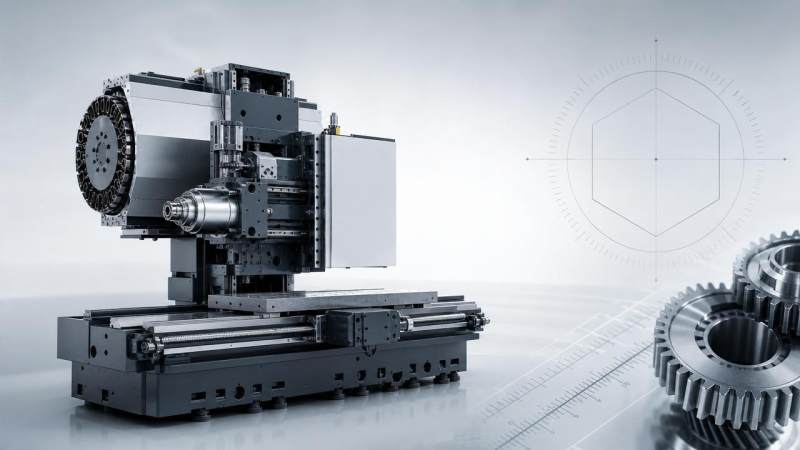
At the 14th China International Machine Tool Show (CCMT2026), held in Shanghai from May 5–8, 2026, high-precision CNC machine tools manufactured in Shandong Province—such as horizontal machining centers with ±1.2 μm repeatability accuracy—emerged as focal points for procurement interest from European, U.S., and Southeast Asian buyers. This development signals a shift in overseas sourcing priorities toward domestically produced mid-to-high-end machine tools that now comply with ISO 230-2:2023, raising implications for international trade, precision manufacturing, and industrial automation sectors.
Event Overview
The 14th China International Machine Tool Show (CCMT2026) took place in Shanghai from May 5 to May 8, 2026. During the exhibition, several CNC machine tools developed and manufactured in Shandong achieved verified repeat positioning accuracy of ±1.2 μm. These machines received on-site factory audit invitations from purchasing representatives based in Europe, the United States, and Southeast Asia. It was publicly confirmed that selected Chinese mid-to-high-end machine tools have passed validation under the updated ISO 230-2:2023 standard for machine tool testing. The exhibitors highlighted shorter lead times, improved cost-performance ratios, and localized technical service responsiveness as key advantages over comparable imported models from Japan and Germany.
Impact on Specific Industry Segments
Direct Trading Enterprises
Trading firms engaged in cross-border machinery export or import may face revised buyer expectations regarding technical compliance and verification documentation. Impact manifests in increased demand for ISO 230-2:2023-aligned test reports, tighter pre-shipment verification requirements, and potential renegotiation of delivery timelines to accommodate local service commitments.
Component & Raw Material Suppliers
Suppliers providing critical subsystems—such as linear guides, spindles, or numerical control units—to domestic machine tool OEMs may observe shifting order profiles. Impact includes possible volume adjustments tied to higher-specification builds, and heightened emphasis on traceability and metrological certification to support end-product ISO 230-2:2023 validation.
Metalworking & Contract Manufacturing Firms
Firms relying on imported machine tools for high-tolerance production may reassess total cost of ownership calculations. Impact centers on recalibrating procurement criteria—notably lead time, post-purchase technical support latency, and compatibility with existing maintenance workflows—when evaluating alternatives from Shandong-based suppliers.
Distribution & Channel Service Providers
Regional distributors and service integrators supporting foreign-branded machine tools in emerging markets could encounter competitive pressure. Impact involves re-evaluating value propositions related to spare parts availability, technician certification depth, and responsiveness windows—especially where local Shandong OEMs now offer direct technical support networks.
Key Considerations for Relevant Enterprises and Practitioners
Monitor official updates on ISO 230-2:2023 implementation guidance
Analysis shows that while ISO 230-2:2023 adoption is confirmed for select models, formal regulatory alignment across China’s national standards framework (e.g., GB/T equivalents) remains pending. Enterprises should track announcements from SAC/TC22 and CNAS for authoritative interpretation and transitional timelines.
Assess exposure to specific product categories and regional procurement shifts
Observably, interest has concentrated on horizontal machining centers and other multi-axis platforms used in aerospace, automotive powertrain, and medical device component manufacturing. Firms active in these end markets should review current supplier portfolios against newly demonstrated capabilities from Shandong-based manufacturers.
Distinguish between verified performance claims and broader market readiness
Current more relevant understanding is that ISO 230-2:2023 validation applies to specific exhibited units—not yet across full production lines or model families. Procurement decisions should differentiate between one-off demonstration results and sustained production-level consistency data.
Prepare technical documentation and service coordination protocols in advance
For trading and distribution entities, aligning internal QA checklists, calibration record templates, and service escalation pathways with ISO 230-2:2023 reporting conventions can reduce friction during buyer due diligence—particularly when responding to factory audit requests from overseas purchasers.
Editorial Perspective / Industry Observation
This development is best understood as an early-stage signal—not yet a systemic shift—in global sourcing dynamics for precision machine tools. Observably, CCMT2026 did not report wholesale displacement of Japanese or German equipment, but rather targeted interest in specific performance tiers where Shandong-made systems now meet internationally recognized metrological benchmarks. From an industry perspective, the significance lies less in immediate substitution volume and more in the erosion of long-held assumptions about the reliability ceiling of domestically produced CNC platforms. Continued attention is warranted because verification against ISO 230-2:2023 represents a threshold capability—one that, once established across multiple OEMs and product lines, could reshape tender criteria, insurance underwriting terms, and even financing conditions for capital equipment in developing markets.
Conclusion
CCMT2026 does not indicate that Shandong-made machine tools have broadly replaced imported alternatives, nor does it suggest uniform readiness across all domestic manufacturers. Rather, it confirms a measurable advancement in verified precision performance within a defined segment—and highlights evolving buyer priorities around verifiability, responsiveness, and total cycle time. Currently, this is better interpreted as a benchmarking milestone than a market inflection point. Stakeholders are advised to treat it as a data point informing longer-term technology assessment, rather than an immediate trigger for strategic reversal.
Information Source
Main source: Official CCMT2026 exhibition summary and press releases issued by the China Association of Machine Tool Builders (CAMTB). Note: Ongoing observation is required regarding the scope and frequency of ISO 230-2:2023 validation across non-exhibited production units and additional OEMs beyond those named at the event.
Send Your Inquiry
We welcome your cooperation and we will develop with you.
