


EU REACH Annex XVII Adds PFAS Limit for Mechanical Lubricants
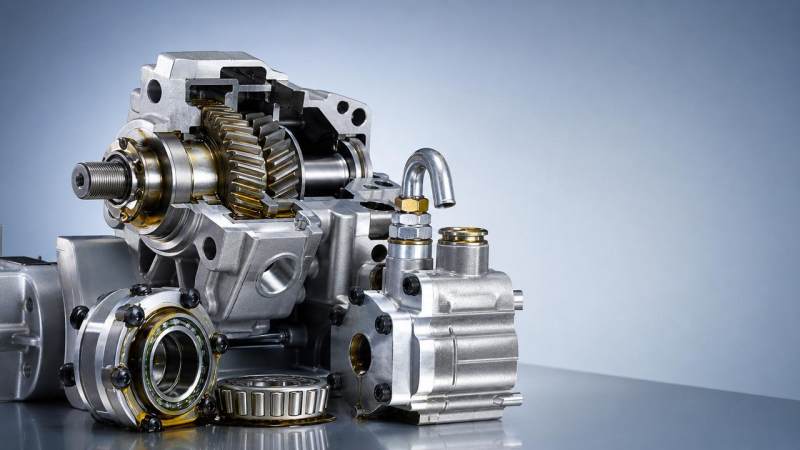
On 1 November 2026, the European Union will enforce a new restriction on per- and polyfluoroalkyl substances (PFAS) in industrial mechanical lubricants under REACH Annex XVII. This regulation directly affects exporters of hydraulic oils, gear oils, and bearing greases to the EU — particularly manufacturers and suppliers in China’s lubricant and machinery sectors.
Event Overview
The European Commission adopted Commission Regulation (EU) 2026/789 on 2 May 2026. It introduces a concentration limit of ≤25 ppm for PFAS in industrial mechanical lubricants, including hydraulic oils, gear oils, and bearing greases. The restriction enters into force on 1 November 2026 and applies to all products placed on the EU market from that date onward.
Which Subsectors Are Affected
Direct Exporters of Lubricants
Manufacturers exporting hydraulic oil, gear oil, or bearing grease to the EU must ensure compliance with the 25 ppm PFAS threshold. Non-compliant batches risk rejection at EU customs or withdrawal from the market post-import. This affects product certification, batch testing protocols, and documentation requirements for CE-related conformity assessments.
Raw Material Suppliers
Suppliers of base oils, additives, or thickener systems used in lubricant formulation may face increased demand for PFAS-free declarations and analytical test reports. Since PFAS can originate from certain fluorinated additives or contaminated feedstocks, upstream verification becomes critical — especially for suppliers serving EU-bound formulations.
Machinery OEMs and Component Makers
OEMs integrating lubricants into equipment (e.g., hydraulic systems, gearboxes, bearings) may be required to verify lubricant compliance as part of their own EU market access obligations. While the restriction targets lubricants—not finished machinery—their supply chain due diligence now extends to fluid specifications and supplier declarations.
Distribution and Regulatory Support Providers
Import agents, regulatory consultants, and testing laboratories supporting EU market access will see higher demand for PFAS screening services (e.g., LC-MS/MS analysis), technical documentation review, and compliance gap assessments—particularly for clients sourcing from China, where over 2,300 lubricant and mechanical manufacturers are impacted.
What Relevant Companies or Practitioners Should Focus On Now
Monitor official implementation guidance from ECHA and national authorities
While Regulation (EU) 2026/789 is legally binding, practical enforcement details—including accepted analytical methods, scope clarifications (e.g., whether ‘mechanical lubricants’ covers food-grade or biodegradable variants), and transitional provisions—are still pending. Stakeholders should track updates from the European Chemicals Agency (ECHA) and EU Member State competent authorities.
Identify high-risk product categories and supply chain touchpoints
Hydraulic oils and gear oils often contain fluorinated anti-wear or extreme-pressure additives; bearing greases may incorporate fluorinated thickeners. Companies should map these formulations, assess existing supplier PFAS statements, and prioritize testing for products with fluorine-containing ingredients or sourced from facilities using fluorinated processing aids.
Distinguish between regulatory signal and operational readiness
The 2026 deadline is fixed, but laboratory capacity for reliable PFAS quantification below 25 ppm remains constrained globally. Analysis shows that lead times for accredited PFAS testing may exceed six weeks — meaning firms delaying sampling until Q3 2026 risk missing the compliance window. Early method validation and lab engagement are operationally urgent.
Prepare documentation, communication, and contingency plans
Exporters should update safety data sheets (SDS), product specifications, and supplier questionnaires to reflect PFAS testing results and declarations. Where reformulation is needed, cross-functional alignment among R&D, procurement, and regulatory affairs is essential. Maintaining alternative lubricant grades—pre-validated for EU export—may mitigate supply disruption risks.
Editorial Perspective / Industry Observation
Observably, this restriction represents a concrete enforcement step—not just a policy signal—in the EU’s broader PFAS regulatory strategy. Unlike earlier proposals targeting all PFAS across all uses (e.g., the ongoing REACH restriction dossier under evaluation), Regulation (EU) 2026/789 is narrowly scoped, legally effective, and time-bound. From an industry perspective, it functions less as a preview and more as a binding benchmark: it confirms that PFAS limits in industrial fluids are enforceable, technically feasible, and commercially consequential. Continued attention is warranted because its implementation may inform future restrictions in adjacent categories — such as metalworking fluids or fire-fighting foams — and because enforcement outcomes in late 2026 could shape third-country alignment trends.
This development underscores a structural shift: PFAS compliance is no longer solely a matter of environmental reporting or voluntary stewardship. It is now embedded in market access requirements for specific industrial fluids entering the EU. For affected enterprises, the priority is not theoretical risk assessment but verifiable, documented, and auditable conformance by 1 November 2026.
Information Source: Commission Regulation (EU) 2026/789, published by the European Commission on 2 May 2026. Pending clarification on enforcement methodology and scope interpretation remains under observation via ECHA communications and national enforcement forums.
Send Your Inquiry
We welcome your cooperation and we will develop with you.
