


Vietnam EMC Certification for Imported Construction Machinery Effective May 2026
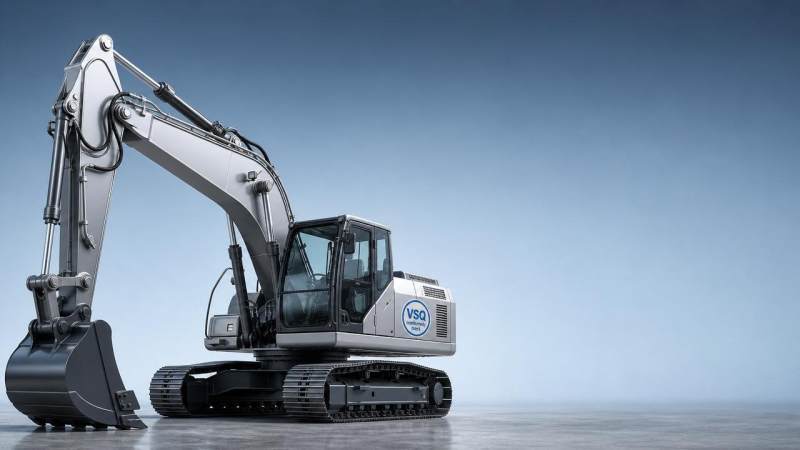
Starting 1 May 2026, Vietnam will require all imported construction machinery—including excavators, forklifts, and cranes—to undergo local electromagnetic compatibility (EMC) testing accredited by the Standard and Quality Institute of Vietnam (STAMEQ) and bear the VSQ conformity mark. This regulatory change directly affects manufacturers, exporters, and logistics providers engaged in machinery trade with Vietnam, particularly those based in China, and introduces new compliance timelines and cost considerations.
Event Overview
Vietnam’s Ministry of Industry and Trade issued Decree No. 17/2026/ND-CP, which enters into force on 3 May 2026. The decree mandates that, effective 1 May 2026, all imported construction machinery must pass EMC testing conducted by STAMEQ-recognized laboratories in Vietnam and carry the VSQ mark. Products failing to meet this requirement will be denied customs clearance or subject to mandatory re-exportation.
Industries Affected
Direct Exporters and Trading Enterprises
Exporters shipping construction machinery to Vietnam will face extended lead times due to mandatory local EMC testing—unlike previous arrangements allowing pre-certification from third countries. Testing cannot be completed prior to shipment, meaning certification now occurs post-arrival or during pre-shipment coordination with Vietnamese labs. This disrupts just-in-time delivery models and increases port dwell time and storage costs.
Manufacturing Enterprises (OEMs and Tier Suppliers)
Original equipment manufacturers—especially those producing integrated electronic control systems—must verify whether their existing EMC test reports (e.g., from EU or Chinese labs) are accepted under the new decree. Analysis shows the regulation explicitly requires testing at STAMEQ-accredited facilities in Vietnam; overseas reports are not recognized. As a result, design validation cycles may need adjustment to accommodate local test parameters and reporting formats.
Supply Chain and Logistics Service Providers
Freight forwarders, customs brokers, and bonded warehouse operators handling machinery consignments to Vietnam must now verify VSQ marking and supporting test documentation before customs submission. Observation shows increased scrutiny at major ports—including Cát Lái and Hải Phòng—suggesting higher risk of hold-ups for non-compliant shipments without advance documentation alignment.
What Enterprises Should Focus On Now
Monitor official implementation guidance from STAMEQ and Vietnam Customs
The decree is effective 1 May 2026, but detailed technical requirements (e.g., applicable EMC standards, test scope per machine category, lab accreditation list) remain pending formal publication. Enterprises should track updates from STAMEQ and the General Department of Vietnam Customs to avoid misalignment between current lab capacity and regulatory expectations.
Prioritize certification for high-volume or high-value machinery categories
Not all construction machinery types carry equal enforcement priority. From industry perspective, excavators and electric forklifts—due to their complex power electronics and growing market share—are more likely to face early verification. Exporters should sequence certification efforts accordingly, beginning with these categories ahead of Q2 2026.
Distinguish between policy issuance and operational readiness
While the legal effective date is fixed, analysis shows STAMEQ’s domestic lab network may not yet be fully scaled to handle surging demand. Enterprises should treat initial months post-implementation as a transition phase—not assume full enforcement immediacy—and confirm testing slot availability well in advance.
Update technical documentation and labeling workflows
VSQ marking must appear visibly on equipment and accompanying documents (e.g., packing lists, certificates of conformity). Current more suitable understanding is that label placement, font size, and bilingual (Vietnamese–English) content requirements will follow STAMEQ Circular 12/2025, expected to be published before April 2026. Preemptive alignment with draft labeling guidelines is advisable.
Editorial Perspective / Industry Observation
This regulation is better understood as a signal of Vietnam’s broader shift toward localized conformity assessment—not merely a technical update. Observably, it reflects tightening control over product safety and digital infrastructure resilience, especially for equipment with wireless communication or variable-frequency drives. It does not yet indicate a full ban on foreign test data, but rather establishes a transitional framework where local validation becomes the baseline requirement. Continued monitoring is warranted, as future amendments may extend similar requirements to other industrial equipment categories beyond construction machinery.
From industry angle, the timing—coinciding with Vietnam’s 2025–2030 National Digital Transformation Program—suggests alignment with wider goals around electromagnetic environment management and smart manufacturing readiness. However, no official linkage has been confirmed between this decree and national digital strategy documents.
Current more appropriate interpretation is that this is an enforceable compliance requirement already codified in law, not a proposal or draft. Yet its practical impact remains contingent on laboratory capacity, customs training, and inter-agency coordination—factors still evolving as of early 2026.
Conclusion
This regulatory development marks a structural shift in Vietnam’s import compliance landscape for construction machinery: local EMC certification is no longer optional but mandatory, with tangible implications for delivery planning, cost structure, and technical documentation. It is neither a temporary measure nor a pilot initiative—it is a legally binding requirement whose operational execution will define near-term trade efficiency. Enterprises are advised to treat it as a fixed constraint in 2026 export planning, while remaining attentive to implementation nuances emerging in the coming months.
Information Sources
Main source: Vietnam Government Decree No. 17/2026/ND-CP, issued by the Ministry of Industry and Trade, effective 3 May 2026 (provisions applicable retroactively to imports arriving on or after 1 May 2026).
Additional reference: STAMEQ public notice No. STQ-EMC/2026-01 (unnumbered draft guidance, under consultation as of March 2026; subject to revision prior to April 2026).
Send Your Inquiry
We welcome your cooperation and we will develop with you.
