


HPMC For Wall Putty: Key Functions in Smoothness, Adhesion, and Water Retention
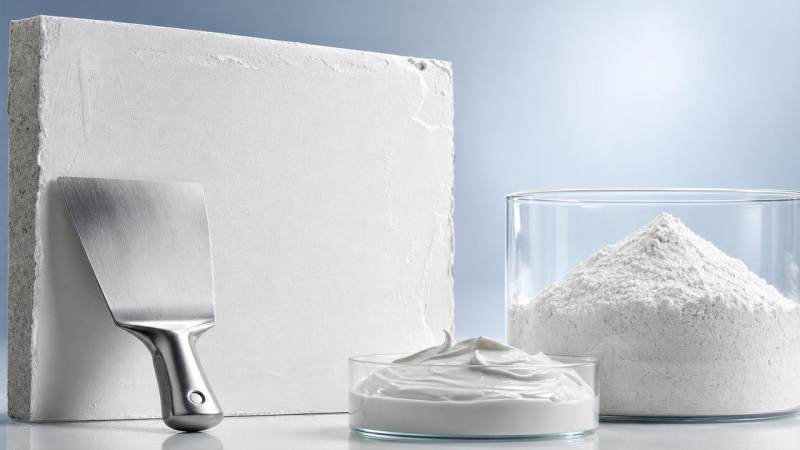
HPMC For Wall Putty has become a central additive in dry-mix finishing systems because surface quality now depends on more than simple filler content. A putty layer must spread easily, stay open long enough for leveling, bond well to mineral substrates, and resist defects after drying. In that balance, hydroxypropyl methylcellulose works as a performance regulator rather than a passive ingredient.
That is why HPMC For Wall Putty matters across the construction additives market. It directly affects workability, water retention, crack control, sanding feel, and the final appearance before paint application. For anyone comparing cellulose ether solutions, the real question is not whether HPMC is used, but how its grade, viscosity, and consistency shape field performance.
Why wall putty performance is under closer scrutiny
Wall putty sits between substrate preparation and decorative finishing. If this layer fails, later coatings often reveal the problem instead of hiding it.
Contractors and material formulators now expect putty to deliver a smoother finish with less rework. At the same time, substrates vary widely in absorption, temperature response, and surface stability.
This makes additive selection more important. In catalyst and chemical additive applications for construction materials, HPMC is valued because it helps control the interaction between powder, water, filler, cement, and the wall surface.
What HPMC For Wall Putty actually does
At a basic level, HPMC dissolves in water and forms a protective colloidal system. That system changes how the putty mix holds water, develops body, and behaves during spreading.
Its role is practical and visible on site. A suitable grade improves troweling feel, reduces drag, supports uniform film formation, and limits premature water loss into porous substrates.
In other words, HPMC For Wall Putty helps the mix remain workable while allowing hydration and physical setting to proceed more evenly. That usually translates into a flatter surface and fewer application defects.
Three functions that define its value
Smoothness is not only about appearance
A smooth putty layer improves paint economy, color consistency, and the visual quality of the final wall. Yet smoothness begins during mixing and application, not after drying.
HPMC For Wall Putty contributes by increasing lubrication and helping fine fillers distribute more evenly. The mix feels more stable under the trowel, which reduces sudden pulling and uneven buildup.
This also affects sanding. When the formulation is balanced, the dried layer is easier to refine without becoming weak or dusty. For many finishing systems, this balance is one of the first signs of a well-selected HPMC grade.
Adhesion depends on formulation balance
Adhesion in wall putty is rarely determined by one ingredient alone. Cement, lime, gypsum, fillers, redispersible polymer powder, and substrate condition all matter.
Still, HPMC For Wall Putty influences how these components work together. By stabilizing the fresh mix and managing water availability, it supports better binder distribution at the interface.
On dense surfaces, the challenge may be wetting and grip. On porous bases, the challenge is often rapid suction. In both cases, the right cellulose ether can reduce the likelihood of weak bonding zones.
Some formulations also combine HPMC with specialty additives for targeted performance. Depending on the system, materials such as Polyvinyl Alcohol may be considered to support film-related properties or formulation tuning.
Water retention is the hidden driver of quality
Among all functions, water retention is often the most decisive. A putty mix that loses water too quickly may look acceptable during application, then fail during drying.
When HPMC For Wall Putty retains water effectively, cementitious or mineral reactions have more time to develop. That helps reduce surface burn, dry edges, poor cohesion, and early shrinkage marks.
This matters even more in hot climates, windy interiors, or highly absorbent substrates. Under those conditions, a small change in cellulose ether behavior can create a large difference in open time and finish quality.
- Better water retention usually improves application window and rework tolerance.
- It can lower the risk of microcracks caused by uneven moisture loss.
- It often supports more consistent curing across large wall areas.
How manufacturers approach grade selection
Choosing HPMC For Wall Putty is not simply a matter of selecting the highest viscosity. Viscosity range, substitution pattern, thermal behavior, and compatibility with the total formula all affect results.
Jinan Ludong Chemical Co., Ltd. operates in this space as a large-scale producer focused on cellulose ethers and integrated construction material solutions. Its product portfolio includes HPMC, RDP, and HPS for different formulation targets.
The company’s production model combines conventional process experience with intelligent automation. That matters because wall putty performance depends heavily on batch consistency, especially when projects require stable viscosity and repeatable water retention.
With annual production capacity reaching 45,000 tons, Ludong Chemical supplies HPMC grades including type 75 and type 60, covering construction and chemical grades. Its viscosity control range from 400 to 200,000 CPS gives formulators room to match different putty systems and climate conditions.
Key evaluation points before choosing a grade
- Substrate absorption level and the risk of rapid water draw.
- Required open time, sag resistance, and hand feel during application.
- Compatibility with cement, gypsum, lime, and polymer modifiers.
- Desired sanding behavior after drying.
- Climate sensitivity across storage, mixing, and jobsite conditions.
Common scenarios where performance differences appear
Not all wall putty formulas expose additive weaknesses in the same way. Problems often appear only when the formulation meets a difficult substrate or a fast-paced application environment.
A practical way to interpret product data
Technical data sheets are useful, but they should be read in context. A viscosity number alone does not predict final wall behavior.
A better approach is to compare lab values with formulation goals. If the target is superior leveling, one grade may stand out. If the priority is anti-cracking under dry conditions, another may be more suitable.
It also helps to review the full additive package. HPMC For Wall Putty often performs best when the formula is tuned as a system, not ingredient by ingredient. In some cases, complementary materials such as Polyvinyl Alcohol are reviewed as part of broader formulation optimization.
What to examine next
A reliable assessment of HPMC For Wall Putty should move from claims to evidence. Focus on rheology, water retention, adhesion performance, and finish quality under actual substrate conditions.
It is also worth comparing consistency across batches, because stable supply quality often matters as much as peak lab performance. For ongoing formulation work, the most useful next step is to build a clear matrix of substrate type, climate exposure, viscosity target, and expected application feel.
That kind of structured review makes it easier to judge whether a specific cellulose ether solution fits the wall putty system today and remains dependable as project demands change.
Send Your Inquiry
We welcome your cooperation and we will develop with you.
