


HPMC Manufacturer vs Trader: Which Is Better for Long-Term Supply Agreements?
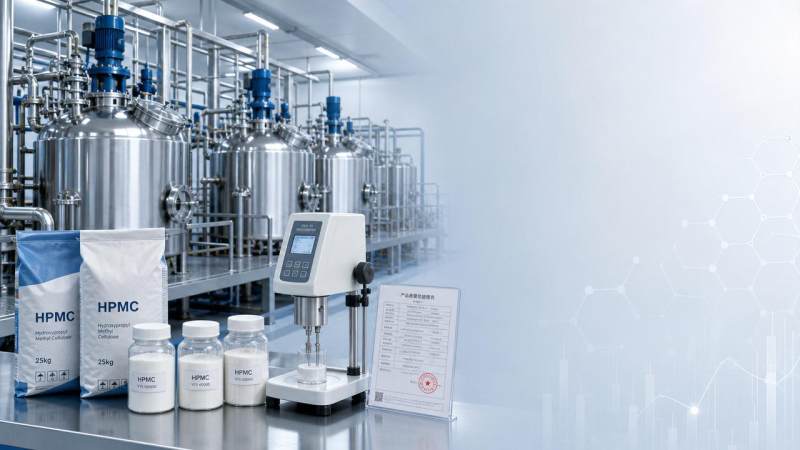
Choosing between an HPMC Manufacturer and a trader can directly affect pricing stability, quality consistency, lead times, and risk control in long-term supply agreements. For business evaluators in the catalyst and chemical additives sector, understanding the differences is essential to securing reliable supply, stronger technical support, and better lifecycle value. This article explores the key factors that influence a smarter long-term sourcing decision.
Why does the HPMC Manufacturer vs trader question matter in long-term supply?
In the catalyst and chemical additives sector, supply agreements are rarely judged by unit price alone. Business evaluators must consider formulation stability, batch traceability, production scheduling, logistics resilience, and technical response speed.
That is why the choice of an HPMC Manufacturer often becomes a strategic decision rather than a simple procurement task. If the supplier model is wrong, hidden costs tend to appear later through claims, process adjustments, or delayed customer deliveries.
- A manufacturer usually offers more direct control over raw materials, production conditions, viscosity management, and batch records.
- A trader may provide sourcing flexibility, but often depends on third-party factories for quality consistency and production visibility.
- For long-term contracts, the ability to prevent variation is often more valuable than obtaining a short-term price advantage.
HPMC is not a generic line item in many applications. In construction chemicals and adjacent additive systems, viscosity range, water retention, workability, and application fit can all influence downstream performance. That raises the importance of working with a supply partner that understands both production and end use.
How do manufacturers and traders differ in real procurement terms?
The most useful way to compare an HPMC Manufacturer with a trader is to focus on operational consequences. The table below highlights what business evaluators usually need to verify before signing a multi-month or multi-year supply agreement.
This comparison does not mean traders have no value. They can be useful for urgent purchases, market testing, or mixed-source procurement. However, if your objective is a stable long-term agreement, an HPMC Manufacturer usually provides stronger control points.
When can a trader still be the better option?
A trader may fit your strategy if demand is uncertain, annual volume is still low, or you need access to several chemistries from one procurement interface. In early-stage sourcing, flexibility can outweigh direct production access.
But once formulations are validated and customer commitments become fixed, the lack of direct manufacturing control may create more exposure than convenience. That is the moment many business evaluators shift toward a manufacturing partner.
What should business evaluators check before selecting an HPMC Manufacturer?
A qualified HPMC Manufacturer should not be evaluated only by brochure claims. Buyers in chemical additives should test the supplier against capacity, viscosity coverage, response discipline, and ability to support application-specific needs.
Core checkpoints for long-term agreements
- Verify annual capacity and whether it supports your forecast growth, not just your current monthly demand.
- Confirm controllable viscosity range and available grades for construction and chemical applications.
- Ask how batch-to-batch variation is monitored and what information can be shared on certificates or lot records.
- Review lead times for standard products versus customized requirements.
- Check whether technical communication reaches the production side directly when issues arise.
Jinan Ludong Chemical Co., Ltd. is positioned well for this type of evaluation because its business combines production, trading, and integrated services of cellulose ethers. That matters when a buyer wants both manufacturing depth and practical commercial coordination.
Its product portfolio centers on HPMC, RDP, and HPS, which are highly relevant to construction-related chemical systems. With annual production capacity reaching 45,000 tons and HPMC viscosities controllable from 400 to 200,000 CPS, the company can support a broad range of specification discussions.
Which supply model performs better on cost, consistency, and lead time?
Long-term buyers often ask the wrong question first. Instead of asking who offers the lowest initial price, it is better to ask which supply model delivers the lowest total procurement risk over the contract period.
The table below helps compare the commercial impact of sourcing from an HPMC Manufacturer versus a trader across the main performance criteria used in business evaluation.
For stable, recurring demand, manufacturer-led supply usually wins on predictability. For opportunistic buying, a trader may remain practical. The best choice depends on whether your priority is continuity or short-term price flexibility.
A hidden cost many buyers miss
One inconsistent batch can affect several downstream costs at once: extra lab validation, production adjustment, delayed shipment, and customer support time. In chemical additives, this indirect cost often exceeds the headline saving from a cheaper source.
How do technical capabilities influence long-term HPMC sourcing?
Technical fit is central to the HPMC Manufacturer decision. In practice, business evaluators should translate formulation needs into measurable supply criteria. These include viscosity range, grade suitability, process consistency, and communication speed when application feedback appears.
Relevant technical points for evaluation
- Viscosity control matters because different mortar, adhesive, and chemical systems respond differently to rheology and water retention behavior.
- Grade breadth matters because procurement teams may need one supplier to support both mainstream and specialized requirements.
- Integrated production matters because process changes should be managed without introducing unnecessary variability.
Ludong Chemical combines traditional production experience with intelligent automated production. For procurement teams, this can be significant because automation helps improve process discipline, while traditional know-how supports practical adaptation to varied customer requirements.
Its type 75 and type 60 HPMC series, covering construction and chemical grades, indicate that supply discussions can move beyond generic product naming. Buyers can focus on suitability by viscosity window, application use, and consistency expectations.
In some purchasing projects, buyers also assess adjacent raw materials to simplify vendor management. Depending on the formulation package, related materials such as Polyvinyl Alcohol may also enter the conversation when evaluating broader additive procurement strategies.
What procurement model works best for catalyst and chemical additives buyers?
In this industry, sourcing decisions often combine technical and commercial review. Business evaluators should not separate them. A supplier that can quote quickly but cannot support application alignment may create more downstream workload than value.
Recommended decision path
- Define annual demand, monthly call-off pattern, and acceptable safety stock level.
- Match product requirements with viscosity range, grade family, and packaging expectations.
- Review the supplier’s production capacity, planning logic, and change-control communication method.
- Test responsiveness through samples, technical discussion, and issue escalation scenarios.
- Finalize the long-term agreement with terms on lead time, quality documents, and claim handling.
If your organization expects recurring demand and low tolerance for variability, a direct HPMC Manufacturer relationship is generally the safer model. If your project is short, mixed, or speculative, a trader can still serve as a temporary bridge.
What mistakes do buyers make when comparing an HPMC Manufacturer and a trader?
Several sourcing mistakes repeat across the chemical additives market. Most of them happen because evaluation teams focus on visible pricing and underestimate supply-chain behavior over time.
Common misconceptions
- Assuming all HPMC grades with similar labels perform the same in real formulations.
- Treating a trader’s current source as fixed, even though future supply may shift with market conditions.
- Ignoring complaint response paths until a batch issue actually occurs.
- Overlooking whether capacity can support growth after the first contract period.
A disciplined evaluation should include not only sample approval, but also scenario review: What happens if demand rises suddenly? What happens if shipping is delayed? What happens if viscosity drift is reported by the end user?
FAQ for business evaluators assessing an HPMC Manufacturer
How do I know whether a manufacturer is more suitable than a trader?
If your demand is recurring, your quality window is narrow, and your customers expect stable delivery, a manufacturer is usually more suitable. The more your business depends on repeatability, the more valuable direct production access becomes.
What should I ask an HPMC Manufacturer before signing a long-term agreement?
Ask about capacity, viscosity range, grade availability, standard lead times, lot traceability, packaging, complaint handling, and whether technical issues can be escalated directly to production personnel. These questions reveal real operating capability.
Is a trader always more expensive over time?
Not always. For short-term buying, a trader may be efficient. Over longer periods, however, indirect costs from source changes, slower technical communication, or inconsistent batches can make trader-led supply more expensive in practice.
What lead-time advantage can a manufacturer offer?
A manufacturer can often align production with forecast volumes and reserve capacity under framework agreements. This does not eliminate all delays, but it usually improves predictability compared with purely market-based spot sourcing.
Why choose a manufacturing partner with integrated service capability?
For long-term supply agreements, the best partner is often not just a factory and not just a trading desk. It is a supplier that combines manufacturing strength with practical service execution. That combination supports both operational stability and commercial flexibility.
Jinan Ludong Chemical Co., Ltd. offers that profile through large-scale cellulose ether production, integrated service capability, and product coverage including HPMC, RDP, and HPS. Its 45,000-ton annual capacity, broad viscosity control from 400 to 200,000 CPS, and support for construction and chemical grades make it a relevant option for business evaluators seeking a dependable HPMC Manufacturer.
If you are reviewing long-term sourcing, you can discuss specific parameters such as viscosity range, grade selection, packaging expectations, forecast volume, delivery cycle, sample support, and documentation needs. You can also compare whether a direct HPMC Manufacturer model or a mixed procurement model better fits your current risk profile.
For broader additive sourcing conversations, related materials such as Polyvinyl Alcohol can also be considered where formulation or procurement integration requires it. The practical next step is to align your target application, contract period, and supply expectations with a supplier that can respond in technical and commercial terms.
Send Your Inquiry
We welcome your cooperation and we will develop with you.
