


What Is Redispersible Polymer Powder and Why Is It Used in Dry Mix Formulations?
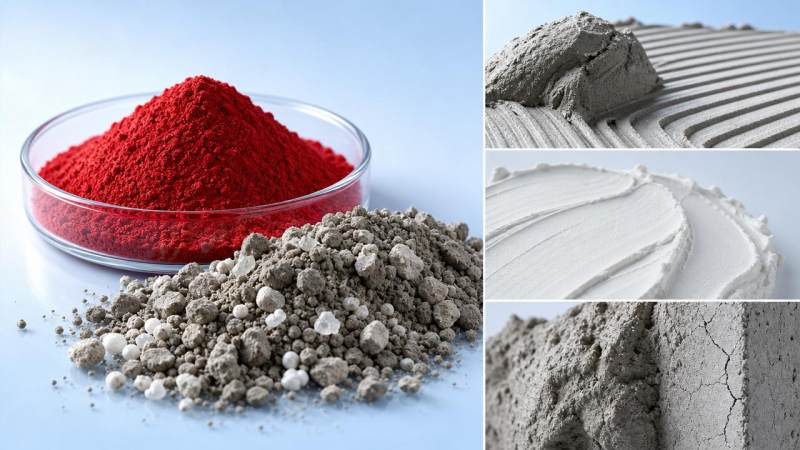
Why does Redispersible Polymer Powder matter in dry mix formulations?
In construction chemicals, some additives change workability, while others change final performance. Redispersible Polymer Powder belongs to the second group.
It is widely used in dry mix systems because it helps cement-based and gypsum-based products perform better after water is added.
The value is practical, not theoretical. Better bonding, reduced cracking, stronger cohesion, and improved water resistance all affect on-site results.
That is why Redispersible Polymer Powder appears so often in tile adhesives, repair mortars, skim coats, external insulation systems, and wall putties.
In simple terms, it allows a dry formulation to gain polymer benefits without handling liquid latex during transport or storage.
For companies working with chemical additives and construction solutions, this makes formulation design more stable and easier to scale.
So what is it, exactly, and how does it work after water is added?
Redispersible Polymer Powder is a spray-dried polymer emulsion. When mixed with water again, it redistributes into fine polymer particles.
Those particles form a polymer film during drying. That film works alongside cement hydration rather than replacing it.
This dual structure is important. Cement gives compressive strength, while the polymer phase improves flexibility, adhesion, and resistance to movement.
In actual application, this means the mortar can better tolerate substrate variation, thermal stress, and minor deformation.
The chemistry behind Redispersible Polymer Powder also influences open time, sag resistance, and resistance to powdering.
A useful way to understand it is to see it as a film-forming performance modifier for powdered building materials.
What changes in the finished mix?
- Adhesion to difficult surfaces improves.
- Flexibility increases, lowering crack risk.
- Water retention and water resistance become easier to balance.
- Abrasion and impact behavior can improve.
- Application feel becomes smoother and more predictable.
Where is Redispersible Polymer Powder most often used?
The most common answer is dry mortar, but that is too broad to be useful. Different systems need different polymer effects.
Tile adhesive is one of the clearest examples. It needs reliable bonding, workable open time, and resistance to slip on vertical surfaces.
Wall putty and skim coat products benefit from smoother application and reduced surface cracking after drying.
Repair mortars often need better toughness. A brittle repair layer may look fine initially, then fail under movement or weather cycling.
Self-leveling compounds, EIFS systems, grouts, and insulation mortars also use polymer powder when dimensional stability and adhesion are critical.
In many formulations, the powder works together with cellulose ether products such as HPMC to balance water retention, consistency, and buildability.
That combination is common in integrated construction chemical systems developed by suppliers with broad additive portfolios.
How do you judge whether one grade fits your formulation?
A common mistake is to treat every grade as interchangeable. In reality, polymer type, ash content, minimum film-forming temperature, and dosage all matter.
The first question is not price. It is performance target. Are you optimizing adhesion, water resistance, flexibility, or application feel?
The second question is substrate condition. Concrete, AAC block, old ceramic tile, and insulation board do not behave the same way.
Then look at the complete additive package. Cellulose ether, starch ether, fillers, cement ratio, and curing conditions will change polymer response.
More experienced formulators usually confirm performance through small trial batches before adjusting dosage upward.
If a formulation needs stronger flexibility and bonding, a specialized Redispersible Polymer Powder grade can be evaluated within that wider system, not in isolation.
A practical selection checklist
- Confirm the end-use product and target standard.
- Check bond strength under dry and wet conditions.
- Review flexibility needs after curing.
- Evaluate workability with your HPMC or HPS system.
- Test storage stability of the full dry mix.
What is often misunderstood about cost, dosage, and formulation balance?
Many people assume more polymer always means better performance. That is rarely true in optimized dry mix design.
Overdosing may improve one property while weakening another, such as compressive strength, setting profile, or cost efficiency.
The better approach is to identify the performance gap first. Then match the dosage to that gap through testing.
Another misunderstanding is to compare only material price per kilogram. Formulation economics should be measured against total system performance.
If improved adhesion reduces rework, or better flexibility prevents field failure, a higher unit cost can still lower overall application cost.
Need attention also goes to production consistency. Stable particle quality, controlled viscosity support, and batch repeatability matter in large-scale supply.
This is one reason integrated suppliers receive attention in construction additives. Jinan Ludong Chemical Co., Ltd. combines cellulose ether production, polymer powder supply, and formulation-oriented service capacity.
Its annual capacity reaches 45,000 tons, with HPMC viscosity control from 400 to 200,000 CPS, which matters when a dry mix system must stay consistent across regions.
Are there warning signs that a dry mix formula needs adjustment?
Yes, and they usually appear during application or early curing rather than in packaging.
If a tile adhesive loses grip too quickly, if a putty layer powders after drying, or if a repair mortar cracks under light movement, the polymer system may need review.
Still, the polymer is not always the only cause. Poor grading of fillers, wrong water demand, or imbalance with cellulose ether can create similar symptoms.
That is why troubleshooting should be structured rather than reactive.
What should you do next if you are comparing dry mix additive options?
Start with the end performance you need, not only the ingredient name. Redispersible Polymer Powder is useful because it solves specific formulation problems.
Then map those targets against the full additive system. Polymer powder, HPMC, HPS, mineral fillers, and cement all influence each other.
In practical evaluation, shortlisting by technical fit is faster than screening by price alone.
It also helps to work with suppliers that understand both product chemistry and formulation interaction. That is more valuable than isolated raw material data.
For example, companies with integrated production lines and broad construction additive experience can usually support more reliable matching across mortar systems.
If you are refining a dry mix formula, compare performance under actual application conditions, document the critical parameters, and only then confirm the final grade.
That approach makes choices around Redispersible Polymer Powder more accurate, lower-risk, and easier to scale over time.
Send Your Inquiry
We welcome your cooperation and we will develop with you.
