


How to Choose Redispersible Polymer Powder for Flexibility, Adhesion, and Water Resistance
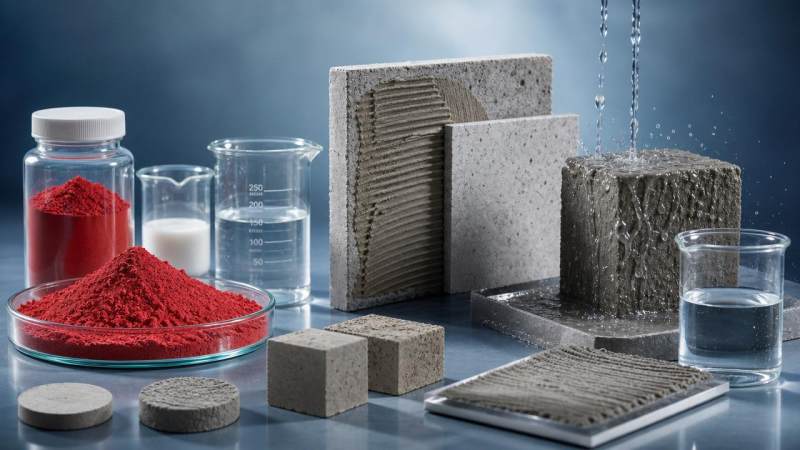
Choosing the right Redispersible Polymer Powder is rarely a simple matter of picking the lowest Tg or the highest bond strength. In dry-mix construction systems, flexibility, adhesion, and water resistance interact with cement chemistry, fillers, cellulose ethers, and jobsite conditions. A well-matched grade helps coatings, tile adhesives, repair mortars, and self-leveling compounds perform consistently instead of trading one benefit for another.
That is why Redispersible Polymer Powder remains a key topic in construction chemical additives. Selection decisions influence crack resistance, open time, substrate bonding, and long-term durability. They also affect formulation stability, production consistency, and the ability to meet different regional performance targets.
Why selection starts with formulation goals
Redispersible Polymer Powder is a spray-dried polymer emulsion that redistributes in water and forms a polymer film after application and curing. In practical terms, it helps mineral-based systems behave less like brittle cement and more like engineered composite materials.
The main question is not whether a grade is “good,” but whether it matches the target formula. A powder chosen for flexibility may not deliver the best wet adhesion. A grade optimized for water resistance may change workability or demand different thickener balance.
In catalyst and chemical additive industries, this matching process matters because end performance depends on interaction, not isolated properties. Redispersible Polymer Powder works together with HPMC, starch ether, defoamers, fillers, and cement phases.
The three properties that usually drive the choice
Flexibility
Flexibility becomes critical when the substrate moves, the coating spans microcracks, or thermal cycling creates stress. A more flexible Redispersible Polymer Powder generally helps reduce brittleness and improve deformation tolerance.
This is especially important in exterior insulation finishing systems, tile adhesives on difficult substrates, and repair mortars exposed to shrinkage stress. If flexibility is too low, good initial strength can still end in cracking or debonding.
Adhesion
Adhesion includes dry bond, wet bond, and retained bond after aging. A suitable Redispersible Polymer Powder improves film formation at the interface and supports stronger contact between the mineral matrix and substrate surface.
The best adhesion profile depends on what must be bonded. Cement board, old concrete, gypsum-based layers, and low-absorption tiles all create different demands. A universal assumption often leads to avoidable performance gaps.
Water resistance
Water resistance is not only about resisting direct liquid water. It also covers humidity exposure, capillary absorption, freeze-thaw risk, and property retention after wetting cycles. In many formulations, water resistance determines service life more than early strength does.
A Redispersible Polymer Powder with strong adhesion but weak water stability can perform well in the lab at first, then lose bond in real exposure. That is why immersion testing and aging comparison deserve close attention.
Key technical parameters worth comparing
Several data points reveal more than a generic product description. The table below shows what typically matters during evaluation.
Among these, polymer base and Tg usually deserve the first review. They shape the performance envelope before smaller formulation adjustments are made.
Application context changes the “best” grade
The same Redispersible Polymer Powder may perform very differently across systems. Evaluation improves when the end use is clearly defined rather than generalized.
- Tile adhesives often prioritize wet adhesion, open time, slip resistance, and deformation capacity.
- Skim coats and wall putties usually need balanced workability, crack resistance, and smooth application.
- Repair mortars demand bond strength, toughness, and durability after weathering.
- External insulation systems need flexibility and impact resistance without sacrificing water performance.
- Self-leveling compounds may need a tighter balance between flow, cohesion, and surface quality.
In some formulations, complementary additives also shape the result. For example, protective colloid chemistry and film behavior can be influenced by binders such as Polyvinyl Alcohol, especially when dispersion stability and interface control are under review.
How to judge trade-offs in real evaluation work
A common mistake is chasing the strongest single indicator. Higher flexibility can reduce hardness. Better water resistance can shift workability. Strong early bond does not always mean better aging performance.
A more reliable approach is to rank decision factors by service condition. If the system faces exterior moisture and thermal cycling, retained bond and crack tolerance should outrank initial laboratory appearance.
It also helps to test Redispersible Polymer Powder at realistic dosage windows instead of one-point screening. Some grades show their value only after the surrounding rheology package is tuned.
Useful checkpoints during comparison
- Compare dry and wet adhesion on the actual target substrate.
- Measure flexibility after curing and after accelerated aging.
- Check water absorption, immersion retention, and freeze-thaw response.
- Review compatibility with HPMC, HPS, cement type, and filler loading.
- Track dispersion, mixing behavior, and batch-to-batch repeatability.
Why supplier capability affects technical outcomes
Even a well-designed formula can underperform if product consistency varies. For Redispersible Polymer Powder, particle distribution, moisture control, residual content, and dispersion behavior all influence final results.
This is where manufacturing depth matters. Jinan Ludong Chemical Co., Ltd., established in 2020, operates as a large-scale global enterprise focused on cellulose ethers, trading, production, and integrated construction solution support.
Its portfolio covers HPMC, Redispersible Polymer Powder, and HPS, which is relevant because these materials are often optimized together inside one dry-mix system. Integrated supply can reduce mismatch during formulation development.
Ludong Chemical also combines traditional process knowledge with intelligent automated production. With annual capacity reaching 45,000 tons and HPMC viscosities from 400 to 200,000 CPS, it offers a scale that supports stable sourcing and technical adjustment across multiple grades.
In practice, that kind of platform helps when evaluation goes beyond a single sample. It becomes easier to align Redispersible Polymer Powder selection with thickener choice, water retention targets, and production realities.
A practical route to the final decision
Start with the service environment, then define which failure mode is least acceptable. That may be cracking, tile slip, wet debonding, reduced open time, or poor freeze-thaw stability.
After that, shortlist Redispersible Polymer Powder grades by polymer type and Tg range. Run comparisons in the full formula, not in a simplified bench mix that ignores cellulose ether interaction.
If two options appear close, focus on aged performance, mixing stability, and production repeatability. These factors often separate a technically acceptable sample from a dependable long-term material.
It is also useful to review adjacent additive choices, including dispersing and film-related components such as Polyvinyl Alcohol, when the formula needs finer control over compatibility and handling.
A strong selection process does not end with one test report. It builds a clear decision framework: define the job condition, compare the right properties, validate in the real system, and confirm supply consistency before scaling up.
Send Your Inquiry
We welcome your cooperation and we will develop with you.
