


HPMC Price Drivers Affecting Construction Additive Budgets
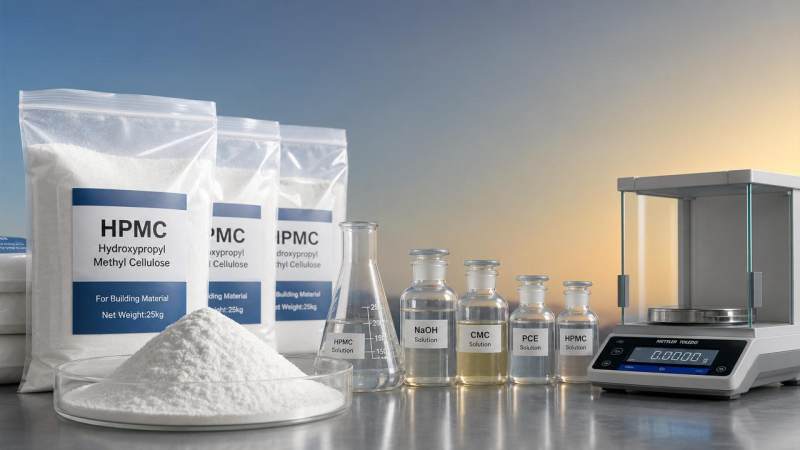
For finance approvers managing construction additive budgets, understanding what moves HYDROXYPROPYL METHYL CELLULOSE pricing is essential to controlling project costs and supplier risk. From raw material volatility and energy expenses to viscosity grade, capacity, and global supply conditions, each factor can influence procurement decisions. This article outlines the key HPMC price drivers and helps decision-makers evaluate cost efficiency, supply stability, and long-term purchasing value.
In construction chemicals, HYDROXYPROPYL METHYL CELLULOSE is not a minor line item when scaled across tile adhesive, wall putty, self-leveling mortar, skim coat, and EIFS formulations. Even a small unit price shift can affect batch economics, quotation accuracy, and payment approval timing.
For finance teams, the challenge is rarely the headline price alone. The more important question is whether the quoted HPMC cost reflects stable quality, controllable consumption, and dependable delivery over 3, 6, or 12 months. That is where supplier capability, grade fit, and manufacturing discipline begin to matter.
Jinan Ludong Chemical Co., Ltd., established in 2020, focuses on cellulose ethers and integrated construction solutions. Its annual production capacity reaches 45,000 tons, with HPMC viscosity ranges from 400 to 200,000 CPS, covering type 60 and type 75 products for construction and chemical applications. For budget reviewers, capacity visibility like this is relevant because it affects supply resilience and pricing consistency.
Why HPMC Price Analysis Matters in Construction Budget Control
In many drymix formulations, HYDROXYPROPYL METHYL CELLULOSE dosage may range from 0.2% to 0.8%, depending on the system. That ratio looks modest, but its effect on water retention, workability, open time, and sag resistance means an incorrect purchase decision can create both direct and indirect cost pressure.
Budget impact goes beyond the invoice price
A lower HPMC quotation may still raise total cost if the product requires 10% to 20% higher addition levels to achieve the same construction performance. Finance approvers should therefore evaluate cost per functional batch, not price per kilogram only.
Four cost lenses for approval review
- Total delivered cost per ton, including freight, payment terms, and packaging format
- Consumption efficiency in the actual mortar or adhesive formula
- Quality consistency between lots over a 30-day to 90-day supply cycle
- Risk cost from late delivery, rework, complaint handling, or plant stoppage
When these 4 lenses are used together, finance teams can distinguish a low quote from a low-cost supply solution. This is especially important in projects where additive cost deviations can reduce bid margins by 1% to 3%.
Why supplier scale influences financial confidence
Manufacturing scale affects more than availability. A supplier with integrated production lines, controllable viscosity output, and broader grade coverage is usually better positioned to smooth short-term raw material swings and reduce disruption risk during peak demand periods.
For example, a producer managing multiple viscosity bands from 400 CPS to 200,000 CPS can better support project substitutions or formulation adjustments without forcing emergency sourcing. That flexibility often protects both procurement budgets and payment approval schedules.
The table below helps finance approvers compare HPMC purchasing decisions using business-focused criteria rather than technical labels alone.
The key takeaway is that HYDROXYPROPYL METHYL CELLULOSE cost control starts with procurement structure. Stable supply, usable grades, and predictable performance often create more financial value than a short-lived discount.
The Main Drivers Behind HYDROXYPROPYL METHYL CELLULOSE Pricing
HPMC prices are shaped by a combination of upstream chemistry, plant economics, and market conditions. Finance approvers should review these drivers as a connected system rather than isolated events, because a price move of 5% to 15% often results from several variables changing at the same time.
1. Raw material cost volatility
The cost base of HYDROXYPROPYL METHYL CELLULOSE depends heavily on refined cotton or wood pulp derivatives and chemical inputs used during etherification and modification. When upstream feedstock prices rise over a 4-week to 8-week period, finished HPMC quotations usually follow with a lag rather than immediately.
For finance planning, this means a current quote may reflect older raw material conditions. If upstream inputs have been climbing for 30 days, future replenishment cost may be higher even if the present invoice looks attractive.
2. Energy and utility expenses
Cellulose ether production is sensitive to steam, electricity, drying, and environmental control costs. In regions where power pricing changes seasonally or industrial gas costs fluctuate, suppliers may adjust quotations to protect manufacturing margins.
Even a moderate increase in energy spending can matter when plants run high output volumes. Finance approvers should therefore ask whether quoted HPMC pricing is fixed, indexed, or valid only for a 7-day to 15-day window.
3. Viscosity grade and specification complexity
Not all HYDROXYPROPYL METHYL CELLULOSE grades carry the same manufacturing cost. Low-viscosity products for certain applications may have different process and screening requirements than high-viscosity grades used in tile adhesive or wall putty systems.
A viscosity range of 400 CPS, 40,000 CPS, or 200,000 CPS can imply different production controls, filtration expectations, and end-use tolerances. Finance teams should verify whether the selected grade is over-specified, because buying unnecessary performance adds cost without improving project return.
4. Capacity utilization and order volume
Production economics improve when plants run stable schedules and larger batches. Buyers placing regular monthly orders of 20 tons, 50 tons, or more often gain better unit economics than irregular spot buyers with fragmented demand.
This does not mean every large order gets the best result. It means finance approvers should compare annualized purchasing plans, reorder frequency, and warehouse cost against unit price improvements offered for larger commitments.
5. Export logistics and global supply conditions
Freight rates, port congestion, customs lead times, and container availability can materially change landed cost. A supplier may keep ex-factory HPMC pricing stable while the delivered cost rises because shipping adds 7 to 21 extra days or higher booking charges.
This is especially relevant for import-dependent construction chemical blenders. If inventory coverage is only 2 to 4 weeks, logistics disruption can force emergency purchases at premium rates.
6. Market balance between demand and supply
Construction cycles affect additive demand. During infrastructure peaks, renovation seasons, or strong tile adhesive consumption periods, suppliers may prioritize long-term customers, while spot prices move faster. In softer markets, buyers usually gain more flexibility in payment terms and negotiation.
The table below summarizes how the major HPMC price drivers typically affect budgeting decisions.
For approvers, this table reinforces one core principle: a quote should be tested against timing, specification fit, and risk exposure, not accepted as a standalone number.
How Finance Approvers Can Evaluate True HPMC Purchasing Value
The best financial decision is often the one that balances unit price, formula efficiency, and supply continuity. In practice, that requires a short approval framework that procurement, technical, and finance teams can use together.
Build a 5-point approval checklist
- Confirm viscosity grade and application fit for the exact mortar or adhesive system.
- Compare dosage cost per finished batch, not per kilogram only.
- Check price validity, lead time, and reorder flexibility over at least 2 purchasing cycles.
- Review supplier capacity, production continuity, and lot consistency controls.
- Estimate contingency cost if delayed supply interrupts customer delivery commitments.
This method is especially useful when procurement compares 2 or 3 suppliers with close pricing. It prevents approval decisions from being driven by a narrow discount that may disappear after formulation trials or delivery delays.
Assess total additive system economics
Many buyers review HPMC in isolation, but drymix performance often depends on the interaction of cellulose ether, starch ether, and polymer modification. In some formulas, a better-balanced additive package can reduce rework, improve application feel, and stabilize output costs.
For example, when evaluating tile adhesive or repair mortar systems, finance teams may also review related materials such as Redispersible Polymer Powder to understand whether a formulation change shifts cost from one additive to another or actually improves total performance economics.
Watch for common approval mistakes
Mistake 1: Approving by lowest ton price only
If a cheaper HPMC grade increases dosage by 0.1% to 0.2% in production, the finished cost per ton of mortar may rise instead of fall. Technical equivalence must be confirmed before financial approval.
Mistake 2: Ignoring lead-time risk
A quote with a 10-day lead time is not comparable to one that may extend to 25 days during peak shipping periods. The difference can affect stock levels, customer service performance, and working capital planning.
Mistake 3: Overbuying premium specification
If a wall putty formula performs adequately with a mid-range viscosity band, moving to a higher-cost grade without measurable application benefit weakens budget efficiency. Specification discipline is a direct cost-control tool.
What to Ask HPMC Suppliers Before Final Approval
Finance approvers do not need to run lab trials, but they should ask precise commercial questions that reveal supply stability and pricing logic. The answers often determine whether the offer supports long-term budget reliability.
Key supplier questions
- What viscosity range and application grade is being quoted: 400, 5,000, 40,000, or higher CPS?
- Is the price valid for 7 days, 15 days, or 30 days?
- What is the normal lead time for standard export orders: 7–15 days or longer?
- How does the supplier manage capacity during demand peaks?
- Can the supplier support repeat orders with stable batch performance?
- What packaging, loading quantity, and shipment terms are included in the quote?
These questions create a clearer approval record and help finance teams justify decisions internally. They also improve cross-functional communication between procurement, technical staff, and management.
Why integrated suppliers often support better cost predictability
Suppliers with broader construction chemical portfolios can support coordinated purchasing decisions. If a manufacturer offers HPMC, HPS, and selective polymer additives, buyers may gain better formulation alignment and fewer sourcing gaps across product categories.
This does not automatically mean lower pricing in every case. It means the approval team can compare more complete solutions, including HPMC grade selection, application guidance, and complementary additive planning, rather than negotiating each item with disconnected assumptions.
HYDROXYPROPYL METHYL CELLULOSE pricing is influenced by raw materials, energy, viscosity, capacity utilization, logistics, and market supply balance. For finance approvers, the most effective control method is to assess total delivered value across specification fit, dosage efficiency, lead time, and supplier stability.
Jinan Ludong Chemical provides cellulose ether manufacturing and integrated construction additive support with large-scale production capability and broad viscosity control. If you are reviewing HPMC budgets, optimizing formula cost, or comparing long-term supply options, contact us to discuss product details, request a tailored quotation, or learn more solutions for your construction chemical purchasing plan.
Send Your Inquiry
We welcome your cooperation and we will develop with you.
