


HPMC Supplier Red Flags You Shouldn't Ignore
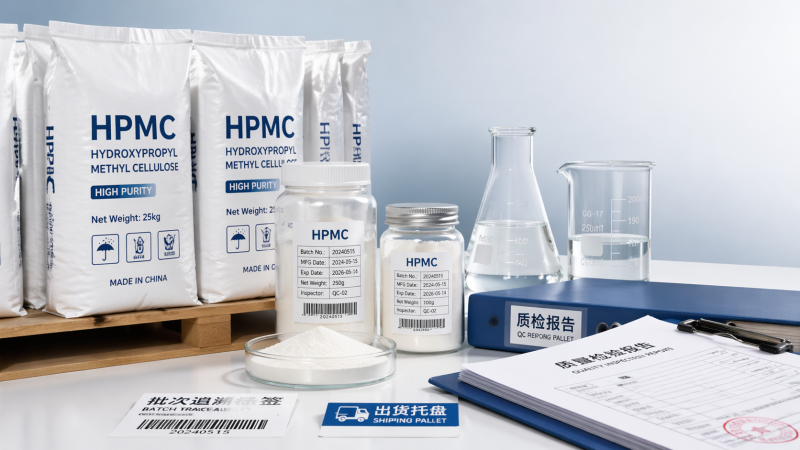
Choosing the wrong HYDROXYPROPYL METHYL CELLULOSE supplier can lead to unstable quality, delivery risks, and rising project costs. For procurement teams, technical evaluators, and quality managers, knowing the warning signs matters just as much as comparing Polyvinyl Alcohol price, reviewing a Redispersible Polymer Powder exporter, or sourcing Lubricants for industrial use. This article highlights the key red flags you should never ignore before selecting a reliable partner.
Why HPMC supplier selection affects quality, cost, and project continuity
In the chemicals industry, HPMC is rarely a simple commodity purchase. It directly influences water retention, workability, open time, sag resistance, and consistency in applications such as tile adhesive, dry mix mortar, skim coat, gypsum systems, and other construction formulations. When a supplier cannot maintain stable viscosity, substitution degree, or batch consistency, the impact often appears downstream as customer complaints, higher rework rates, or unstable production windows.
For technical evaluators, the first concern is performance repeatability across 3 to 5 consecutive batches, not just a single attractive sample. For procurement teams, the key issue is total supply reliability over 2 to 4 quarters, including lead time, communication efficiency, and claim handling. For decision-makers, the bigger question is whether the supplier can support scaling from trial quantities to container-level orders without quality drift or delivery disruption.
A dependable partner should be able to explain grade differences clearly, provide a practical viscosity range such as 400 to 200,000 CPS where relevant, and discuss how specific HPMC types fit different formulations. This matters because one mortar plant may prioritize anti-sag behavior while another focuses on pumpability or water demand control. If a supplier talks only about price per ton and avoids application discussion, that is already a warning sign.
Jinan Ludong Chemical Co., Ltd. focuses on cellulose ethers with integrated production, trading, and service capabilities. Its annual production capacity reaches 45,000 tons, and its HPMC product lines include type 75 and type 60 for construction and chemical grades. For buyers, that scale matters because it can support both regular volume planning and more flexible supply arrangements when project demand changes within a 7 to 15 day window.
- Batch-to-batch consistency affects product acceptance, site performance, and complaint risk.
- Lead time stability affects plant scheduling, safety stock, and customer delivery commitments.
- Technical responsiveness affects formulation adjustment speed during trials and scale-up.
Which HPMC supplier red flags should procurement teams never ignore?
Some supplier risks are visible early, while others remain hidden until production starts. A low quotation may appear competitive, but if the supplier cannot provide clear technical data, traceable batch records, or realistic shipment commitments, the apparent savings often disappear through reformulation work, delayed dispatch, and customer claims. In B2B chemical sourcing, red flags usually appear in communication, documentation, samples, and process transparency.
The table below summarizes common warning signals and what they may mean for technical, quality, and purchasing teams. It is especially useful during supplier shortlisting, sample review, and pre-order audits, when a structured checklist can reduce subjective judgment and keep the evaluation aligned across departments.
These signals do not automatically disqualify a supplier, but they should trigger deeper review. A practical rule is to verify at least 5 key checkpoints before placing a commercial order: grade clarity, viscosity control approach, application recommendation, batch traceability, and realistic delivery schedule. If two or more of these areas remain unclear after repeated communication, the sourcing risk is usually too high for critical production lines.
Communication red flags during technical and commercial review
A reliable HPMC supplier should answer basic technical questions with precision. That includes explaining whether a grade is more suitable for tile adhesive, wall putty, self-leveling compounds, or gypsum applications, and describing how viscosity affects use behavior. If the response remains generic after 2 or 3 exchanges, buyers should assume that future troubleshooting may also be slow and incomplete.
Commercial ambiguity is another warning sign. If packaging details, minimum order quantity, loading plans, or common lead times are unclear, the risk extends beyond purchasing into warehousing and production planning. Good suppliers define what can be shipped immediately, what needs scheduling, and what depends on raw material or line allocation.
Signs that a quotation is incomplete
An HPMC offer should not be judged by unit price alone. It should also clarify product grade, viscosity range, moisture-related storage guidance, packaging type, and expected lead time. In some procurement comparisons, a slightly higher quote can still be more economical if it reduces failed trials, urgent freight, and on-site performance complaints. The same logic applies when buyers compare additives such as Polyvinyl Alcohol alongside cellulose ether systems.
How to evaluate technical stability before you approve an HPMC supplier
Technical evaluation should move from paper review to sample validation and then to controlled production testing. In practice, many failures happen because teams approve a supplier after one lab result instead of checking performance across multiple batches or realistic plant conditions. A stronger process uses 3 stages: documentation screening, comparative lab formulation, and pilot or line validation under actual mixing procedures.
For construction chemicals, procurement and R&D teams often look at 4 core indicators: viscosity consistency, water retention behavior, workability impact, and compatibility with other additives. Depending on the formulation, additional checks may include anti-sag performance, open time, or resistance to separation during storage and transport. The supplier should be able to discuss which parameters matter most instead of presenting one generic data sheet for every use case.
Ludong Chemical’s manufacturing model combines traditional process discipline with intelligent automated production, which is relevant to buyers seeking repeatability at volume. With integrated production lines and cellulose ether specialization, the company is positioned to support both standard grades and more application-oriented discussions. That is valuable when technical teams need clearer guidance on type 75 versus type 60 selection or on choosing a viscosity window for specific dry mix systems.
A useful internal rule is this: no supplier should be approved without at least 2 to 3 production-representative test rounds. Lab success is important, but pilot confirmation under actual water ratio, mixing time, and filler system is what reveals whether the HPMC grade is stable enough for long-term use. This approach reduces costly switching later.
Key questions technical evaluators should ask
- What is the target application, and which HPMC grade is recommended for that exact formulation scenario?
- What viscosity control range is typical for the offered grade, and how is lot consistency monitored?
- Can the supplier explain expected behavior in tile adhesive, putty, gypsum, or self-leveling systems instead of giving generic claims?
- How many days are normally required for sample preparation, commercial order confirmation, and shipment scheduling?
The table below can help teams build a more disciplined technical review framework. It translates broad quality expectations into specific checkpoints that can be discussed with suppliers before contract commitment.
A table like this also helps align departments. Procurement may focus on shipment and terms, while quality managers focus on traceability and technical teams focus on performance. Putting these checks into one framework makes supplier approval faster and more objective.
What do quality and compliance teams need to confirm?
Quality managers and safety personnel should review more than the sample itself. In chemical purchasing, document discipline is often the difference between a controllable issue and a disruptive claim. Even where no special industry-specific certification is requested by the buyer, the supplier should still provide standard commercial and technical documentation, including product specifications, lot identification logic, storage guidance, and a clear communication path for nonconformance handling.
A practical audit approach is to review 6 items before approval: product specification sheet, COA format, packaging label details, storage recommendations, complaint response process, and change notification practice. If a supplier cannot explain how formulation-impacting changes are communicated, the risk is not only technical but contractual. This is particularly important when HPMC is part of a validated formula sold to end customers under stable performance promises.
In many cases, compliance review also overlaps with logistics and warehouse management. Teams should ask about typical shelf-life guidance, moisture protection during transport, and packaging integrity for long-distance shipment. A low-cost supplier can become expensive if bags arrive damaged, labels are incomplete, or warehouse handling instructions are inconsistent across batches.
For buyers comparing multiple specialty additives, consistency in documentation standards can simplify audits across categories. That is one reason some purchasing teams evaluate cellulose ethers, RDP, HPS, and Polyvinyl Alcohol suppliers using one cross-functional checklist rather than separate informal reviews.
A simple approval checklist for QC and safety teams
- Confirm product identity, application grade, and lot coding method.
- Review whether specification values and testing methods are clearly stated.
- Check packaging, labeling, storage, and transport protection requirements.
- Verify claim handling steps and expected response timeline, ideally within 24 to 72 hours for first feedback.
- Ask how process or raw material changes are communicated before they affect supply.
Why traceability matters more when supply volume grows
At small sample volume, inconsistencies can be overlooked. At recurring monthly shipments or container-level orders, traceability becomes essential. Without clear lot identification and retained technical records, teams cannot easily isolate whether a field complaint came from formula change, production conditions, storage exposure, or incoming raw material variation.
How to compare suppliers beyond price alone
Price pressure is real, but experienced buyers know that the cheapest HPMC quote is not always the lowest total cost option. A difference in delivered performance, rejection risk, or lead time reliability can easily outweigh a lower unit price. A good comparison model includes 4 dimensions: technical fit, supply stability, service responsiveness, and commercial competitiveness. When one dimension is weak, the entire sourcing result becomes fragile.
For example, if Supplier A offers a lower price but needs 3 to 4 weeks for shipment and provides limited troubleshooting support, while Supplier B offers a moderate price with stronger batch control and faster technical feedback, Supplier B may be the safer choice for production-critical formulas. This is especially true when customer deadlines are tight or when line stoppage cost exceeds raw material savings.
Ludong Chemical’s advantage lies in its manufacturing scale, integrated service model, and specialization in cellulose ethers. With annual capacity reaching 45,000 tons and viscosity control options from 400 to 200,000 CPS, it is better positioned to discuss both standard procurement and application-oriented selection. For enterprise buyers, this reduces the gap between commercial ordering and technical implementation.
A useful sourcing strategy is to avoid single-factor decisions. Ask what happens after the first order: can the supplier support repeat supply, formulation adjustment, urgent replenishment, and documentation review over the next 6 to 12 months? If the answer is weak, the initial savings may not be sustainable.
A practical decision model for procurement and management
When several suppliers look similar on paper, scoring can help. Teams often assign internal weightings, such as 30% to technical consistency, 25% to delivery reliability, 20% to responsiveness, and 25% to commercial terms. The exact ratio can vary, but the principle remains the same: a competitive HPMC supplier must perform across multiple decision layers, not just quote aggressively.
- Use samples from at least 2 candidate suppliers for side-by-side comparison in the same formula.
- Run at least 1 pilot verification under plant conditions before confirming annual volume.
- Review monthly or quarterly delivery performance after onboarding to prevent hidden decline.
FAQ: common questions when screening an HPMC supplier
How many sample rounds are usually needed before approval?
For most B2B construction chemical applications, 2 to 3 rounds are more reliable than a single sample test. The first round checks basic compatibility, the second confirms repeatability, and the third can validate plant-level behavior if required. If a supplier resists repeat sampling or cannot explain batch consistency, the risk remains high.
What is a reasonable lead time to discuss with an HPMC manufacturer?
Lead times depend on grade, packaging, order size, and shipping destination, so buyers should ask for a normal range rather than a single promise. In practice, teams often plan around 7 to 15 days for common preparation and dispatch arrangements, but this must be confirmed case by case. The important point is transparency: realistic scheduling is safer than overly aggressive commitments.
What should buyers prioritize: viscosity range or application recommendation?
Both matter, but application recommendation should come first. A viscosity figure alone does not guarantee the right field performance. Buyers should ask how a grade behaves in the intended formulation, then confirm whether the stated viscosity range supports that behavior. This is particularly important when comparing tile adhesive, putty, gypsum, or chemical-grade uses.
What are the most common mistakes in HPMC sourcing?
The most common mistakes are approving by price only, relying on one sample result, skipping traceability review, and assuming all HPMC grades are interchangeable. Another frequent issue is separating procurement from technical review. In effective sourcing, purchasing, QC, and formulation teams work together from the first shortlist to the first commercial order.
Why choose us for HPMC sourcing and technical support
If your team is evaluating HPMC suppliers, you need more than a quotation sheet. You need a partner that can discuss application fit, viscosity options, supply continuity, and practical delivery planning in one conversation. Jinan Ludong Chemical Co., Ltd. specializes in cellulose ethers and related construction solution materials, with integrated production lines and annual capacity of 45,000 tons to support both stable volume demand and flexible order planning.
Our HPMC portfolio includes type 75 and type 60 for construction and chemical grades, with controllable viscosities from 400 to 200,000 CPS. That range helps technical teams narrow product selection faster, whether the target is tile adhesive, mortar, putty, or another formulation. We also understand that procurement decisions depend on more than product specs, so discussions can include packaging, sample support, lead time expectations, and supply coordination.
You can contact us for 6 practical topics: parameter confirmation, grade selection, sample arrangement, expected delivery cycle, customized solution discussion, and quotation review. If your team is comparing multiple suppliers, we can also support a clearer evaluation process by aligning technical information with purchasing needs and quality checkpoints.
For a more efficient next step, send your target application, required viscosity range, expected monthly volume, packaging preference, and destination market. With those 5 inputs, the discussion becomes faster, more accurate, and more useful for procurement, technical evaluation, and management approval.
Send Your Inquiry
We welcome your cooperation and we will develop with you.
