


HPMC or HEMC: Which One Performs Better in Mortar?
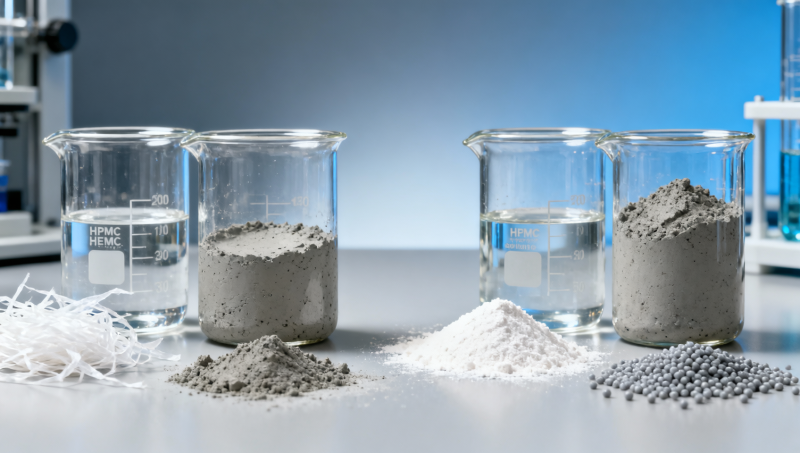
In mortar formulation, choosing between HYDROXYPROPYL METHYL CELLULOSE (HPMC) and HEMC can directly affect water retention, workability, open time, and final strength. For technical evaluators, buyers, and quality managers, understanding how these cellulose ethers interact with Redispersible Polymer Powder, Polyvinyl Alcohol, and Lubricants is essential for selecting the most cost-effective and performance-driven solution.
For most drymix mortar applications, there is no universal winner between HPMC and HEMC. The better choice depends on the performance target, climate conditions, application method, and cost boundary. In general, HPMC is often favored for balanced water retention, broad formulation compatibility, and supply consistency, while HEMC is frequently selected when stronger workability, smoother application feel, and better temperature-related performance are priorities. For decision-makers, the key question is not simply “Which one is better?” but “Which one performs better in this mortar system, under these jobsite conditions, at this cost level?”
What technical buyers really need to compare between HPMC and HEMC
The most relevant comparison points are:
- Water retention: critical for cement hydration, anti-sag behavior, and crack reduction
- Workability: how smooth, creamy, and easy the mortar feels during mixing and application
- Open time: especially important in tile adhesives and skim coat systems
- Slip resistance and sag control: essential for vertical applications
- Compatibility with other additives: especially RDP, starch ether, defoamers, lubricants, and PVA-based components
- Thermal stability during use: important in hot climates and long mixing times
- Cost-performance ratio: not only unit price, but dosage efficiency and rework reduction
For procurement teams, a lower-cost cellulose ether is not automatically the better option if it increases dosage, worsens consistency, or causes batch-to-batch instability. For quality managers, the real benchmark is reproducible mortar behavior across raw material fluctuations and seasonal conditions.
How HPMC and HEMC behave differently in mortar
Both HPMC and HEMC are cellulose ethers used to improve mortar performance, but their substitution structure creates noticeable differences in application behavior.
HPMC is widely used in construction mortar because it offers a reliable balance of:
- high water retention
- good thickening efficiency
- stable workability
- broad compatibility with cement-based systems
- strong adaptability across tile adhesive, plaster, render, and self-leveling related formulations
HEMC is often appreciated for:
- excellent workability and smooth application feel
- good anti-sag performance in some formulations
- potentially better usability under elevated temperature conditions
- extended open time in certain tile adhesive systems
In practical terms, many formulators describe the difference this way: HPMC tends to deliver dependable all-around control, while HEMC may provide a more refined application experience in specific mortar designs. However, this is highly formulation-dependent. Cement type, filler gradation, sand moisture, polymer loading, and auxiliary additives can significantly shift the result.
Which one performs better in key mortar applications?
Tile adhesive:
In tile adhesives, both HPMC and HEMC can perform well, but the decision usually comes down to open time, slip resistance, and wetting ability. If the goal is balanced retention and dependable adhesion across standard conditions, HPMC is often the safer baseline. If extended open time and improved troweling feel are top priorities, HEMC may show an advantage.
Wall putty and skim coat:
For skim coat systems, smoothness, knife feel, and anti-shrink behavior matter more to the applicator. HEMC can be attractive where superior spreading feel is required. HPMC remains a common choice where manufacturers want broad process stability and easier sourcing across multiple markets.
Cement plaster and rendering mortar:
In plastering applications, water retention and labor efficiency are major concerns. HPMC is frequently used for its stable thickening and water management. HEMC may be selected when hot weather application or improved handling is especially important.
EIFS/ETICS and insulation bonding systems:
These systems require stable adhesion, anti-slip properties, and compatibility with polymer modification. HPMC is commonly preferred in such applications due to its well-established use profile and strong interaction with redispersible polymer systems.
If the goal is a broad product portfolio with fewer formulation changes, HPMC often offers greater standardization value. If the goal is application optimization for a narrower high-performance segment, HEMC may justify the extra evaluation work.
How these cellulose ethers interact with RDP, PVA, and lubricants
This is where technical evaluation becomes more meaningful. A cellulose ether should never be judged alone. Mortar performance depends on how the full additive package behaves together.
With Redispersible Polymer Powder (RDP):
RDP improves adhesion, flexibility, and impact resistance. HPMC generally shows very good compatibility with RDP in tile adhesive and repair mortar systems, helping maintain water retention and workability without destabilizing the mix. HEMC can also work effectively with RDP, and in some systems may contribute to a more favorable application feel. The right choice depends on balancing polymer film formation, setting behavior, and sag resistance.
With Polyvinyl Alcohol (PVA):
PVA may be used in selected formulations for film-forming, binding, or specialty handling effects. In these systems, cellulose ether selection should be tested carefully, since viscosity development and water demand can shift. HPMC is often chosen where predictable rheology control is required.
With lubricants and rheology modifiers:
Lubricants can improve application smoothness, but if the cellulose ether structure already provides strong slip or creaminess, overuse may reduce body or negatively affect anti-sag properties. HEMC may feel smoother in some formulations, while HPMC may provide a more controlled balance between lubrication and structure.
For manufacturers managing multiple additive suppliers, laboratory screening should focus on the combined effect, not isolated datasheet values. Brookfield viscosity alone is not enough to predict field performance.
How to make the right selection: technical and commercial checklist
For technical evaluators, procurement specialists, and business decision-makers, the best selection process should include both lab data and operational factors.
1. Define the actual priority
Is the main target lower dosage, better open time, stronger anti-sag, smoother application, or better hot-weather stability? Without a clear target, comparison results are often misleading.
2. Test under realistic formulation conditions
Use the actual cement, fillers, sand system, and polymer package. A cellulose ether that performs well in a generic lab formula may behave differently in production.
3. Evaluate dosage efficiency
A higher-priced grade may still reduce total formula cost if it works at a lower addition level or improves yield and consistency.
4. Check supply stability and viscosity range
For large-scale manufacturers and distributors, supply continuity matters as much as performance. Producers with controlled viscosity ranges and scalable capacity reduce operational risk. Jinan Ludong Chemical Co., Ltd., for example, offers cellulose ether manufacturing capacity with viscosities controllable from 400 to 200,000 CPS, which is highly relevant for customers managing diversified mortar grades.
5. Consider cross-application sourcing strategy
Some buyers prefer to standardize around one core cellulose ether family across multiple construction products to simplify inventory and quality control. Others optimize each formulation separately for maximum performance.
6. Verify quality and application support
A qualified supplier should support not just sales, but formulation matching, sample testing, and problem diagnosis. That matters even more when the same company also serves other cellulose ether markets, such as Detergent-grade HPMC, because broader product expertise can sometimes reflect stronger process control and derivative technology understanding.
So, which one should you choose?
If you need a concise decision rule, it is this:
- Choose HPMC when you want a proven, versatile, and broadly compatible solution for mortar systems, especially where formulation stability, sourcing consistency, and balanced performance matter most.
- Choose HEMC when your application places higher value on improved handling feel, potential open-time advantages, or performance tuning under specific environmental conditions.
For many companies, HPMC is the more practical first-choice benchmark because it is easier to standardize across product lines and often delivers a dependable cost-performance balance. HEMC becomes highly attractive when a formulation has already been narrowed to a more specialized application target and the manufacturer wants to optimize user experience on-site.
The most reliable conclusion is not based on theory alone: run side-by-side testing in your own mortar system, with your own raw materials, at your own dosage limits.
In the end, HPMC and HEMC are both valuable mortar additives, but they solve priorities differently. HPMC usually stands out for balanced performance, formulation flexibility, and commercial practicality. HEMC can outperform when application smoothness, open time, or certain jobsite conditions are the deciding factors. For technical teams, buyers, and quality managers, the best choice is the one that delivers repeatable field performance, acceptable cost, stable supply, and lower risk across the full production chain.
Send Your Inquiry
We welcome your cooperation and we will develop with you.
