


Blog
Is High Viscosity HPMC Right for You
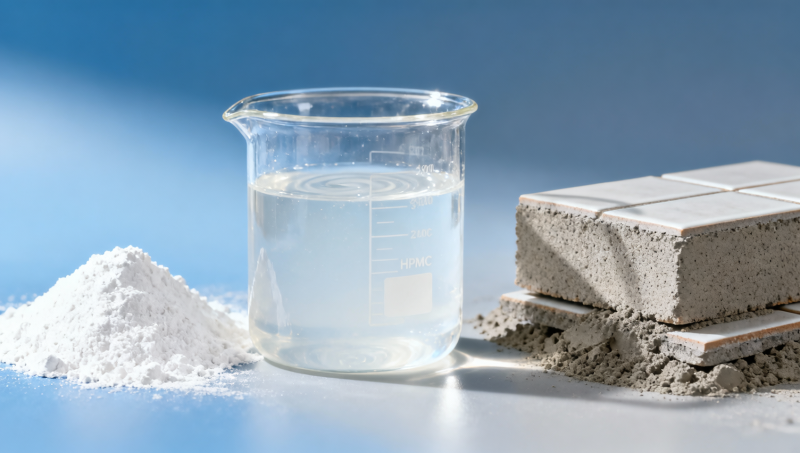
Choosing HYDROXYPROPYL METHYL CELLULOSE high viscosity is not just a technical decision but a business one. For technical evaluators, commercial teams, and decision-makers, working with a reliable HYDROXYPROPYL METHYL CELLULOSE supplier means balancing application performance, consistency, and cost. This guide helps you assess whether high-viscosity HPMC fits your formulation and procurement goals.
What Buyers and Evaluators Really Need to Know First
If you are asking whether high viscosity HPMC is right for you, the short answer is: it is the right choice only when your application truly benefits from stronger water retention, thicker consistency, improved sag resistance, or longer open time. It is not automatically the “better” option. In many formulations, excessively high viscosity can reduce workability, complicate processing, or increase cost without delivering proportional value.
For technical assessment teams, the real question is performance fit. For commercial teams, it is supply stability and price-performance balance. For decision-makers, it is whether the selected grade improves end-product competitiveness while controlling operational risk.
When High Viscosity HPMC Makes Sense
High viscosity HPMC is typically selected when a formulation needs stronger rheology control and better water management. In construction and chemical applications, this often matters in products such as tile adhesives, wall putty, cement-based mortars, skim coats, and other drymix systems where application behavior directly affects final quality.
You should consider high viscosity HPMC if your product needs:
- High water retention to support cement hydration and reduce rapid moisture loss
- Better anti-sag performance in vertical applications
- Improved consistency and thicker feel during mixing and application
- Longer open time for installation or adjustment
- Enhanced suspension stability in certain liquid or semi-liquid systems
In these scenarios, the right high viscosity grade can improve usability for contractors, reduce application defects, and support more stable finished-product performance.
When High Viscosity HPMC May Not Be the Best Choice
There are also many cases where high viscosity is unnecessary or even counterproductive. If your formulation requires faster dispersion, lighter consistency, easier pumping, or lower dosage cost, a lower or mid-range viscosity grade may be more suitable.
Potential drawbacks of choosing too high a viscosity include:
- Reduced flow and more difficult mixing
- Heavier application feel for end users
- Possible incompatibility with other formulation components
- Longer dissolution or hydration behavior depending on system design
- Higher raw material cost without equivalent performance gain
This is why viscosity should never be selected in isolation. It must be evaluated together with formulation structure, end-use expectations, process conditions, and target cost.
How Technical Teams Should Evaluate High Viscosity HPMC
For technical evaluators, a practical assessment should focus on measurable outcomes rather than viscosity alone. The specification may say 40,000, 100,000, or 200,000 CPS, but what matters is how the grade performs in your real formulation.
Key evaluation factors include:
- Water retention: Does it help maintain sufficient moisture under site conditions?
- Workability: Is the material easy to spread, comb, pump, or trowel?
- Open time: Does it provide enough adjustment time without harming set behavior?
- Sag resistance: Does it hold position in vertical or thick-layer use?
- Compatibility: Does it work well with cement, fillers, starch ether, RDP, and additives?
- Batch consistency: Does performance remain stable from one lot to another?
Lab testing should simulate actual use conditions as closely as possible. A grade that performs well in a simple viscosity comparison may behave differently in a complete mortar or putty system.
What Commercial and Procurement Teams Should Compare
From a business perspective, the decision is not only about technical suitability. Procurement and commercial teams should compare total value, not just price per kilogram.
The most important questions include:
- What dosage is required to reach target performance?
- Is the supplier able to maintain stable quality at scale?
- How wide is the available viscosity range for future formulation adjustment?
- What is the annual production capacity and supply reliability?
- Can the supplier support both standard and customized requirements?
- What are the logistics, lead time, and global service capabilities?
A lower-priced product that requires higher dosage or causes batch instability can become more expensive in practice. For many buyers, the best supplier is the one that reduces formulation risk, production disruption, and customer complaints.
Why Supplier Capability Matters as Much as the Product
High viscosity HPMC performance depends not only on nominal viscosity but also on manufacturing control, raw material consistency, process stability, and technical support. That is why supplier evaluation should be part of the selection process from the beginning.
Jinan Ludong Chemical Co., Ltd. is a large-scale global manufacturer focused on cellulose ethers and integrated construction solutions. Its product portfolio includes HPMC, redispersible polymer powder, and hydroxypropyl starch ether, with annual production capacity reaching 45,000 tons. Its HPMC series covers construction and chemical grades, with controllable viscosities from 400 to 200,000 CPS. For buyers evaluating long-term sourcing options, this type of capacity range is useful because it supports both current product matching and future formulation optimization.
If you are comparing supplier options for Hydroxypropyl Methyl Cellulose, it is worth looking beyond the data sheet to assess production flexibility, quality consistency, and service responsiveness.
A Simple Decision Framework: Is High Viscosity HPMC Right for You?
You are more likely to need high viscosity HPMC if most of the following are true:
- Your application requires strong water retention
- Your customers value anti-sag behavior and application stability
- Your formulation benefits from increased thickness and structure
- You are targeting premium or performance-sensitive product grades
- You have validated that higher viscosity improves real-use results
You may need a lower or medium viscosity option if these points describe your situation better:
- Easy mixing and flow are top priorities
- Your end product is highly cost-sensitive
- Very high thickening is not necessary for the application
- You want to minimize dosage cost while maintaining acceptable performance
- Your production process responds better to faster-dispersing or lighter-rheology grades
In many cases, the best decision comes from formulation testing across several viscosity levels rather than assuming the highest grade will produce the best outcome.
Final Takeaway
High viscosity HPMC is the right choice when it delivers clear formulation and market advantages, such as better water retention, improved anti-sag performance, stronger workability control, and more reliable application results. But it should be selected based on end-use performance, not on viscosity number alone.
For technical evaluators, the priority is validated application fit. For commercial teams, it is cost-performance balance and supplier reliability. For business decision-makers, it is long-term product quality, procurement security, and return on formulation investment.
If your team is reviewing options for Hydroxypropyl Methyl Cellulose, the smartest path is to combine lab validation with supplier capability assessment. That approach will help you determine whether high viscosity HPMC truly supports your product goals—or whether another grade would create better overall value.
Send Your Inquiry
We welcome your cooperation and we will develop with you.
