


Redispersible Polymer Powder: What Affects Cost Most?
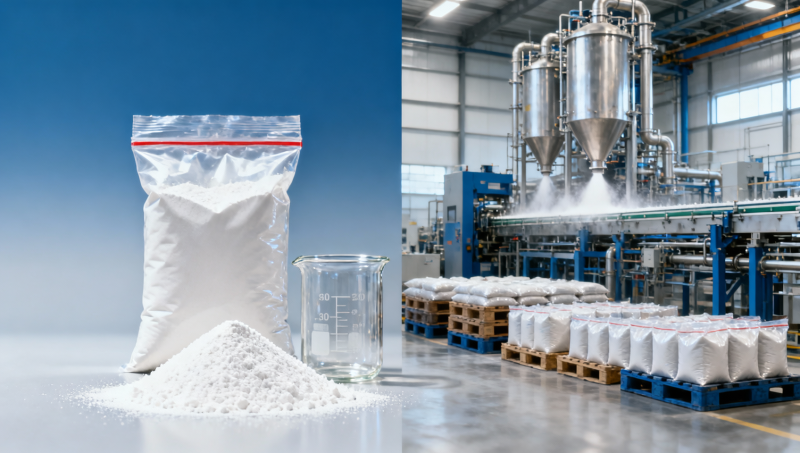
For buyers and technical teams evaluating Redispersible Polymer Powder, cost is shaped by far more than raw material prices alone. Factors such as Polyvinyl Alcohol quality, Lubricants selection, production consistency, and the use of complementary materials like HYDROXYPROPYL METHYL CELLULOSE all influence final pricing, performance, and supply reliability. Understanding these cost drivers helps procurement, quality, and decision-makers make smarter sourcing choices.
Which Cost Factors Matter Most in Redispersible Polymer Powder Purchasing?
A well-produced RDP must redisperse reliably, support adhesion, improve flexibility, and maintain workability across different construction environments. To achieve this, manufacturers control feedstock purity, drying conditions, particle distribution, and anti-caking balance. Even a small variation in process control across 2–3 production batches can create downstream differences in mortar performance, water demand, or storage stability. That is why technically similar offers may still show a meaningful price gap.
For decision-makers, cost evaluation should also include hidden operational exposure. Lower-cost material that causes more formulation adjustment, slower mixing, or claim risk in the field can increase total ownership cost over a 3–6 month supply cycle. This is especially important for distributors, project suppliers, and factory users serving tile adhesives, skim coat, repair mortar, EIFS, or self-leveling systems.
Jinan Ludong Chemical Co., Ltd. supports this type of evaluation with integrated cellulose ether and construction chemical production capabilities. With annual production capacity reaching 45,000 tons and HPMC viscosity control from 400 to 200,000 CPS, the company is positioned to help customers assess not only product price, but also system compatibility between RDP and cellulose-based additives used in modern dry-mix formulations.
Why a Price Difference of One Grade Is Not Always About Margin
In many tenders, two suppliers may present products that appear similar on paper, yet one is priced 5%–15% higher. This difference often reflects better raw material selection, tighter batch control, cleaner spray drying conditions, or more stable packaging and moisture protection. For chemical buyers, understanding this structure helps prevent overemphasis on invoice price while ignoring application losses and complaint costs.
- Raw material quality affects film formation, redispersion behavior, and long-term storage stability.
- Process consistency affects batch-to-batch reproducibility, which is critical for quality control teams.
- Packaging and moisture control affect transport risk, especially in sea freight cycles of 2–6 weeks.
- Technical support reduces trial-and-error during formula optimization and new market introduction.
How Do Raw Materials and Formulation Inputs Change RDP Cost?
Raw materials remain one of the most visible cost drivers in Redispersible Polymer Powder production. However, buyers should look beyond the general label of “polymer base.” The actual cost impact comes from the selected polymer chemistry, protective colloid level, lubricant package, anti-caking mineral choice, and the target performance profile required by the end use. In practical sourcing work, these inputs often determine whether a powder is optimized for standard interior mortar or more demanding exterior and flexible applications.
One major component is Polyvinyl Alcohol, commonly used as a protective colloid in the production system. Its grade, hydrolysis level, and stability influence redispersion behavior and powder handling. Higher-quality input can improve dispersion and reduce formulation variability, but it may also increase production cost. For purchasers comparing offers across regions, this is one reason why nominally equivalent RDP grades may not perform the same in water retention, bonding, or workability tests.
Lubricants and anti-caking materials also affect economics. These may seem secondary, but they influence powder flow, storage resistance, and handling during high-humidity transport. If the chosen auxiliary package is too simple, the material may cake during storage or show lower feeding stability in automatic dry-mix plants. In large-volume procurement, avoiding these issues can matter more than saving a small amount on initial product cost.
Another cost factor is formulation compatibility with cellulose ether, especially HPMC. When RDP is paired with the right HPMC viscosity range, a manufacturer can often improve workability and reduce unnecessary overdesign in the mortar system. That is why an integrated supplier with experience in both RDP and cellulose ethers can help customers balance performance and budget more effectively across 3 key levers: polymer loading, rheology control, and application target.
Key Input Variables Buyers Should Review
The table below summarizes major material-side cost drivers and explains why they matter during technical evaluation and commercial negotiation.
This comparison shows why cost control in Redispersible Polymer Powder starts at the raw material and formulation level. A lower-cost offer may still become more expensive if it requires additional dosage, creates mixing issues, or fails to match the intended additive system.
Why Do Manufacturing, Quality Control, and Supply Stability Influence Price?
In chemical manufacturing, price is strongly linked to process discipline. For RDP, the production route must maintain stable solids handling, controlled spray drying, predictable particle morphology, and consistent residual moisture management. Buyers focused only on declared specifications may miss the importance of manufacturing repeatability. Yet for quality teams and plant managers, repeatability across monthly orders is often one of the most valuable parts of the product.
Batch stability matters because dry-mix mortar plants often operate on fixed formula windows. If one batch requires adjustment in 1 or 2 key additives, production efficiency can drop, and trial verification time may increase by several hours or even several production runs. A supplier with intelligent automated production and standardized control procedures is generally better equipped to deliver consistent material over repeated shipments.
Packaging, warehousing, and shipping are also part of cost. In export business, supply chains may involve 7–15 days for document preparation and inland scheduling, plus 2–4 weeks of ocean transit depending on destination. If moisture barrier quality is weak or container loading control is poor, the customer may receive caked or degraded material. Therefore, logistics reliability is not separate from price; it is part of the value included in the offer.
Jinan Ludong Chemical combines traditional production knowledge with intelligent automation, helping customers reduce this type of supply risk. For procurement heads, this matters in two ways: more predictable delivery planning and better support for annual or quarterly purchasing schedules. For distributors, it also supports customer retention because fewer quality deviations mean fewer complaints from downstream users.
A Practical Checklist for Evaluating Production-Related Cost
Before accepting a lower quote, use a 5-point review process to understand whether the savings are real or simply transferred into hidden risk.
- Confirm whether batch-to-batch consistency data is available for at least 3 consecutive production lots.
- Check packaging integrity and storage recommendations for high-humidity or long-transit environments.
- Review whether the supplier supports compatibility testing with HPMC, HPS, or other dry-mix additives.
- Ask for typical lead time windows, such as 7–15 days for standard orders and longer for customized grades.
- Evaluate response speed for complaints, re-testing, and application troubleshooting after delivery.
How Production Strength Changes Procurement Confidence
A supplier with broad production capacity and integrated product lines can often support more stable procurement planning. This is especially useful when customers need RDP together with HPMC or HPS for coordinated formulation development. Instead of sourcing from multiple vendors and spending 2–3 rounds of testing on compatibility issues, buyers can shorten evaluation cycles and improve accountability through coordinated technical support.
How Should Buyers Compare Low-Cost, Balanced, and Premium RDP Options?
Not every project needs the same Redispersible Polymer Powder grade. A standard interior wall putty may accept a different cost-performance balance than exterior tile adhesive or flexible repair mortar. The right purchasing approach is to match technical demand with the required performance window, rather than overbuying or underbuying. This is where technical evaluators and commercial teams should work together.
A low-cost option may be suitable for basic, low-risk formulations where flexibility demand is limited and local storage conditions are controlled. A balanced option may fit most routine dry-mix applications, combining acceptable adhesion, workability, and shipping stability. A premium option is usually justified when projects face outdoor exposure, stricter substrate movement, export resale, or higher complaint sensitivity. In many cases, spending more on the right grade reduces lifecycle cost.
The table below can support a structured evaluation across application type, risk level, and procurement strategy. It is especially useful for distributors and private-label buyers managing multiple customer segments in parallel.
This type of comparison helps companies avoid a common procurement mistake: evaluating all RDP grades by one price benchmark. In reality, the best option depends on substrate conditions, climate exposure, customer claims tolerance, and how much formula adjustment time the factory can accept each month.
What Should Technical and Purchasing Teams Align Before Ordering?
A successful purchase decision usually requires alignment on 3 categories of information: target application, processing environment, and commercial supply needs. If any of these is missing, the team may buy a material that looks economical but performs poorly in actual use.
- Target application: tile adhesive, skim coat, wall putty, repair mortar, EIFS, or self-leveling system.
- Processing environment: local climate, warehouse humidity, mixing equipment, and required workability window.
- Commercial needs: order volume, quarterly purchase plan, sample validation timing, and shipment schedule.
When these factors are clarified early, suppliers can recommend more accurate grades and reduce the number of trial cycles. That can save 1–2 rounds of lab reformulation and shorten the path from sample to commercial order.
What Procurement Risks and Misconceptions Increase Total Cost?
One common misconception is that Redispersible Polymer Powder is a simple commodity. In reality, two grades with similar basic descriptions may behave differently in workability, bonding, flexibility, and storage stability. For quality managers and safety-related reviewers, this means incoming inspection should focus not only on appearance, but also on practical compatibility with the intended formula system and storage conditions.
Another misconception is that dosage alone decides value. Some buyers believe a lower-priced powder will always be cheaper if dosage is kept low. But if the formulation then needs compensation through extra additives, additional HPMC, or more processing adjustment, the total formula cost can rise. A better approach is to compare cost per functional result, not just cost per kilogram.
There is also a supply-chain misconception: many teams underestimate the financial impact of unstable delivery. A delayed or inconsistent shipment can disrupt production planning, customer commitments, and distributor inventory flow. In B2B chemicals purchasing, a dependable lead time of 7–15 days for standard production planning can be worth more than a nominal discount that introduces uncertainty.
Finally, some companies test only one sample batch before annual procurement. This is risky. A stronger evaluation process includes at least 3 checkpoints: sample trial, pilot batch confirmation, and repeat-order verification. That gives purchasing and technical departments a more realistic view of long-term supply behavior.
FAQ for Buyers, QC Teams, and Distributors
How can we judge whether a higher-priced RDP is really worth it?
Check whether the higher-priced grade improves at least one important operational result: lower dosage requirement, better compatibility, fewer mixing issues, or stronger storage reliability over 2–4 weeks of logistics and warehouse handling. If it reduces reformulation time or customer complaints, the premium may be justified.
What should procurement ask for before placing a regular order?
Ask for a technical data sheet, batch consistency information, storage recommendation, packaging details, and suggested application range. If the product will be used with cellulose ether, request compatibility guidance. For new projects, a sample plus pilot test is usually more reliable than direct full-container ordering.
Is it useful to source RDP and cellulose ethers from one supplier?
In many cases, yes. An integrated supplier can often support faster formula matching and reduce troubleshooting between separate vendors. This is especially practical when customers need coordinated adjustment of RDP, HPMC, and HPS to achieve workability, water retention, and mechanical balance in dry-mix mortar systems.
How many times should a new grade be tested before commercial approval?
A practical minimum is 3 stages: lab screening, pilot production verification, and one repeat-order confirmation. This approach is more reliable than approving a grade from a single small sample because it reveals whether quality remains stable across actual production conditions.
Why Choose a Supplier That Understands Cost, Compatibility, and Delivery Together?
For Redispersible Polymer Powder buyers, the best sourcing outcome comes from balancing cost, performance, and operational reliability. Jinan Ludong Chemical Co., Ltd. offers value in this wider sense. Its integrated production and service model supports cellulose ether products, RDP-related formulation coordination, and application-focused communication for global dry-mix mortar customers. This is especially useful for teams that need both technical evaluation and commercial execution to move quickly.
Because Ludong Chemical operates comprehensive production lines and combines traditional process knowledge with intelligent automated production, customers can discuss not only quotation, but also formulation fit, batch consistency expectations, and supply planning. For businesses managing monthly demand, quarterly contracts, or market expansion through distributors, that kind of coordination can reduce risk and shorten decision cycles.
If you are reviewing Redispersible Polymer Powder costs, a more effective next step is to compare offers against 4 practical questions: Which grade matches your application? How should it work with HPMC or HPS? What lead time do you need across the next 1–3 months? What testing support is required before scale-up? These questions usually lead to better commercial outcomes than price comparison alone.
Contact us to discuss sample support, parameter confirmation, product selection, compatibility with dry-mix systems, typical delivery cycle, packaging options, and quotation planning. If needed, you can also ask about suitable additive combinations, including a second review of Polyvinyl Alcohol related input considerations for your target formulation and supply strategy.
Send Your Inquiry
We welcome your cooperation and we will develop with you.
