


How to Choose Redispersible Polymer Powder for Tile Adhesives
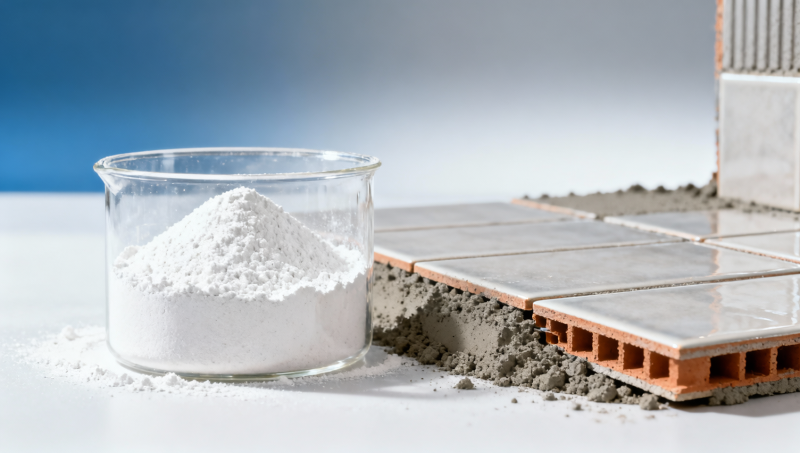
Choosing the right redispersible polymer powder for tile adhesives is not just a formulation detail—it directly affects bond strength, slip resistance, open time, flexibility, water resistance, and overall installation reliability. For technical evaluators, procurement teams, quality managers, and business decision-makers, the best choice is usually not the “highest-grade” powder, but the one that matches the tile type, substrate, performance standard, production process, and cost target. In practice, selection should focus on polymer type, re-dispersion behavior, compatibility with hydroxypropyl methylcellulose (HPMC), powder workability, and consistency in batch quality. This guide explains how to make that decision in a practical and commercially useful way.
What Matters Most When Choosing Redispersible Polymer Powder for Tile Adhesives
The answer starts with application requirements. Tile adhesive formulations vary widely depending on whether they are designed for ceramic tiles, porcelain tiles, large-format tiles, interior wall applications, floor systems, or more demanding environments with moisture and temperature variation. The selected polymer powder must support the specific balance of:
- Adhesion strength
- Flexibility and deformability
- Open time
- Anti-slip performance
- Water retention coordination with HPMC
- Workability during application
- Durability after curing
For many manufacturers, redispersible polymer powder is one of the key functional additives that determines whether a tile adhesive can meet expected standards and remain cost-effective in mass production.
Start with the Performance Target, Not Just the Raw Material Name
A common mistake in procurement and technical screening is selecting based only on product category or price. Instead, start from the final adhesive performance target.
Ask these questions first:
- What tile type will the adhesive be used for?
- Is the substrate absorbent or non-absorbent?
- Does the product need standard adhesion or enhanced flexibility?
- Will it be used indoors, outdoors, or in wet areas?
- Does the formulation need to meet specific standards such as C1, C2, T, E, or S classifications?
- Is the priority maximum performance, balanced performance, or optimized cost?
For example, standard ceramic tile adhesive on absorbent substrates may require a more economical performance profile. But porcelain tiles, large-format tiles, or low-absorption surfaces usually need stronger polymer modification to improve adhesion and reduce installation failure risk.
Key RDP Properties That Directly Affect Tile Adhesive Performance
Not all redispersible polymer powders behave the same in cement-based tile adhesive systems. Technical evaluators should focus on the following properties.
1. Polymer Composition
The base polymer chemistry has a major influence on flexibility, adhesion, hydrophobicity, and overall mechanical behavior. Different polymer systems are suited to different application priorities. In tile adhesives, polymer selection should align with whether the formulation needs stronger dry adhesion, better wet adhesion, improved deformability, or more balanced all-around performance.
2. Re-dispersion Quality
A high-quality powder should disperse uniformly in water and integrate well into the cementitious system. Poor re-dispersion can lead to inconsistent film formation, unstable workability, and fluctuations in bond strength. This is especially important for plants aiming for repeatable large-scale production.
3. Glass Transition Temperature and Film Formation Behavior
These characteristics influence flexibility and cohesive strength. In practical terms, the wrong balance may cause the adhesive to become too rigid or insufficiently strong. For tile adhesives exposed to thermal variation or movement, this factor becomes more important.
4. Ash Content and Mineral Carrier System
Redispersible polymer powders usually contain anti-caking mineral carriers. Their level and composition can affect flowability, effective polymer content, and formulation response. Procurement teams comparing products purely by unit price may overlook that lower-cost powders sometimes deliver lower effective performance in the formula.
5. Contribution to Adhesion and Deformability
The powder should improve cement adhesion to both tile and substrate while helping absorb stress caused by shrinkage, movement, or thermal change. This is one of the main reasons polymer-modified tile adhesives outperform unmodified dry-mix systems.
Why Compatibility with HPMC Is a Critical Selection Factor
In tile adhesive formulations, redispersible polymer powder does not work alone. Its performance depends strongly on compatibility with hydroxypropyl methylcellulose. HPMC controls water retention, application feel, sag resistance, and open time, while the polymer contributes adhesion, flexibility, and toughness.
If the balance is poor, several formulation problems may appear:
- Weak early handling properties
- Unsatisfactory anti-slip performance
- Reduced wetting of tile backs
- Poor trowelability
- Inconsistent open time
- Loss of bond strength after curing
For this reason, quality managers and formulators should evaluate the whole additive system rather than testing polymer powder in isolation. Manufacturers with deep experience in cellulose ethers and polymer modification often provide better technical support in optimizing this interaction.
How Polyvinyl Alcohol and Lubricants Influence Selection
Two often-overlooked aspects in polymer powder evaluation are protective colloids and formulation side effects.
Polyvinyl Alcohol (PVA)
Polyvinyl alcohol is commonly used as a protective colloid in the production of redispersible polymer powder. It helps stabilize the polymer particles and affects re-dispersion behavior, water interaction, and adhesion characteristics. The type and amount of residual PVA can influence how the powder performs in tile adhesive systems, especially in relation to water resistance and workability.
For technical assessments, it is useful to understand whether a supplier can provide clear information about the role of PVA in the product and how it may affect final application results.
Lubricants and Processing Aids
Lubricants or other minor formulation aids can alter powder flow, mixing behavior, and user application feel. In some cases, these materials can improve manufacturing convenience; in others, they may interfere with water demand, surface wetting, or adhesion if not properly controlled. This is why lab testing should include actual dry-mix processing and not just small-scale theoretical evaluation.
How Procurement Teams Can Compare Suppliers More Effectively
For procurement professionals and business decision-makers, the right purchase decision should balance price, supply reliability, technical performance, and quality consistency. Comparing quotations without comparing technical value often leads to hidden costs later.
Use this practical checklist when evaluating suppliers:
- Is the product performance stable from batch to batch?
- Can the supplier support formulation adjustment if raw materials change?
- Do they understand tile adhesive systems, not just polymer powder in isolation?
- Can they provide application test data relevant to your market?
- Is production capacity sufficient for long-term supply security?
- Can viscosity modifiers, polymer powder, and related additives be coordinated as a system solution?
For companies seeking integrated support, working with a manufacturer experienced in both cellulose ethers and polymer technologies can reduce formulation risk and speed up product development. In this context, Redispersible Polymer Powder should be evaluated not only as a raw material, but as part of a complete tile adhesive performance strategy.
What Quality Control and Safety Teams Should Verify Before Approval
Quality control personnel and safety managers are usually focused on consistency, compliance, storage stability, and production suitability. Before approving a redispersible polymer powder for tile adhesives, they should verify:
- Powder appearance and flow consistency
- Moisture sensitivity during storage and transport
- Re-dispersion performance in water
- Impact on mortar consistency and working time
- Bond strength test results under dry and wet conditions
- Compatibility with cement, fillers, HPMC, and other additives
- Packaging integrity and warehouse handling requirements
Stable quality is especially important in export-oriented or multi-market businesses, where inconsistent adhesive behavior can result in customer complaints, rework costs, or distributor distrust.
A Practical Selection Process for Technical and Commercial Teams
The most effective way to choose the right product is to use a step-by-step evaluation approach:
- Define the target tile adhesive grade and application scenario.
- Determine required properties such as bond strength, slip resistance, open time, and flexibility.
- Shortlist powders based on polymer type and expected performance profile.
- Test compatibility with HPMC and the complete dry-mix formula.
- Compare dosage efficiency, not just price per ton.
- Assess supplier consistency, technical support, and production scale.
- Run pilot production and field validation before full adoption.
This process helps reduce technical uncertainty and avoids selecting a cheaper powder that requires higher dosage or causes downstream claims.
Why Integrated Manufacturing Experience Can Add Value
In the construction chemicals sector, supplier capability matters as much as product specification. Jinan Ludong Chemical Co., Ltd. is a large-scale global manufacturing enterprise focused on cellulose ethers, trading, and integrated services, with main products including HPMC, RDP, and HPS. Its combination of modern production lines, scalable capacity, and experience in construction applications can be valuable for customers who need not just materials, but formulation coordination and long-term supply assurance.
For tile adhesive producers, this kind of integrated capability can help improve product development efficiency, quality consistency, and commercial responsiveness across different markets.
Conclusion
Choosing the right redispersible polymer powder for tile adhesives means matching the powder to the real application target, not simply choosing by price or generic specification. The most important factors are adhesive performance requirements, compatibility with HPMC, re-dispersion quality, contribution to flexibility and bond strength, and supplier consistency. For technical evaluators, procurement teams, and quality managers, the best decision comes from testing the product within the full formulation and assessing both performance and total cost value. A well-chosen Redispersible Polymer Powder can improve not only tile adhesive performance, but also manufacturing reliability and market competitiveness.
Send Your Inquiry
We welcome your cooperation and we will develop with you.
