


HYDROXYPROPYL METHYL CELLULOSE Demand Trends in Construction Additives
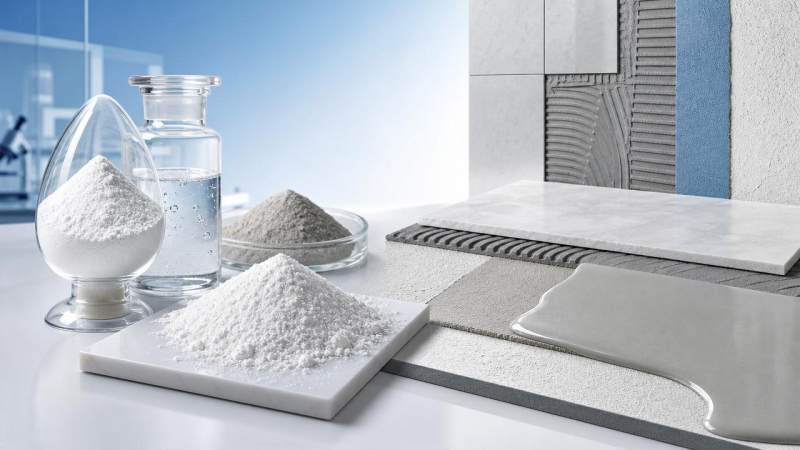
Why is HYDROXYPROPYL METHYL CELLULOSE demand rising in construction additives?
As construction standards evolve toward higher performance, consistency, and efficiency, HYDROXYPROPYL METHYL CELLULOSE is becoming a critical additive for manufacturers and project decision-makers.
From improving workability and water retention to supporting stable formulation performance, market demand is rising across global building applications.
This article explores the key demand trends, industry drivers, and supply considerations shaping the future of HPMC in construction additives.
HYDROXYPROPYL METHYL CELLULOSE is widely used in tile adhesives, wall putty, cement renders, self-leveling compounds, and gypsum-based systems.
Its growth is linked to stricter quality requirements, rising mechanized application, and the need for predictable jobsite performance.
Another driver is formulation optimization, where additives must deliver balanced rheology without compromising construction speed or finish quality.
What does HYDROXYPROPYL METHYL CELLULOSE actually do in building formulations?
HYDROXYPROPYL METHYL CELLULOSE functions as a cellulose ether that improves water retention, thickening, sag resistance, and open time.
These properties help dry-mix products perform more consistently during mixing, spreading, and curing under changing site conditions.
In tile adhesive, it supports bond development by keeping enough water available for cement hydration.
In wall putty, it helps create a smooth feel, easier knife application, and reduced cracking from premature moisture loss.
In self-leveling systems, selection becomes more sensitive because flow, anti-segregation, and surface quality must remain in balance.
Some formulations also combine HPMC with complementary modifiers such as Hydroxypropyl Starch Ether to fine-tune workability and anti-sag performance.
That combination can be useful when a system requires stronger structure build-up while maintaining user-friendly application characteristics.
Key functional benefits
- Improved water retention for cement and gypsum systems
- Better workability and smoother application feel
- Extended open time and adhesion support
- Enhanced consistency across batches
- Reduced formulation sensitivity under variable conditions
Which market trends are pushing HYDROXYPROPYL METHYL CELLULOSE consumption higher?
Several construction trends are accelerating HYDROXYPROPYL METHYL CELLULOSE use across mature and developing markets.
The first is the shift from traditional onsite mixing toward factory-controlled dry-mix mortars.
Dry-mix systems depend heavily on additive precision, making cellulose ether selection a direct quality issue.
The second trend is labor efficiency. Faster application and more forgiving workability reduce rework and improve installation consistency.
The third trend is surface performance. Higher expectations for crack resistance, finish quality, and bond reliability increase additive importance.
Energy-saving building systems also contribute. External insulation and lightweight construction often require specialized adhesive and skim formulations.
Urbanization and renovation activity further expand demand, especially where tile installation, repair mortar, and interior finishing are growing quickly.
Demand drivers by application
How should product grades be evaluated for different construction uses?
Not every HYDROXYPROPYL METHYL CELLULOSE grade performs the same in every system.
Viscosity is important, but it is not the only decision point.
Selection should also consider substitution level, dissolution behavior, thermal gel characteristics, and formulation compatibility.
A higher viscosity product may improve sag resistance, yet it can reduce flow or change mixing behavior.
A lower viscosity grade may support easier pumping, but water retention must still meet system needs.
Reliable suppliers usually offer broad viscosity control, helping formulations target specific standards and jobsite expectations.
Jinan Ludong Chemical Co., Ltd. provides HPMC series products with viscosities controllable from 400 to 200,000 CPS.
Its integrated production capability supports both standard construction grades and customized performance adjustment for diverse global requirements.
Selection checklist
- Target application: adhesive, putty, plaster, or leveling system
- Required water retention and open time
- Desired viscosity range and rheology profile
- Local raw material variability and climate conditions
- Batch consistency and technical support availability
What supply-side factors matter most as HYDROXYPROPYL METHYL CELLULOSE demand expands?
Demand growth creates pressure not only on volume, but also on consistency, lead time, and formulation support.
In construction chemicals, unstable additive quality can affect final product performance more than expected.
That makes manufacturing scale, process control, and testing capability central to supplier evaluation.
Ludong Chemical operates large-scale production lines and integrated service systems focused on cellulose ethers.
Its annual capacity reaches 45,000 tons, supporting global demand for HPMC, RDP, and related construction additives.
Scale alone is not enough. Buyers also need dependable viscosity control, stable substitution, and reproducible performance over time.
Technical collaboration is another key factor, especially when formulas must adapt to local cement, sand, gypsum, or climate differences.
A supplier with integrated solutions can often shorten trial cycles and reduce the risk of repeated reformulation.
What common mistakes affect HYDROXYPROPYL METHYL CELLULOSE selection and market planning?
One common mistake is treating HYDROXYPROPYL METHYL CELLULOSE as a simple thickener.
In reality, it influences hydration, workability, build, finish, and overall user experience.
Another mistake is comparing grades by viscosity number alone.
Two products with similar viscosity can perform differently in the same mortar system.
A third mistake is ignoring formulation synergy with other additives, fillers, and binders.
For example, a system may require different balance when redispersible polymer powder or Hydroxypropyl Starch Ether is introduced.
The final mistake is underestimating regional demand shifts.
Renovation growth, insulation policies, and labor-saving methods can quickly change which grades are most attractive.
Quick FAQ reference table
What do these HYDROXYPROPYL METHYL CELLULOSE demand trends mean for the next step?
HYDROXYPROPYL METHYL CELLULOSE will remain a core material in modern construction additives because it supports performance, process stability, and application efficiency.
The strongest demand will likely come from dry-mix mortars, tile installation systems, finishing materials, and upgraded insulation applications.
Future success depends on choosing grades by performance target, not by price or viscosity number alone.
It also depends on working with suppliers that combine production scale, stable quality, and responsive technical service.
A practical next step is to review current formulations against new demand drivers, then validate additive matching through controlled application tests.
Where formulation upgrades are planned, integrated cellulose ether solutions from experienced producers can improve both speed and confidence in development.
Send Your Inquiry
We welcome your cooperation and we will develop with you.
