


Hidden Cost Gaps Between HPMC Grades in Tile Adhesive Formulas
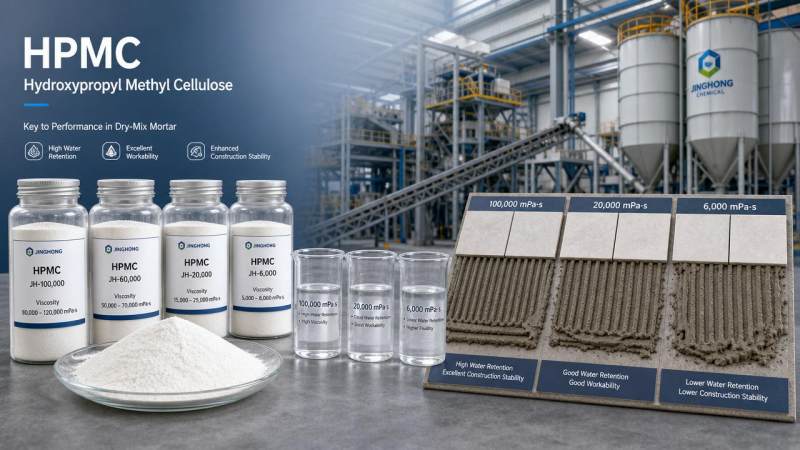
In tile adhesive purchasing, the cheapest HPMC grade does not always deliver the lowest total cost. Differences in water retention, workability, consistency, and dosage can quietly reshape labor efficiency, defect rates, and approval budgets. Understanding how HYDROXYPROPYL METHYL CELLULOSE grades affect full-formula economics helps financial decision-makers identify real savings instead of hidden cost gaps.
Why do hidden cost gaps appear between HPMC grades?
For finance teams, tile adhesive additives are often reviewed as line-item costs. That approach is simple, but it can be misleading. In practice, one HYDROXYPROPYL METHYL CELLULOSE grade can reduce dosage, stabilize production, and lower complaint risk, while another lower-priced grade may increase total cost through weaker field performance.
The gap usually appears because HPMC does more than thicken a formula. It influences open time, sag resistance, water retention, slip behavior, trowel feel, and bonding consistency. These properties affect how much cement is wasted, how quickly workers install tiles, and how often contractors face rework.
In the chemicals industry, price comparison without performance context is risky. A purchasing file may show a lower price per kilogram, yet the approved material may require a higher dosage, narrower process control, or extra support from other additives. That is where hidden cost gaps start.
- A lower unit price can be offset by higher use levels per ton of dry-mix tile adhesive.
- Poor consistency between batches can increase quality claims and disrupt production schedules.
- Weak water retention may reduce cement hydration efficiency and hurt final application results.
- Inferior workability can slow down installers, increasing labor cost at the project level.
What finance approvers should evaluate first
Finance approvers rarely need to judge chemistry at a laboratory level. What they do need is a framework that connects additive selection to measurable budget outcomes. The right question is not “Which HPMC grade is cheapest?” but “Which grade delivers the lowest approved cost per square meter installed?”
Which HYDROXYPROPYL METHYL CELLULOSE properties influence total formula economics?
The following comparison helps procurement and finance teams understand how key HPMC characteristics affect downstream cost, not just purchase price. These are common evaluation dimensions in tile adhesive production and on-site application.
For financial review, dosage efficiency and batch consistency often matter as much as nominal viscosity. A grade with stable performance may allow tighter cost forecasting, fewer production interruptions, and more predictable gross margin.
Why viscosity alone is not enough
Two grades can share a similar viscosity range on paper and still behave differently in tile adhesive. Particle characteristics, substitution balance, dissolution behavior, and interaction with cement and RDP all influence final application performance. This is why finance departments should request not only technical data sheets, but also dosage guidance and application-fit recommendations.
How can a low-price HPMC grade become a high-cost decision?
A lower purchase price usually looks attractive during quotation review. However, in tile adhesive formulas, the additive cost is only one part of the final economic picture. If the selected HYDROXYPROPYL METHYL CELLULOSE grade requires more kilograms per ton or causes slower application, the price advantage can disappear quickly.
This table shows a practical budgeting logic that finance approvers can use when comparing HPMC options for dry-mix systems.
The hidden cost gap usually grows when procurement and finance focus on a single purchase metric. The stronger method is total-cost accounting: formula cost, production stability, installer efficiency, defect risk, and supply reliability together.
A simple approval formula
A practical internal model can be stated as: approved material cost + dosage-adjusted formula cost + expected quality risk cost + supply risk cost. This structure gives finance departments a clearer way to defend decisions during budget review.
What should procurement and finance ask suppliers before selecting a grade?
Supplier questions should move beyond catalog viscosity. For tile adhesive formulas, finance approvers benefit from commercial and technical questions that expose real operating cost. This is especially important when comparing multiple HYDROXYPROPYL METHYL CELLULOSE offers that seem similar at first glance.
- What is the recommended dosage range for wall tile adhesive, floor tile adhesive, and large-format tile systems?
- How stable is the grade across production batches, and what routine controls are used for viscosity management?
- How does the grade perform with different cement types, fillers, and redispersible polymer powder levels?
- Can the supplier support sample evaluation, formula tuning, and lead-time planning for recurring orders?
- What packaging, storage, and logistics conditions are recommended to reduce waste and shelf-life losses?
In some formulas, procurement teams also compare HPMC with adjacent cellulose ether options to balance water retention and workability. Depending on formulation goals, a supplier may also discuss complementary products such as Methyl Hydroxyethyl Cellulose (HEMC) where appropriate.
How does supplier capability reduce financial risk?
Even a well-selected HPMC grade can become a weak purchasing decision if the supplier cannot maintain capacity, specification control, or responsive technical support. In cellulose ethers, manufacturing scale and process discipline matter because they affect availability, consistency, and long-term cost predictability.
Jinan Ludong Chemical Co., Ltd. focuses on the production, trading, and integrated services of cellulose ethers for global markets. Its main construction-related product portfolio includes HPMC, RDP, and HPS, giving buyers a more coordinated source for dry-mix system planning rather than isolated raw material purchasing.
For financial approvers, several operational strengths are relevant. The company reports annual production capacity of 45,000 tons and offers HPMC series products such as type 75 and type 60, with controllable viscosities from 400 to 200,000 CPS. This breadth supports more precise formula matching across different tile adhesive requirements.
- Broad viscosity control supports grade selection based on use-case economics rather than forced compromise.
- Integrated production lines can help reduce coordination cost for customers using multiple dry-mix additives.
- Traditional process knowledge combined with intelligent automation can support consistency and flexible order response.
- Global supply orientation is valuable for purchasers managing recurring deliveries across regions.
Why capacity matters to finance
Capacity is not just a manufacturing metric. It affects delivery reliability, inventory planning, and the need for emergency substitution. When supply is unstable, the resulting downtime, reformulation cost, or expedited freight can exceed the original price difference between HPMC grades.
Which tile adhesive scenarios create the biggest cost sensitivity?
Not every tile adhesive application reacts the same way to HPMC differences. Cost sensitivity increases when installation conditions are demanding or quality tolerances are narrow. Finance approvers should pay closer attention when the customer serves complex projects or high-volume standardized output.
The table below outlines where HYDROXYPROPYL METHYL CELLULOSE selection has a stronger economic effect in practice.
This scenario-based view is useful because it connects additive choice to actual business exposure. A finance approver can then prioritize technical review where the cost of underperformance is highest.
Common mistakes when evaluating HYDROXYPROPYL METHYL CELLULOSE for tile adhesive
Many cost overruns come from avoidable evaluation mistakes. They are not always technical failures. Often, they are decision-process failures between procurement, laboratory staff, sales teams, and finance.
- Comparing only price per kilogram and ignoring dosage-adjusted cost per ton of adhesive.
- Approving a grade after laboratory mixing only, without considering installer feel or site conditions.
- Treating equal viscosity values as equal field performance across all tile adhesive systems.
- Failing to review supply stability, especially for repeat export or contract-manufacturing business.
- Ignoring the value of coordinated additives, where HPMC, RDP, and HPS may need joint optimization.
For some buyers, reviewing neighboring cellulose ether solutions such as Methyl Hydroxyethyl Cellulose (HEMC) can also help clarify whether the target formula needs a different performance balance. The key is not substitution for its own sake, but cost-performance fit.
FAQ: what do finance approvers usually need to know?
How should we compare two HPMC grades with different prices?
Start with dosage-adjusted formula cost, then add expected effects on labor efficiency, complaint rate, and supply continuity. A lower-price grade is only better if total cost per ton and downstream risk both remain favorable. Ask for side-by-side trial recommendations under the same tile adhesive formula conditions.
Which data points are most useful for approval?
Request viscosity range, recommended dosage, water retention behavior, workability feedback, and batch consistency information. If the supplier can explain compatibility with cement systems and other additives, the approval decision becomes more defensible from both technical and financial perspectives.
Is the highest viscosity HYDROXYPROPYL METHYL CELLULOSE always the safer choice?
No. Higher viscosity does not automatically mean better economics or better application behavior. An overbuilt grade may increase cost, complicate mixing, or produce handling that does not match the target tile adhesive segment. The better choice is the grade that meets application needs at the most efficient dosage.
What supply questions matter most in annual budgeting?
Focus on lead time, production capacity, viscosity control range, packaging options, and support for repeat orders. In annual budgeting, supply continuity can be as important as price because interruptions often create emergency freight, substitute testing, and delayed customer delivery.
Why choose us for tile adhesive cellulose ether sourcing?
For finance-led purchasing, the right supplier should help reduce uncertainty, not merely submit a quotation. Jinan Ludong Chemical Co., Ltd. offers a combination of cellulose ether manufacturing focus, integrated product capability, and flexible production support relevant to tile adhesive buyers evaluating HPMC cost-performance tradeoffs.
If you are reviewing HYDROXYPROPYL METHYL CELLULOSE for tile adhesive formulas, you can consult us on specific points that matter to approval decisions: viscosity selection, dosage guidance, compatibility with RDP or HPS, estimated delivery cycle, sample support, recurring supply planning, and pricing discussion based on actual formula targets rather than generic grade labels.
A productive next step is to share your tile adhesive application type, target performance, and current additive usage. With that information, we can support parameter confirmation, product selection, and a more accurate cost comparison so your team can identify real savings instead of hidden cost gaps.
Send Your Inquiry
We welcome your cooperation and we will develop with you.
