


Redispersible Polymer Powder in Tile Adhesives: Key Performance Factors
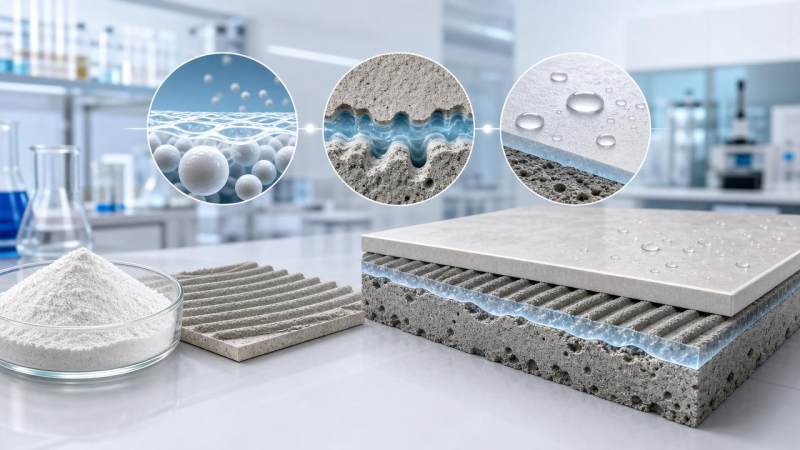
For technical evaluators, the key question is not whether Redispersible Polymer Powder matters in tile adhesives, but which performance factors actually determine reliable field results. In practice, RDP selection affects bond strength, open time, deformability, water resistance, slip behavior, and the stability of the whole dry-mix formulation.
When assessing a product or formulation, the most useful approach is to evaluate RDP through application outcomes rather than marketing labels alone. Polymer chemistry, minimum film-forming behavior, ash content, dosage range, compatibility with cement and fillers, and consistency between production batches are the factors that most directly influence technical decisions.
Why Redispersible Polymer Powder Is a Core Variable in Tile Adhesive Performance
In cement-based tile adhesives, Redispersible Polymer Powder forms a polymer film after water evaporation and cement hydration begin to develop. That film improves adhesion to challenging substrates, enhances flexibility, reduces brittleness, and helps the adhesive tolerate stress from thermal movement, substrate deformation, and service moisture.
For technical evaluators, this means RDP is not simply an additive for “better bonding.” It is a performance-balancing component. Increasing polymer content may improve tensile adhesion and flexibility, but it can also alter consistency, setting profile, and cost structure. The right assessment is therefore always formulation-specific.
This is especially important in modern tile systems, where large-format tiles, low-absorption porcelain, underfloor heating, lightweight wall systems, and exterior exposure all place higher demands on adhesive performance. Under these conditions, the contribution of Redispersible Polymer Powder becomes easier to measure and harder to replace.
Which Performance Indicators Matter Most to Technical Evaluators
When comparing tile adhesive formulations, evaluators usually focus first on tensile adhesion strength under standard, water-immersed, heat-aged, and freeze-thaw conditions. These results help determine whether the polymer contributes only initial stickiness or also delivers durable adhesion after environmental stress.
A second key metric is deformability. Cement-rich systems without enough polymer may show high hardness but poor strain tolerance. Redispersible Polymer Powder helps the adhesive absorb movement between tile and substrate, reducing crack risk and improving long-term service reliability, particularly for large tiles and thermally active installations.
Open time and slip resistance are also critical in application evaluation. A technically strong adhesive that loses tack too quickly or allows tile slippage may still fail on-site. Evaluators should look at how RDP interacts with water retention agents and rheology modifiers to support workable installation windows without sacrificing bond development.
Water resistance remains one of the most practical decision criteria. Bathrooms, kitchens, facades, balconies, and other humid environments require tile adhesives that preserve adhesion after prolonged moisture exposure. Here, polymer quality and film integrity often matter more than nominal polymer dosage alone.
How Polymer Chemistry Changes the Final Result
Not all Redispersible Polymer Powder grades behave the same way. The base polymer composition strongly affects flexibility, hydrophobicity, adhesion profile, and alkali resistance. Evaluators should distinguish between general-purpose grades and grades tailored for high-deformation, high-water-resistance, or enhanced workability applications.
One important consideration is the glass transition behavior of the polymer. Softer polymers generally provide better flexibility and crack-bridging capacity, while harder polymers may contribute differently to mechanical strength. The optimal balance depends on whether the adhesive is designed for rigid substrates, porcelain tile, exterior use, or high-movement systems.
Another practical factor is redispersion quality. A powder may look acceptable in dry form but still redisperse unevenly in the mortar, leading to inconsistent film formation and uneven performance. Technical evaluation should therefore include not only final test data but also dispersion behavior during mixing and application.
Protective colloid systems also influence performance. Residual stabilizers can affect water demand, compatibility with cement, and the behavior of the finished mortar. In some cases, they influence workability more than expected, which is why laboratory comparisons should mirror actual production formulas rather than isolated polymer testing alone.
Why Dosage Alone Does Not Predict Success
One common mistake in technical screening is to treat dosage as the main quality indicator. While polymer loading is important, more Redispersible Polymer Powder does not automatically mean better tile adhesive performance. Beyond a certain level, gains in adhesion may flatten while cost, softness, or application variability increase.
Evaluators should instead identify the effective dosage window for each target standard and use scenario. A wall tile adhesive for standard interior ceramic tile may need a different polymer range from a C2-class porcelain adhesive, and both will differ from systems intended for exterior walls or underfloor heating.
The best evaluation method is comparative formulation testing with controlled changes. Keep cement type, filler grading, cellulose ether level, and water ratio stable while adjusting polymer grade or dosage. This approach reveals whether observed changes come from the RDP itself or from broader shifts in mortar balance.
In many formulations, synergy with water retention and rheology control is decisive. For example, a tile adhesive may reach better open time and application feel when Redispersible Polymer Powder is properly matched with Hydroxypropyl Methyl Cellulose, rather than by simply increasing polymer content alone.
Compatibility with Cement, Fillers, and Additive Systems
Technical evaluators should pay close attention to compatibility because good polymer chemistry can still underperform in an unbalanced mortar. Cement reactivity, gypsum contamination, filler particle distribution, and alkaline conditions all influence polymer film formation and the development of final bond strength.
Cellulose ethers, starch ethers, defoamers, retarders, accelerators, and hydrophobic agents may all modify the contribution of Redispersible Polymer Powder. For example, excessive air entrainment can reduce mechanical strength, while poor water retention control can limit proper hydration and weaken the polymer-cement matrix.
Compatibility testing should therefore include fresh-state and hardened-state evaluation together. Mixing feel, sag resistance, trowelability, wetting behavior, tile transfer, and anti-slip performance are often the first visible signs of whether the polymer is working harmoniously within the system.
For manufacturers developing export-ready tile adhesive formulations, compatibility also matters because raw materials vary by region. The same RDP may perform differently with different local cements or calcium carbonate sources. Technical evaluators should account for this by validating formulations under realistic regional material conditions.
What to Check in Laboratory and Field Evaluation
A robust evaluation protocol should combine standard test methods with application-oriented observations. Laboratory testing typically includes tensile adhesion strength after standard curing, water immersion, heat aging, and freeze-thaw cycles. These results establish whether the adhesive can maintain bond integrity under expected service stress.
However, technical decisions should not rely only on pass-or-fail values. Evaluators should also observe failure mode. Cohesive failure within the adhesive, adhesive failure at the tile interface, or substrate-related failure each tells a different story about how the Redispersible Polymer Powder is contributing to the system.
Field simulation is equally useful. Apply the mortar on representative substrates, use actual tile sizes, and compare transfer, open time retention, anti-slip behavior, and adjustment time. These practical checks often reveal formulation weaknesses that standard tensile data alone cannot fully explain.
Batch consistency should be part of technical approval. A high-performing sample has limited value if commercial production varies in particle size, moisture, or redispersion behavior. For this reason, supplier process control, production scale, and quality assurance discipline are important evaluation criteria, especially for long-term procurement.
How to Identify a Reliable Redispersible Polymer Powder Supplier
For technical evaluators, supplier assessment should go beyond product datasheets. A reliable supplier should provide stable manufacturing capability, traceable quality systems, technical support for formulation adjustment, and enough product range to address different tile adhesive classes and regional raw material conditions.
Manufacturing scale matters because consistency often depends on process control. Jinan Ludong Chemical Co., Ltd., as a global manufacturer focused on cellulose ethers and related construction additives, operates integrated production lines designed to support stable supply and flexible customer requirements across construction applications.
Its portfolio includes HPMC, Redispersible Polymer Powder, and hydroxypropyl starch ether, which is relevant for evaluators seeking coordinated formulation support rather than isolated raw material sourcing. In tile adhesive development, this broader additive perspective can help improve compatibility, testing efficiency, and formulation optimization.
When reviewing suppliers, evaluators should ask for application-specific recommendations, benchmark test data, and support in balancing polymer with other mortar components. In many cases, the most useful supplier is not the one offering the highest nominal specification, but the one helping achieve stable, cost-effective performance in production.
Common Evaluation Mistakes That Lead to Misjudgment
One frequent mistake is overvaluing initial bond strength while underestimating water resistance and deformability. A tile adhesive may test well at early age yet fail under moisture, thermal cycling, or substrate movement. Redispersible Polymer Powder should always be assessed across the full expected service profile.
Another mistake is comparing different polymer grades in formulas that are not otherwise controlled. Changes in cellulose ether, filler packing, water addition, or cement source can easily distort results. Without disciplined comparative testing, evaluators may attribute performance differences to the wrong factor.
Some teams also rely too heavily on supplier descriptions such as “high flexibility” or “premium grade” without correlating those claims to measurable outcomes. The right approach is to translate product features into application targets: porcelain bonding, exterior durability, low slip, extended open time, or improved freeze-thaw stability.
Finally, cost-per-kilogram thinking can be misleading. A lower-priced polymer that requires higher dosage, causes process instability, or produces inconsistent field performance may create a higher true system cost. Technical evaluation should consider efficiency, consistency, risk reduction, and warranty implications, not only unit purchase price.
Practical Decision Framework for Selecting the Right RDP
For most technical evaluators, the best selection framework starts with end-use classification. Define the tile type, substrate, environmental exposure, movement expectation, and target standard first. Only then should you narrow down Redispersible Polymer Powder grades that fit the required adhesion and deformation profile.
Next, test the polymer inside the intended mortar system rather than in simplified screening mixes alone. Confirm dosage efficiency, fresh-state usability, environmental durability, and production stability. If possible, compare at least two dosage points to identify the performance plateau and avoid unnecessary formulation cost.
Then assess supply reliability and technical service. If two grades perform similarly in the lab, the better choice is usually the one with stronger consistency, clearer technical documentation, and better support for scale-up or regional raw material adaptation. This is often what determines success after commercialization.
Where formulation refinement is needed, evaluators should also consider coordinated optimization with additives such as Hydroxypropyl Methyl Cellulose, since the final performance of a tile adhesive depends on system balance more than on any single component viewed in isolation.
Conclusion
Redispersible Polymer Powder is one of the most influential variables in tile adhesive design because it shapes adhesion durability, flexibility, water resistance, and application behavior at the same time. For technical evaluators, the real task is to connect polymer properties with measurable field-relevant outcomes.
The most reliable judgments come from evaluating polymer chemistry, dosage efficiency, compatibility, durability under stress, and supplier consistency together. Rather than choosing on specification headlines alone, technical teams should select the RDP that delivers stable performance inside the full mortar system and under real installation conditions.
In short, the best Redispersible Polymer Powder for tile adhesives is not the one with the broadest claims, but the one that proves repeatable value in your target formulation, your application class, and your supply environment. That is the standard that supports sound technical decisions and durable construction results.
Send Your Inquiry
We welcome your cooperation and we will develop with you.
