


HYDROXYPROPYL METHYL CELLULOSE or Not Enough Water Retention?
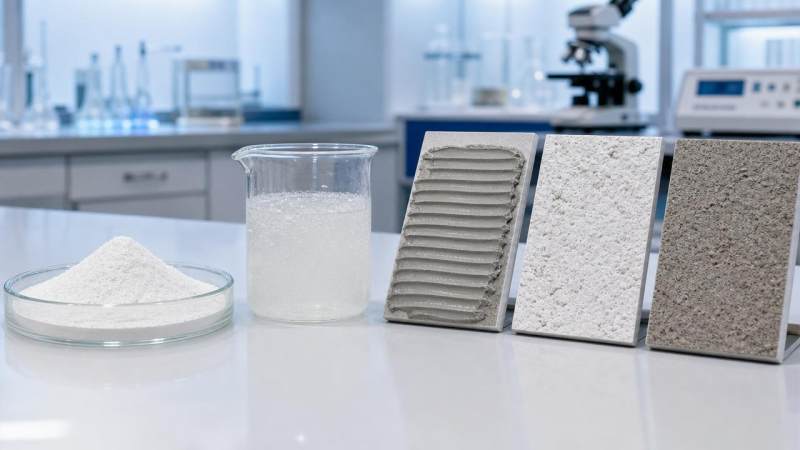
When mortar, tile adhesive, or gypsum underperforms, insufficient water retention is often the hidden cause. HYDROXYPROPYL METHYL CELLULOSE plays a critical role in improving workability, open time, and bonding performance across construction applications. For researchers and buyers comparing material solutions, understanding how HPMC affects water retention is essential to selecting the right grade and achieving more stable, efficient results.
In drymix construction materials, water retention is not a minor adjustment. It directly affects cement hydration, substrate wetting, application comfort, and early bonding strength. For information-focused buyers, the key question is often not whether to use HYDROXYPROPYL METHYL CELLULOSE, but which grade, viscosity range, and dosage level can solve a specific retention problem without creating new processing issues.
Jinan Ludong Chemical Co., Ltd., established in 2020, operates as a large-scale global manufacturer focused on cellulose ethers and integrated construction material solutions. Its main product portfolio includes HPMC, RDP, and HPS, supported by modern production lines and a combination of conventional and intelligent automated manufacturing. With annual capacity reaching 45,000 tons and HPMC viscosities controllable from 400 to 200,000 CPS, the company can support varied formulation requirements across mortar, tile adhesive, skim coat, and gypsum systems.
Why Water Retention Becomes a Performance Bottleneck
Many formulation problems are first noticed on the job site: rapid drying, poor troweling, reduced open time, edge lifting, weak adhesion, or inconsistent finishing. In many of these cases, the underlying issue is that the system loses free water too quickly within the first 10 to 30 minutes after mixing or application.
HYDROXYPROPYL METHYL CELLULOSE helps manage that loss by forming a water-holding polymer network in the wet mix. This slows evaporation and migration into porous substrates, giving cement, gypsum, or other binders more time to hydrate properly. In practical terms, this can extend open time, improve sag resistance, and stabilize application across hot, dry, or absorbent conditions.
What insufficient retention looks like in common systems
Researchers and purchasing teams should link field complaints to formulation behavior. A tile adhesive that skins over too fast may not simply need “more additive.” It may need a better-matched HYDROXYPROPYL METHYL CELLULOSE grade with a different viscosity, substitution level, particle dissolution pattern, or dosage window such as 0.2% to 0.6% of total dry mix.
- Mortar: reduced hydration, cracking tendency, poor spreadability
- Tile adhesive: short open time, low wetting ability, poor slip control
- Gypsum-based products: premature stiffening, uneven finish, reduced workable time
- Skim coat and putty: difficult polishing, patchy surface, weak interlayer bonding
Three factors that usually drive retention loss
- High-absorption substrates such as AAC blocks or dry cement board
- Elevated temperature and airflow, especially above 30°C
- Mismatch between additive design and binder or filler system
The table below shows how insufficient water retention typically appears in different construction formulations and what the formulator should examine first.
The key takeaway is that low retention rarely acts alone. It interacts with binder chemistry, filler size distribution, temperature, and additive package design. That is why evaluation should focus on the full formulation rather than a single number on a technical sheet.
How HYDROXYPROPYL METHYL CELLULOSE Improves Construction Formulations
HYDROXYPROPYL METHYL CELLULOSE is widely selected because it provides multiple functions in one additive: water retention, thickening, workability improvement, and stabilization. In cement-based and gypsum-based systems, this combination can reduce trial complexity and improve batch-to-batch consistency when the correct grade is selected.
Core mechanisms behind performance
At the formulation level, HPMC affects rheology and water distribution. Viscosity grades from 400 CPS up to 200,000 CPS can be tailored to different applications. Lower ranges may support flow and wetting in self-leveling or lighter mixes, while mid to high ranges are often considered for tile adhesive, plaster, and drymix mortars where retention and anti-sag behavior matter more.
It also helps create a more forgiving application window. For contractors, even an extra 5 to 15 minutes of open time can improve tile placement and reduce rework. For manufacturers, this may translate into fewer field complaints and more stable product positioning across climate zones.
Performance dimensions buyers should compare
- Water retention under high-absorption conditions
- Viscosity stability after storage and transportation
- Dissolution behavior in cold water mixing systems
- Compatibility with cement, gypsum, lime, and polymer modifiers
- Effect on open time, slip resistance, and hand feel
In some formulations, complementary additives may be considered to refine film formation or binder interaction. For example, certain resin or protective colloid systems can be reviewed alongside cellulose ethers, and in related industrial applications some buyers also compare materials such as Polyvinyl Alcohol when evaluating broader additive compatibility. The selection logic, however, should remain application-specific rather than generic.
How to Select the Right Grade for Mortar, Tile Adhesive, and Gypsum
The right choice depends on four practical dimensions: application type, target consistency, environmental conditions, and production method. A product that performs well in factory-controlled testing at 20°C may behave differently on a dry wall in a 35°C installation environment. For this reason, grade selection should combine laboratory screening with application simulation.
A practical evaluation framework
For information researchers, it is useful to compare grades using a fixed process. Start with 3 to 5 samples, hold binder and filler constant, then vary only the HPMC grade and dosage. Measure water retention, slump or consistency, open time, anti-slip behavior, and final surface feel. This reduces confusion caused by multiple moving variables.
The following matrix can help purchasing and formulation teams align product grade with application priorities.
This comparison shows that there is no universal best grade. The correct HYDROXYPROPYL METHYL CELLULOSE is the one that fits the end-use target, not the one with the highest viscosity or the lowest dosage on paper.
Four questions to ask a supplier
- What viscosity range is recommended for my target application and why?
- What dosage window is typically tested, such as 0.2%, 0.4%, or 0.6%?
- How does the grade behave in cement versus gypsum systems?
- Can the supplier support sample comparison across 2 to 3 candidate formulations?
This is where production flexibility matters. Ludong Chemical offers HPMC series such as type 75 and type 60 for construction and chemical grades, with a wide viscosity control range from 400 to 200,000 CPS. For buyers managing different regional formulas, that breadth can simplify sourcing and reduce the need to qualify too many unrelated suppliers.
Procurement Risks, Testing Priorities, and Implementation Tips
Even if a sample performs well, commercial adoption can still fail because of unstable supply, inconsistent viscosity, uncontrolled moisture, or weak technical communication. In chemical procurement, product fit and supply reliability should be evaluated together, especially when monthly demand rises from pilot batches to multi-ton orders.
Common mistakes during sourcing
- Choosing only by price per ton without checking dosage efficiency
- Comparing different grades without standardized test water ratio
- Ignoring climate and substrate conditions during evaluation
- Overlooking packaging, storage stability, and lead-time consistency
A 5-step qualification process
- Define target application and key failure point
- Shortlist 2 to 4 HPMC grades
- Run controlled lab screening with fixed binder ratio
- Verify field simulation under at least 2 environmental conditions
- Confirm commercial factors such as capacity, lead time, and support response
For larger buyers, manufacturing scale is part of risk control. Ludong Chemical’s annual capacity of 45,000 tons indicates the ability to support broad volume requirements, while integrated cellulose ether production and service can help customers coordinate HPMC, RDP, and HPS selection more efficiently. In mixed additive studies, some procurement teams may also review materials like Polyvinyl Alcohol for related formulation strategies, but decisions should always return to measured performance in the target system.
If your current mortar, adhesive, or gypsum product still shows short open time, poor workability, or unstable water holding, the issue may not be the binder alone. A better-matched HYDROXYPROPYL METHYL CELLULOSE grade can often improve hydration control, application comfort, and final bonding behavior with a relatively small dosage adjustment. For researchers, formulators, and sourcing teams seeking more reliable construction chemistry solutions, now is the right time to compare grades, verify performance, and discuss tailored options. Contact Ludong Chemical to get product details, request samples, or explore a customized formulation solution.
Send Your Inquiry
We welcome your cooperation and we will develop with you.
