


Polyvinyl Alcohol Storage Risks That Can Ruin Batch Stability
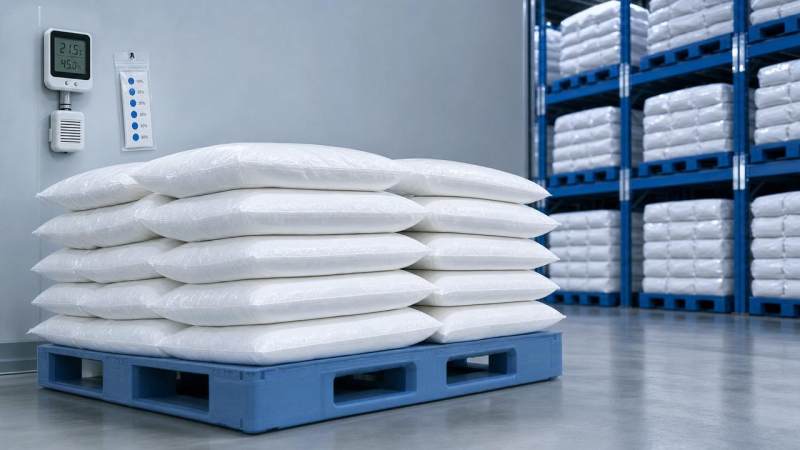
Polyvinyl Alcohol may appear easy to store, yet batch stability often fails because of small storage mistakes. Moisture pickup, heat exposure, poor sealing, and rough handling can change powder behavior before production even starts.
In chemical operations, those changes can trigger clumping, slower dissolution, viscosity drift, filtration problems, and inconsistent end-use performance. Stable storage conditions protect quality, reduce waste, and support predictable processing results.
For companies working with construction and specialty chemical systems, storage discipline matters as much as formulation discipline. This article explains the main Polyvinyl Alcohol storage risks and practical controls that help preserve batch consistency.
Basic Understanding of Polyvinyl Alcohol Storage Behavior
Polyvinyl Alcohol is a water-soluble polymer used in adhesives, coatings, construction additives, paper treatment, textile processing, and specialty formulations. Its performance depends heavily on molecular characteristics and controlled physical condition.
Even when the chemistry remains unchanged, storage conditions can alter bulk density, flowability, moisture content, and dissolution response. These physical shifts can create the impression of raw material instability.
Some grades are especially sensitive to humid air because the powder can absorb moisture during storage, transfer, or sampling. Once absorbed, water may promote caking and uneven feed into mixing systems.
That is why quality teams should evaluate storage risk as part of batch assurance. Good warehousing is not only a logistics issue. It is a direct part of material quality management.
Why Storage Risk Has Become a Stronger Industry Focus
Chemical supply chains now involve longer transit times, varied climates, and more complex packaging interfaces. As a result, Polyvinyl Alcohol may face greater environmental stress before reaching the process line.
At the same time, downstream formulations demand tighter viscosity control and better lot-to-lot consistency. Minor storage deviations that once seemed acceptable can now create measurable production losses.
- Higher humidity exposure during shipping and warehousing
- More automated feeding systems sensitive to powder flow changes
- Greater quality pressure in construction and industrial formulations
- More frequent audits on traceability, safety, and material handling
For integrated chemical suppliers such as Jinan Ludong Chemical Co., Ltd., stable raw material handling aligns with broader process reliability. Advanced production lines still depend on disciplined storage and environmental control.
Key Storage Risks That Can Ruin Polyvinyl Alcohol Batch Stability
Moisture Ingress and Hygroscopic Pickup
Moisture is often the most serious storage threat for Polyvinyl Alcohol. Open bags, damaged liners, and humid storage rooms allow gradual water absorption that changes powder condition and process response.
The first signs may include caking, lumps, and reduced free flow. Later, operators may see incomplete wetting, fish eyes, longer dissolution time, or viscosity differences between production batches.
Temperature Fluctuation and Local Heating
High temperature does not always destroy the polymer immediately, but repeated warming and cooling can increase condensation risk inside packaging. Local heating near walls, roofs, or equipment also accelerates damage.
Warehouse hot spots are especially dangerous when daytime heat is followed by cooler nights. That cycle may form micro-condensation, which is enough to start clumping within sealed packages.
Packaging Failure and Seal Weakness
A sound package is the first barrier against ambient moisture and contamination. Torn sacks, poor pallet wrapping, punctured liners, and weak reclosure practices quickly compromise batch stability.
Partially used bags are a common weak point. Once opened, the material should be resealed immediately. Delayed resealing can expose a large surface area to humid air.
Contamination During Storage and Handling
Cross-contamination can come from dirty tools, reused containers, dust, pallet debris, and nearby chemical vapors. Even small foreign matter can affect clarity, filtration, or application performance.
In sensitive formulations, contamination may appear as insoluble particles, off-color solution, unexpected foam behavior, or irregular viscosity readings during quality checks.
Mechanical Compression and Poor Stacking
Excessive stacking height can compact the lower layers of powder and encourage hard caking. Forklift impact and rough movement may also break packaging and create fine dust loss.
Compacted material may not feed uniformly into dissolving tanks. This can increase batching time and create concentration differences during make-up operations.
Operational Impact on Quality, Safety, and Cost
Storage problems rarely stay limited to the warehouse. They move into production as instability, rework, downtime, and specification failure. That makes Polyvinyl Alcohol storage a financial issue as well.
Where precise rheology matters, even moderate storage deviation can affect final use. This is especially relevant in coatings, dry-mix systems, binders, and specialty water-based formulations.
Typical Risk Scenarios Across Chemical Applications
Different application routes highlight different weaknesses in stored material. The same Polyvinyl Alcohol batch may seem acceptable in one process and problematic in another.
- Adhesive systems: dissolution delays and gel particles can disrupt mixing efficiency
- Coating formulations: contamination may reduce film clarity and consistency
- Construction additives: flow changes can affect dry blending accuracy
- Paper and textile uses: viscosity drift may alter penetration and surface performance
When evaluating a stored lot, sampling should reflect real warehouse conditions. Top-layer sampling alone may miss moisture gradients or compaction zones deeper in the pallet stack.
In some cases, a verified source of Polyvinyl Alcohol with appropriate packaging support helps reduce handling variation across longer supply routes.
Practical Storage Controls That Protect Batch Stability
Control the Environment
- Store in a clean, dry, well-ventilated indoor area
- Avoid direct sunlight, roof heat, and exterior wall hot spots
- Keep humidity stable and prevent condensation cycles
- Separate from water sources and steam-prone zones
Protect Packaging Integrity
- Inspect incoming pallets for punctures, tears, and loose seals
- Use first-in, first-out inventory rotation
- Reseal opened bags immediately after partial use
- Do not place material directly on the floor
Improve Handling Discipline
- Use clean scoops, transfer bins, and sampling tools
- Limit exposure time during weighing and charging
- Train operators to identify early caking and package damage
- Document any storage incident that may affect release status
Verify Stability With Routine Checks
Routine checks can include appearance review, moisture trend monitoring, sieve behavior, dissolution time, and solution viscosity. The exact plan should match the grade and end-use sensitivity.
For operations that require dependable polymer performance, source selection also matters. Consistent material quality and packaging standards support better storage outcomes over time.
Implementation Priorities for More Stable Warehouse Performance
A practical improvement plan should begin with the highest-risk failure points rather than broad policy statements. Small changes usually deliver the fastest reduction in Polyvinyl Alcohol storage incidents.
- Map humidity, temperature, and exposure zones in the warehouse
- Review receiving inspection and damaged-package quarantine rules
- Standardize resealing steps for partially used bags
- Set stack height limits based on package strength
- Link warehouse records with quality investigation reports
These actions create stronger traceability and reduce hidden variation before production begins. They also support safer storage, cleaner operations, and more reliable formulation performance.
If batch consistency is critical, review present storage conditions, packaging controls, and testing methods now. Better protection of Polyvinyl Alcohol in storage is often the simplest route to better process stability.
Send Your Inquiry
We welcome your cooperation and we will develop with you.
