


High Viscosity HPMC: When Does It Fit Best?
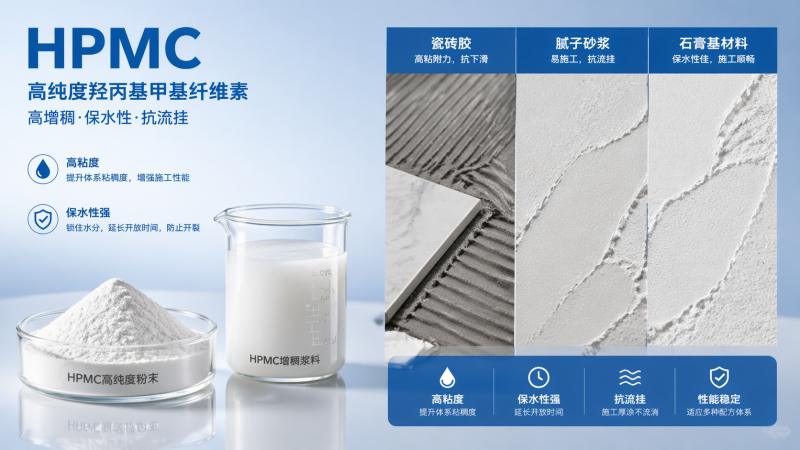
Choosing the right high-viscosity hydroxypropyl methylcellulose (HPMC) grade is usually less about chasing the highest number and more about matching performance to the application. In practice, high viscosity HPMC fits best when a formulation needs stronger water retention, better sag resistance, improved open time, thicker consistency, or more stable film-forming behavior. For technical evaluators, procurement teams, and quality managers, the key question is not simply “Is high viscosity better?” but “Where does it create measurable value, and where can it add unnecessary cost or process difficulty?” As a professional HPMC supplier, Jinan Ludong Chemical supports global customers in selecting water-soluble cellulose ether solutions that align with construction performance targets, production stability, and cost efficiency.
What does high viscosity HPMC do best?
High viscosity HPMC is most useful in systems where water management and rheology control are critical. Compared with lower viscosity grades, it generally provides:
- Higher water retention, helping cementitious systems hydrate more completely
- Better anti-sag performance in vertical applications
- Improved open time, giving workers a longer adjustment window
- Stronger thickening effect in liquid or semi-liquid formulations
- More stable application feel in products that require consistent flow and adhesion
This makes high viscosity grades especially relevant when the end product must remain workable while also resisting slump, fast water loss, or uneven application. For many buyers and formulators, that balance is the real reason to choose a higher viscosity grade.
When is high viscosity HPMC the right choice?
High viscosity HPMC usually fits best in applications where performance under demanding site or process conditions matters more than minimum additive cost.
1. Tile adhesives and cement-based bonding systems
In tile adhesive formulations, high viscosity HPMC can improve water retention and slip resistance while supporting proper cement hydration. This is especially valuable for large-format tiles, porous substrates, warm climates, or jobs requiring longer open time.
2. Wall putty and skim coat
These products often need smooth workability, sufficient anti-sag performance, and crack-resistance support through better moisture control. A high viscosity grade can help create a more stable and user-friendly application profile.
3. Drymix mortar for vertical or extended-workability applications
Where mortar needs to stay cohesive, resist rapid drying, and maintain spreadability, higher viscosity HPMC can provide a noticeable performance advantage.
4. Gypsum-based products
In some gypsum formulations, high viscosity HPMC helps manage consistency and application behavior, especially when surface quality and working time are important.
5. Industrial and household chemical systems requiring thickening and stability
Although construction is the main focus for many users, high viscosity grades can also be relevant in selected detergent and chemical applications where thickening, suspension, or flow control is required. In such cases, the choice depends heavily on surfactant compatibility, clarity targets, and process conditions. For buyers reviewing multi-application sourcing options, Detergent-grade HPMC may be worth comparing when evaluating non-construction formulations.
When can high viscosity HPMC be the wrong choice?
This is an important purchasing and formulation question. High viscosity HPMC does not automatically improve every product.
- If a formulation requires faster dissolution or easier dispersion, an excessively high viscosity grade may complicate processing.
- If the product needs higher flowability rather than stronger body, lower or medium viscosity may be more appropriate.
- If cost pressure is high and the application does not truly need maximum water retention or anti-sag behavior, using a high viscosity grade may reduce cost competitiveness.
- If the production line is sensitive to mixing efficiency, poor grade matching can cause lumping, slower wet-out, or batch inconsistency.
For decision-makers, the takeaway is simple: the best grade is the one that meets the performance threshold reliably, not the one with the highest viscosity on paper.
What do technical evaluators and quality teams need to check?
For technical assessment, viscosity should be reviewed together with several other indicators. A reliable grade-selection process should include:
- Water retention performance: Does the product maintain adequate moisture under the intended application conditions?
- Workability: Does the mix feel smooth, stable, and easy to apply?
- Open time and adjustability: Is there enough working time for installation or finishing?
- Anti-sag or slip resistance: Does the formulation stay in place on vertical surfaces?
- Compatibility: Does the HPMC work well with cement, gypsum, fillers, starch ether, RDP, surfactants, or other additives?
- Batch consistency: Is the viscosity range stable enough for production control and end-use reliability?
Quality and safety managers should also examine storage stability, dust control during handling, moisture sensitivity in warehousing, and traceability from supplier to finished product.
How should procurement teams evaluate high viscosity grades commercially?
Procurement should not compare HPMC only by unit price. A more useful evaluation model includes:
- Dosage efficiency: Can a higher-performance grade reduce total use level?
- Yield stability: Does it lower the risk of off-spec batches or customer complaints?
- Application value: Can it improve installer experience or end-product acceptance?
- Supply reliability: Can the supplier maintain consistent quality and lead times?
- Customization range: Can viscosity and grade be adjusted for different market needs?
For global buyers, supplier capability matters as much as product data. Jinan Ludong Chemical, established in 2020, operates as a large-scale global manufacturing enterprise focused on cellulose ethers and integrated services. With annual production capacity reaching 45,000 tons and HPMC viscosity control from 400 to 200,000 CPS, the company is positioned to support both standard and more application-specific selection needs across construction and chemical industries.
How to decide whether high viscosity HPMC fits your formulation
A practical selection process can be built around four questions:
- Does the application suffer from poor water retention, sagging, or short open time?
If yes, moving to a higher viscosity grade may solve a real problem. - Is the current formula already difficult to mix or too thick?
If yes, increasing viscosity further may create new processing issues. - Is the target market premium, standard, or cost-sensitive?
Higher viscosity grades often make more sense in applications where performance complaints are expensive. - Can the supplier support testing and grade matching?
Trial-based selection is often the fastest path to a commercially sound decision.
In some cross-category sourcing programs, buyers may also assess specialty products such as Detergent-grade HPMC alongside construction grades, especially when one supplier is expected to support broader cellulose ether procurement.
Final answer: when does high viscosity HPMC fit best?
High viscosity HPMC fits best when the formulation needs stronger water retention, better vertical hold, improved open time, and more controlled application behavior. It is particularly valuable in tile adhesives, wall putty, skim coat, drymix mortar, and selected gypsum or chemical systems where stability and workability directly influence product quality.
For technical evaluators, the right choice depends on verified formulation performance. For procurement teams, it depends on total value rather than nominal price. For business decision-makers, it depends on balancing performance, processability, and market positioning. In short, high viscosity HPMC is the right solution when its functional benefits solve a real production or application problem—and when those benefits are supported by consistent supplier capability and application-focused testing.
Send Your Inquiry
We welcome your cooperation and we will develop with you.
