


How HPMC Controls Sag Resistance and Workability
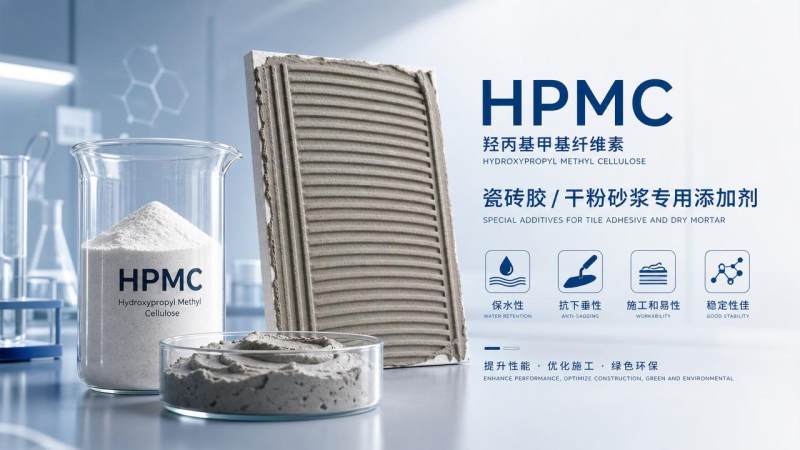
In tile adhesives, renders, and other dry-mix systems, HYDROXYPROPYL METHYL CELLULOSE plays a key role in balancing sag resistance and workability. For operators, the right HPMC grade helps materials stay in place, spread smoothly, and remain easy to adjust during application. Understanding how it works is essential for achieving stable performance, higher efficiency, and more reliable construction results.
For site applicators and plant operators, this balance is not theoretical. It affects whether a tile slips by 2 to 5 mm after placement, whether a render holds on a vertical wall, and whether a mortar remains open long enough for adjustment. In practical terms, the performance of HYDROXYPROPYL METHYL CELLULOSE determines application comfort, defect risk, labor rhythm, and consistency from batch to batch.
As a core cellulose ether in construction chemicals, HPMC is widely used in cement-based dry mixes. Jinan Ludong Chemical Co., Ltd., established in 2020, supplies cellulose ether solutions on a large manufacturing scale, with annual capacity reaching 45,000 tons and HPMC viscosity ranges from 400 to 200,000 CPS. For users who need dependable sag resistance and smooth handling, understanding grade selection, dosage, and interaction with the full formulation is the shortest path to stable on-site results.
Why Sag Resistance and Workability Must Be Controlled Together
In dry-mix construction materials, sag resistance and workability are often treated as separate targets, but in operation they are linked. If a formula gives strong anti-sag performance but poor trowel feel, spreading becomes slow and uneven. If workability is excellent but vertical hold is weak, the material may slump, slide, or lose thickness control within minutes.
For tile adhesives, good sag resistance keeps tiles fixed after pressing. For cement renders and skim coats, it helps maintain layer stability at application thicknesses such as 3 to 10 mm. For the operator, ideal workability means easy wetting, low drag, smooth combing, and sufficient open time, often in a practical window of 15 to 30 minutes depending on temperature and substrate absorption.
What sag resistance means in daily application
Sag resistance is the ability of fresh mortar to remain in position after being applied to a vertical or inclined surface. In construction chemicals, this depends on the fresh-state rheology of the mix. HYDROXYPROPYL METHYL CELLULOSE improves water retention and develops a supportive network in the wet mortar, increasing yield stress so the material can resist downward movement.
This property becomes especially important when using large-format tiles, when applying thicker layers, or when working in hot and windy environments. A small change in rheology can determine whether one operator can install continuously for 2 hours or needs repeated corrections every 10 minutes.
What workability means for operators
Workability is the practical ease of mixing, pumping, spreading, leveling, and adjusting a mortar. Operators usually judge it through 4 direct signals: water acceptance during mixing, trowel drag, surface smoothness, and adjustment behavior after placement. Even when laboratory values look acceptable, poor workability can increase labor time by 10% to 20% in actual site conditions.
A well-chosen HPMC grade helps create a controlled, creamy texture rather than a watery or sticky one. That matters because over-sticky mortar may reduce speed, while under-structured mortar may separate, bleed, or lose edge stability. The best operating window is a balanced one, not the highest value in a single test.
The table below shows how applicators usually experience the difference between poor, balanced, and excessive thickening behavior in cement-based systems containing HYDROXYPROPYL METHYL CELLULOSE.
The key conclusion is that operators do not need the maximum viscosity effect in every case. They need a formulation window where anti-sag and flow are both controlled. This is why HPMC selection should always be linked to substrate type, layer thickness, ambient temperature, and mixing practice.
How HYDROXYPROPYL METHYL CELLULOSE Works in Dry-Mix Systems
The function of HYDROXYPROPYL METHYL CELLULOSE in construction chemicals comes from several mechanisms acting at the same time. It does not simply thicken water. It improves water retention, supports cement particle dispersion, enhances cohesion, and modifies fresh mortar rheology. These combined effects help maintain a usable consistency from the first minute of mixing to the final stage of placement.
Water retention and hydration control
One of the most important tasks of HPMC is retaining water in the mortar matrix. In absorbent substrates such as aerated blocks or dry concrete, rapid water loss can shorten open time and make adjustment difficult. By holding water inside the system, HPMC gives cement more time to hydrate, usually improving application stability within the first 20 to 40 minutes.
For operators, this means a more forgiving material. The mortar remains plastic for longer, spreads more evenly, and resists premature stiffening. On warm jobsites above 30°C, this function becomes even more important, because evaporation and substrate suction can quickly disrupt fresh performance.
Rheology modification and yield stress
Sag resistance depends heavily on yield stress, the force needed to start material flow. HPMC increases this fresh-state structure while still allowing movement under trowel pressure. In simple terms, the mortar stands still when left alone, but flows when the operator works it. This is exactly the behavior required for vertical adhesives and renders.
Different viscosity grades can shift this balance. Lower ranges may support easier mixing and pumping, while medium to high ranges can provide stronger anti-sag performance. Ludong Chemical offers controllable viscosities from 400 to 200,000 CPS, giving formulators room to match the HPMC grade to application type rather than forcing one grade into every formula.
Film-forming and interface support
HPMC also contributes to better contact between the mortar and substrate surface. During application, this improves wetting and reduces the risk of dry patches or interrupted comb patterns. In tile adhesives, that can support more uniform transfer to the tile back, especially when the notch size and working angle are kept consistent.
Interaction with other dry-mix additives
HPMC rarely works alone. In practical formulas, it interacts with redispersible polymer powder, defoamers, retarders, and starch-based rheology modifiers. In some systems, a small amount of Hydroxypropyl Starch Ether is used alongside HPMC to fine-tune anti-sag behavior, improve structure build, or adjust trowel response in vertical applications.
The next table summarizes how the main HPMC functions translate into visible benefits for operators in dry-mix construction materials.
For users, the practical takeaway is clear: HYDROXYPROPYL METHYL CELLULOSE is not just a thickener. It is a multi-function performance modifier that helps keep a dry-mix system stable during the exact period when application quality is most vulnerable.
How to Choose the Right HPMC Grade for Different Applications
Choosing an HPMC grade should begin with the application target, not with viscosity alone. A tile adhesive for vertical ceramic tiles, a skim coat for fine finishing, and a machine-applied render all require different combinations of water retention, build, slip control, and mixing behavior. The same dosage can perform very differently in formulas with different cement, fillers, or polymer content.
Four selection factors operators and buyers should check
- Application type: tile adhesive, EIFS mortar, plaster, putty, or self-leveling mix.
- Required layer thickness: for example 2 to 4 mm, 5 to 8 mm, or above 10 mm.
- Construction method: hand application, spray application, or pumping.
- Climate and substrate condition: high suction, low temperature, or hot weather above 30°C.
These 4 points often determine whether a medium-viscosity HPMC is sufficient or whether stronger structure build is required. In many dry-mix systems, dosage adjustments as small as 0.02% to 0.10% can be visible during troweling and anti-sag testing.
Typical matching logic by product type
Tile adhesives usually need a strong balance between open time and slip resistance. Skim coats often prioritize smoothness and low drag. Renders may require stronger body and better hanging properties, especially on vertical substrates. Because Ludong Chemical produces both type 75 and type 60 construction and chemical grades, formulators can work within a wide selection framework rather than relying on a single universal option.
In some formulations, a combined rheology package may be more effective than increasing HPMC alone. For example, adding Hydroxypropyl Starch Ether in controlled amounts can help improve anti-sag structure without creating excessive stickiness, depending on the cement and filler system.
Common selection mistakes
- Choosing by CPS value only without checking water retention and application feel.
- Increasing dosage too quickly when the real issue is sand grading or water ratio.
- Testing at one temperature only, then scaling directly to field conditions.
- Ignoring mixer type, even though high-speed and low-speed mixing can change dispersion behavior.
A better approach is to test 2 to 3 candidate grades under actual plant and site conditions. Compare slip, open time, trowel drag, and adjustment ease in the same formulation. That gives more useful guidance than relying on one laboratory viscosity number in isolation.
Practical Control Points During Mixing and Application
Even the correct HPMC grade can underperform if process control is weak. Operators should watch the entire chain from dry blending to water addition, mixing time, resting time, and final application. Small process deviations often explain why a proven formula behaves differently across shifts or jobsites.
Five process checks that improve consistency
- Keep raw material moisture variation under routine control, especially sand and fillers.
- Maintain a stable water addition range instead of correcting by feel alone.
- Use a fixed mixing time, often 3 to 5 minutes, then allow 2 to 3 minutes of maturation if required.
- Check fresh mortar behavior at the same temperature band, ideally noting conditions below 10°C or above 30°C.
- Record whether the issue is slip, drag, open time, or edge collapse before changing dosage.
For operators, these steps reduce unnecessary corrections. For purchasing and technical teams, they also help separate formulation problems from process problems. That leads to faster troubleshooting and more efficient grade selection.
What to discuss with your HPMC supplier
A useful supplier conversation should include at least 6 points: application type, cement system, filler type, target viscosity feel, climate range, and preferred dosage window. Jinan Ludong Chemical supports global customers with integrated cellulose ether manufacturing and service, which is important when buyers need not just material supply but matching recommendations across HPMC, RDP, and related dry-mix additives.
This matters because a good supplier should help narrow the test range quickly. Instead of screening too many grades, users can move directly to the most relevant viscosity band and application profile, reducing development cycles and avoiding avoidable waste in pilot batches.
Final Guidance for Stable Field Performance
The best field result comes from matching HYDROXYPROPYL METHYL CELLULOSE to the real application environment, not from pursuing one extreme property. Stable sag resistance requires enough fresh structure. Good workability requires smooth spreading, controlled drag, and enough open time for adjustment. In most dry-mix systems, both targets can be reached only through balanced formulation and disciplined process control.
For operators, the signs of a good HPMC choice are easy to recognize: clean mixing, stable vertical hold, comfortable troweling, and fewer corrections during installation. For procurement and technical teams, the value lies in repeatable supply, a broad viscosity range from 400 to 200,000 CPS, and practical support for product matching in tile adhesives, renders, and related construction chemical systems.
If you are optimizing a new dry-mix formula or improving an existing one, now is the right time to discuss your target performance, dosage window, and application conditions. Contact Jinan Ludong Chemical to get product details, evaluate suitable HPMC grades, and explore more reliable construction material solutions for your operation.
Send Your Inquiry
We welcome your cooperation and we will develop with you.
