


How HPMC for Tile Adhesive Helps Control Sag on Vertical Surfaces
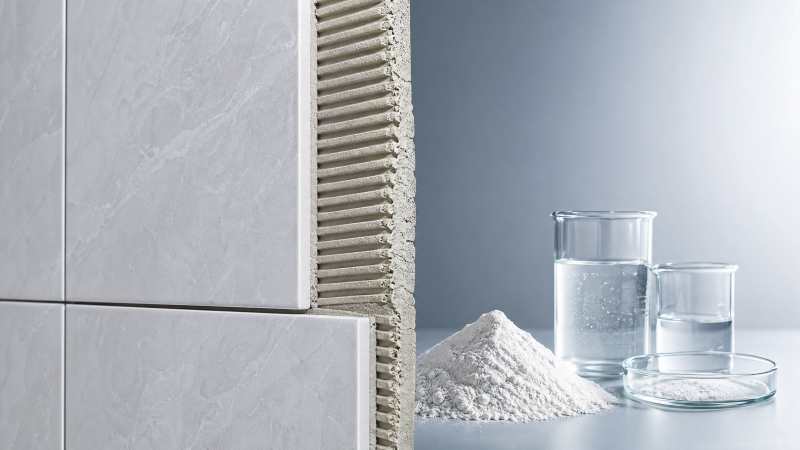
On vertical tile installations, sag can quickly lead to uneven alignment, callbacks, and costly rework. HYDROXYPROPYL METHYL CELLULOSE for tile adhesive plays a key role in improving water retention, workability, and anti-sag performance, helping maintenance teams achieve more stable application results. Understanding how HPMC controls slip is essential for after-sales personnel who need to diagnose adhesive issues and support long-term installation quality.
Why does tile adhesive sag on vertical surfaces in the first place?
For after-sales maintenance teams, vertical slip is rarely caused by one factor alone. In most cases, sag appears when the adhesive cannot build enough early structure to hold the tile weight within the first 10 to 30 minutes after application. If the formulation releases water too quickly, flows too easily under load, or lacks suitable thixotropy, the tile starts to move downward before final set develops.
The problem becomes more obvious with large-format tiles, low-absorption porcelain, and warm jobsite conditions above roughly 30°C. On dense surfaces, less water is absorbed into the tile body, so the mortar depends even more on internal rheology control. That is exactly why HYDROXYPROPYL METHYL CELLULOSE for tile adhesive is so important: it supports water retention and helps form a balanced paste structure that resists collapse on walls.
In maintenance investigations, technicians should also remember that sag is not always a “bad cement” issue. It may come from excess water addition, unsuitable sand grading, poor polymer balance, or an HPMC viscosity grade that is not matched to application needs. A formula that works well on floors can still underperform on walls if anti-sag design was not properly considered.
What field conditions usually increase the risk of sag?
- Tiles larger than 600 × 600 mm, because the dead load rises quickly.
- Low-porosity porcelain or vitrified tiles that absorb very little mix water.
- High water addition beyond the recommended range, often by 0.5% to 1.5% more than the design level.
- Thin-bed vertical installation where open time and grab must be balanced carefully.
- Hot, dry, or windy environments that change hydration and surface drying behavior.
When these factors combine, even a small mismatch in cellulose ether performance can show up as tile drift, ridge collapse, or poor line retention. For service teams, the practical takeaway is simple: sag should be diagnosed as a rheology-and-retention issue before assuming a single raw material defect.
How does HYDROXYPROPYL METHYL CELLULOSE for tile adhesive actually control sag?
HYDROXYPROPYL METHYL CELLULOSE for tile adhesive works by modifying the fresh mortar system at several levels at once. First, it increases water retention, allowing cement hydration to proceed more evenly instead of losing moisture too fast to the environment or substrate. Second, it thickens the aqueous phase and improves yield value, which means the adhesive can stay where it is troweled instead of flowing downward under the tile’s weight.
Third, HPMC contributes to thixotropic behavior. In practical terms, the mortar becomes workable under trowel shear but regains body after application. This recovery is critical on walls. A mix may spread smoothly during combing, yet once the trowel leaves the surface, it should hold notch shape and resist deformation. That recovery window often determines whether the tile stays aligned during the first 15 to 40 minutes.
For after-sales personnel, it helps to visualize HPMC not as a simple thickener, but as a performance controller for water management, consistency stability, and slip resistance. In many repair analyses, teams find that a formulation with acceptable open time but weak anti-sag performance often needs a better-matched HPMC grade rather than just “more viscosity.”
Which HPMC mechanisms matter most on walls?
The most relevant mechanisms are water retention, yield stress development, and viscosity stability across the mixing and application cycle. A high-quality HPMC should disperse well, develop consistent body in the mortar, and help maintain notch definition. If notch edges soften too quickly within 3 to 8 minutes, the system may not have enough structural hold for vertical placement.
Quick functional breakdown for service diagnosis
The table below summarizes how HPMC influences different wall-application behaviors and what maintenance teams should look for during troubleshooting.
This is why wall-grade adhesive design must consider more than one laboratory number. A mortar can appear thick in the bucket yet still sag after combing if structure recovery is too weak. Effective troubleshooting therefore combines visual assessment, mixing review, and formulation analysis.
What should after-sales teams check when vertical slip complaints happen?
The most efficient response is to investigate in layers. Start with application practice, then move to environmental conditions, and only after that assess formulation fit. Many complaints can be narrowed down within 20 to 40 minutes on site if the right checklist is used. This is especially valuable when installers report that “the adhesive feels normal” but tiles still move after placement.
A practical service approach includes checking water dosage, mixer speed, resting time, tile size, trowel notch, substrate flatness, and ambient conditions. For example, adding even 1 liter too much water per 25 kg bag can noticeably reduce anti-sag performance. Likewise, skipping a 3 to 5 minute maturation period after mixing can lead to incomplete development of the cellulose ether system.
The adhesive formula should then be reviewed for HPMC grade, dosage, cement compatibility, and the balance with polymer powder or starch ether. In some systems, the issue is not low HPMC level alone but poor synergy across additives. Jinan Ludong Chemical Co., Ltd., as a manufacturer focused on cellulose ethers and integrated construction solutions, supports this type of formulation-based diagnosis across HPMC, RDP, and HPS interactions.
A field checklist for faster root-cause identification
- Confirm the actual water addition against the product instruction range.
- Record the tile type, tile size, and whether the installation is interior or exterior.
- Observe the mortar after combing: are the ridges sharp for at least several minutes?
- Check whether the substrate is highly absorbent, dusty, or too warm.
- Verify mixing time, maturation time, and pot life conditions on site.
- Review the formulation if repeated sag occurs under normal application practice.
This process helps maintenance teams separate usage errors from raw-material mismatch. It also reduces unnecessary product rejection when the real cause is environmental or operational. In wall-tile service work, a structured checklist often saves more time than a quick visual judgment.
How do you choose the right HPMC grade for tile adhesive anti-sag performance?
Choosing the right grade means matching performance targets, not simply selecting the highest viscosity available. Depending on the adhesive type, HPMC viscosities used in construction systems commonly range from a few thousand CPS up to well above 100,000 CPS, but the right point depends on water demand, cement content, filler system, and whether the adhesive is intended for standard ceramic wall tile or large-format porcelain.
For vertical applications, after-sales teams should pay attention to the balance between sag resistance and workability. If the mortar becomes too heavy, installers may add extra water, which can undo the anti-sag benefit. If it is too fluid, tile slip appears immediately. A useful supplier should therefore offer controllable viscosity ranges and practical formulation guidance instead of one-size-fits-all recommendations.
Ludong Chemical’s annual production capacity reaches 45,000 tons, with HPMC series products including type 75 and type 60 for construction and chemical grades, and viscosities controllable from 400 to 200,000 CPS. For maintenance and technical support teams, this range matters because different wall systems may require different rheology windows, especially when adhesive formulas are being adjusted for climate, tile load, or local raw materials.
What selection factors matter most?
The most practical selection criteria include water retention behavior, viscosity profile, compatibility with cement and fillers, troweling feel, and notch stability. It is also useful to compare the adhesive before and after resting time, because some formulas look acceptable immediately after mixing but lose their ideal application feel during the first 30 minutes of use.
The following table can help after-sales teams discuss grade selection more clearly with technical and purchasing colleagues.
This comparison shows why grade selection should be based on trial performance, not only on specification sheets. In practical service work, a small formulation adjustment can often improve wall hold without sacrificing too much spreadability.
What about other additives in the system?
HPMC does not work in isolation. Redispersible polymer powder can improve adhesion and deformability, while hydroxypropyl starch ether may support anti-slip and workability tuning. In some special formulations, related auxiliaries or binders may also enter technical discussion, including materials such as Polyvinyl Alcohol, but selection should always be based on system compatibility and the target performance profile.
What are the most common mistakes when evaluating anti-sag performance?
One common mistake is equating high viscosity with guaranteed anti-sag behavior. In reality, a mortar may test “thick” in the bucket and still allow tile movement on the wall. Anti-sag performance depends on how the system behaves under shear and after shear, not only on one viscosity label. That is why HYDROXYPROPYL METHYL CELLULOSE for tile adhesive must be assessed through actual wall-application behavior.
Another mistake is ignoring installer adjustment habits. If a product feels too sticky or too resistant during troweling, workers often compensate by adding more water. Once this happens, the designed rheology balance can collapse. After-sales teams should therefore ask not only what the formula contains, but also how it is actually mixed on site, including whether each 25 kg bag receives the same amount of water every time.
A third mistake is overlooking substrate and climate effects. On a highly absorbent wall, poor priming may change moisture movement. In a hot area, pot life may shorten faster than expected. In an air-conditioned interior with low humidity, surface drying can accelerate. These variables can make an otherwise acceptable adhesive appear unstable if they are not controlled during complaint analysis.
A quick FAQ-style judgment table
The table below can be used in service communication to sort common assumptions from more likely technical causes.
For after-sales personnel, this kind of structured response improves communication with contractors and distributors. It also helps reduce simplified blame assignment and leads to more accurate corrective action.
How can maintenance teams work with suppliers to prevent repeat vertical-slip issues?
The best prevention strategy is early technical alignment. Before approving a wall-tile adhesive for broad use, teams should confirm target tile types, climate range, expected water addition, and whether the product is intended for standard wall ceramic, porcelain, or larger decorative panels. A product that performs well at 20°C in the lab may need adjustment for summer jobsites above 35°C or for low-absorption tile systems.
This is where a supplier with integrated production and technical flexibility becomes valuable. Jinan Ludong Chemical Co., Ltd., established in 2020, operates as a large-scale global manufacturing enterprise engaged in the production, trading, and integrated services of cellulose ethers. Its product portfolio covers HPMC, RDP, and HPS, which makes it easier to discuss system-level optimization rather than isolated raw material substitution.
For after-sales and technical service teams, cooperation should focus on trial design and failure prevention. That means agreeing on sample evaluation steps, target consistency, anti-sag expectations, and complaint feedback format. If needed, related binder-support materials such as Polyvinyl Alcohol may enter broader formulation conversations, but the priority should remain stable wall performance under realistic field conditions.
What should you confirm before asking for a recommendation or quotation?
- Required tile type and size range, such as standard ceramic versus large-format porcelain.
- Vertical application conditions, including interior or exterior use and normal temperature range.
- Current formula information, especially cement, filler, polymer, and additive system.
- Expected viscosity or handling target, including workability and open-time preferences.
- Sample quantity, trial cycle, and any delivery timing constraints.
- Whether local standards or internal acceptance thresholds need to be met.
Clear input at the beginning usually shortens the adjustment cycle. In many cases, a few well-designed trials are more useful than repeated field correction after complaints appear.
Why choose us when you need support on tile adhesive sag control?
If your team is handling wall tile complaints, evaluating HYDROXYPROPYL METHYL CELLULOSE for tile adhesive, or trying to reduce rework on vertical installations, practical technical support matters as much as raw material supply. Ludong Chemical combines modern production lines with integrated solution capability, while maintaining flexible manufacturing to meet different market and formulation needs.
For after-sales personnel, that means you can discuss more than a catalog item. You can ask for support on parameter confirmation, HPMC grade selection, viscosity range matching, compatibility with RDP or HPS, and sample planning for wall-performance verification. When projects involve different climates or tile categories, this kind of discussion helps reduce trial-and-error cost and shorten the troubleshooting cycle.
Contact us if you need to confirm product selection, delivery timing, sample support, formulation adjustment direction, packaging options, or quotation details. If you are investigating vertical-slip failures, prepare your tile type, water addition range, formula basics, and site conditions first. With that information, the technical conversation becomes faster, clearer, and more useful for solving the real application problem.
Send Your Inquiry
We welcome your cooperation and we will develop with you.
