


Redispersible Polymer Powder Supplier Selection for New Market Entry
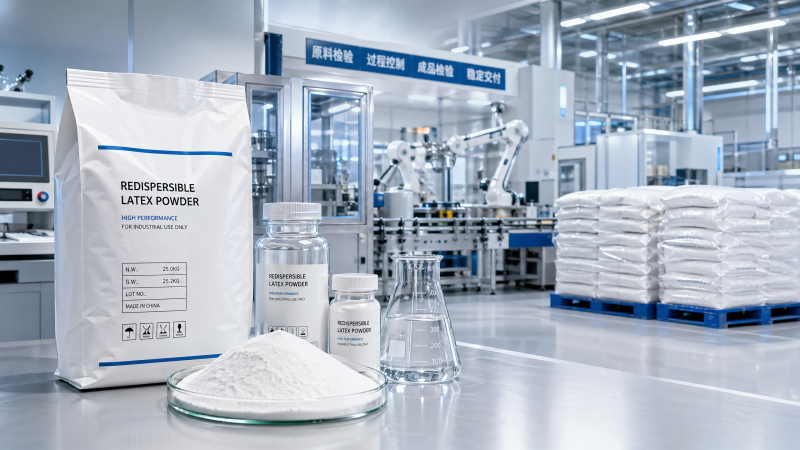
Choosing the right Redispersible Polymer Powder supplier is a critical step for companies entering a new market, as product consistency, technical support, and supply reliability directly affect business growth. For decision-makers in the chemicals and construction sectors, understanding how to evaluate manufacturing strength, quality control, and service capability can reduce risk and build a stronger foundation for long-term market success.
For importers, distributors, construction material formulators, and project-oriented manufacturers, supplier selection is not only a purchasing task. It is a market-entry decision that influences product positioning, channel stability, cash flow, complaint rates, and long-term brand credibility. In the case of redispersible polymer powder, small variations in ash content, bulk density, film-forming behavior, or compatibility with cement systems can create large differences in on-site performance.
A capable Redispersible Polymer Powder supplier should offer more than product availability. Decision-makers usually need a partner that can support trial stages, sample verification, specification alignment, delivery planning, and technical troubleshooting within 24–72 hours when issues arise. This becomes even more important when entering markets with different climate conditions, building standards, and contractor expectations.
Jinan Ludong Chemical Co., Ltd., established in 2020, operates as a large-scale global manufacturing enterprise focused on cellulose ethers production, trading, and integrated services. With main products including HPMC, RDP, and HPS, and annual production capacity reaching 45,000 tons, the company is positioned to serve global construction material customers that need dependable supply, flexible production, and coordinated technical support during expansion into new regions.
Why Supplier Selection Matters in New Market Entry
When a business enters a new geography, the first 6–12 months often determine whether it can secure repeat orders and build distributor confidence. In drymix mortar, tile adhesive, EIFS, skim coat, and self-leveling systems, the performance of redispersible polymer powder directly affects adhesion, flexibility, water retention synergy, and workability stability. If a product performs inconsistently between batches, the commercial cost is far higher than the material cost difference.
A weak Redispersible Polymer Powder supplier may create hidden risks in three areas. First, unstable supply can interrupt customer delivery schedules and force reformulation. Second, limited technical support can prolong trial periods from 2 weeks to 6 weeks or more. Third, inconsistent quality can increase complaint handling costs, particularly when the target market includes contractors who expect uniform site performance across different seasons.
For decision-makers, the real question is not simply who can quote a lower price per ton. It is which supplier can support a predictable market-entry process with manageable risk. That includes sample consistency, documentation speed, order visibility, and the ability to adjust logistics plans when demand rises faster than forecast. In many cases, paying 3%–8% more for stable supply can protect a much larger share of market revenue.
Common market-entry pressure points
- New customer approval cycles often require 2–3 rounds of sample testing before commercial orders begin.
- Different mortar formulas may require RDP with different Tg, anti-caking behavior, or hydrophobicity balance.
- Import lead times of 15–40 days can magnify the cost of a supplier’s production delay.
- Small initial volumes may still need full technical attention, especially during the launch stage.
These pressure points mean a Redispersible Polymer Powder supplier should be evaluated as an operational partner rather than a simple raw material vendor. Companies that manage this well usually establish stronger customer retention by the second or third order cycle.
How to Evaluate Manufacturing Strength and Product Consistency
Manufacturing capability is one of the most practical indicators of whether a Redispersible Polymer Powder supplier can support scale-up. Buyers should review production capacity, process control, storage conditions, and batch traceability. A supplier with integrated production planning is usually better prepared to handle demand swings, specification matching, and repeatability over multiple purchase cycles.
Jinan Ludong Chemical combines traditional production practices with intelligent automated production, which is relevant for buyers seeking both operational stability and flexible fulfillment. Its annual capacity of 45,000 tons across cellulose ether-related product lines signals that the company can support growing demand rather than only small-volume spot orders. For companies entering new markets, this kind of scale helps reduce the risk of outgrowing a supplier within 12–18 months.
Consistency should be verified through technical data, retained samples, and trial reports rather than claims alone. Procurement teams should ask for typical ranges for moisture, ash, bulk density, minimum film-forming behavior, and recommended dosage windows in target applications. Even if exact values differ by grade, the supplier should be able to explain how those properties affect tile adhesion, open time, sag resistance, or flexural performance.
Key manufacturing checks before supplier approval
Before onboarding a Redispersible Polymer Powder supplier, decision-makers can use a simple review framework covering production, quality, and responsiveness. The table below summarizes practical checkpoints that matter during new market entry.
The strongest conclusion from this review is that manufacturing scale alone is not enough. A reliable supplier combines capacity with repeatability and operational discipline. Buyers that verify these 4 areas early can usually reduce supplier-switching risk during the first year of market entry.
Related system compatibility
In many formulations, RDP works together with cellulose ethers to balance water retention, workability, and adhesion development. For formulators expanding product portfolios, compatibility across additives matters. In some application discussions, buyers may also compare support materials such as Methyl Hydroxyethyl Cellulose (HEMC) when optimizing mortar behavior for specific climates or substrate conditions.
Quality Control Standards That Reduce Commercial Risk
Quality control is where technical reliability becomes measurable. A Redispersible Polymer Powder supplier should be able to explain incoming raw material checks, in-process monitoring points, finished product release criteria, and storage controls. Even when exact test methods differ by plant, buyers should expect a clear quality logic rather than vague assurances. That is especially important for customers launching new private-label or regional drymix lines.
For many importers and manufacturers, a practical quality review includes 5 checkpoints: appearance uniformity, moisture range, bulk density stability, sieve residue behavior, and application test repeatability. Commercial teams may focus on price and lead time, but technical approval usually depends on whether 3 consecutive batches behave similarly in the intended formula. This is one of the fastest ways to distinguish a dependable Redispersible Polymer Powder supplier from a trading-only source with limited process visibility.
Decision-makers should also consider shelf-life and packaging performance. In humid logistics environments, weak packaging can cause caking, reduced redispersibility, and handling losses. Typical B2B checks include 25 kg bag integrity, pallet condition, labeling clarity, and warehouse recommendations such as dry storage and rotation within the advised shelf-life period. A supplier that provides these details proactively is usually better prepared for export business.
Recommended quality review framework
The following table outlines a practical quality control review for companies comparing potential suppliers during qualification and trial order stages.
This framework helps turn technical review into a commercial safeguard. When quality controls are transparent and repeatable, the buying company can launch into a new market with fewer unexpected formulation changes and stronger negotiating confidence with distributors or contractors.
Service Capability, Lead Times, and Cross-Functional Support
A strong Redispersible Polymer Powder supplier supports more than shipments. In new market entry, buyers often need sample coordination, alternative grade suggestions, packaging confirmation, customs document support, and technical interpretation for local partners. If these tasks are fragmented across different contacts, project speed slows down. A supplier with integrated service processes can reduce communication gaps and shorten decision cycles.
Lead time management is especially important. For trial orders, a 7–15 day preparation period may be acceptable if communication is clear and sample consistency is verified. For regular orders, buyers often target 2–4 week production windows plus freight time. What matters most is not the shortest promise, but the supplier’s ability to provide realistic scheduling, update shipment status, and prepare contingency plans when raw material or vessel changes occur.
Jinan Ludong Chemical’s integrated production lines and service orientation are relevant in this context. Companies entering overseas markets often prefer partners that can coordinate product supply across HPMC, RDP, and HPS rather than managing multiple disconnected vendors. This can simplify procurement, reduce compatibility uncertainty, and improve order planning for complete drymix mortar systems.
What decision-makers should ask during supplier interviews
- How long does sample preparation usually take, and can the supplier provide matching commercial-batch material within the same specification?
- What is the standard lead time for 1 container, and how does it change during peak demand periods?
- Who handles application troubleshooting, and what is the normal response window for technical questions?
- Can the supplier support multiple additive categories if future formulation expansion is planned?
These questions reveal whether a Redispersible Polymer Powder supplier is prepared for long-term cooperation or only transactional sales. In B2B chemicals, responsiveness often has a direct effect on customer retention because formulation and project deadlines rarely wait for delayed technical answers.
Service integration as a scaling advantage
As product lines expand, buyers may need additional cellulose ether options for mortar optimization. In those cases, a broader product platform can improve sourcing efficiency. For example, discussions around rheology and water-retention adjustment may also involve Methyl Hydroxyethyl Cellulose (HEMC) as part of a wider formulation strategy, provided the use case and performance targets are clearly defined.
A Practical Selection Process for Comparing Suppliers
Supplier selection becomes more effective when purchasing teams use a step-by-step process instead of comparing quotations in isolation. For most companies, a 5-step framework works well: requirement definition, sample evaluation, technical-commercial alignment, pilot order, and post-delivery review. This approach creates measurable checkpoints before annual volume commitments are made.
The first step is to define application targets. A tile adhesive grade and an EIFS grade may need different flexibility, adhesion profile, or hydrophobic balance. Without that definition, even a qualified Redispersible Polymer Powder supplier may send a technically sound product that is not optimized for the target application. The second step is to test at least 2–3 suppliers under the same formula conditions to make comparison fair and useful.
The third and fourth steps involve commercial alignment and pilot execution. Buyers should confirm MOQ, lead time, packaging details, payment terms, and complaint handling before placing a pilot order. A pilot order should then be evaluated not only for product performance but also for communication accuracy, loading quality, and document completeness. The fifth step is a review after the first shipment cycle, ideally within 30–45 days.
Supplier comparison scorecard
The table below offers a practical scorecard structure for enterprise buyers comparing multiple supplier candidates during market-entry planning.
This scorecard helps teams avoid overemphasizing unit price. In new market entry, technical fit and supply reliability usually deserve a combined weight of at least 50% because they have the greatest effect on customer satisfaction and launch continuity.
Common Mistakes and FAQ for Enterprise Buyers
Even experienced buyers can make avoidable mistakes when selecting a Redispersible Polymer Powder supplier for a new region. One common mistake is approving a supplier after only one successful lab sample. Another is treating trial support and mass-supply reliability as the same capability. A supplier may perform well at the sample stage but struggle with documentation, scheduling, or batch consistency during repeated shipments.
Another frequent mistake is ignoring climate and substrate differences. A formula that performs well in one country may behave differently in high humidity, low temperature, or fast-setting conditions elsewhere. This is why supplier technical communication matters. The best selection process combines lab testing, pilot validation, and realistic planning for at least the first 3 commercial orders.
Below are several frequently asked questions that reflect real purchasing concerns from decision-makers in the chemicals and construction materials sectors.
How many suppliers should be tested before final approval?
In most cases, testing 2–3 suppliers is practical. Fewer than 2 gives limited comparison, while more than 4 can slow decision-making without adding much value. The goal is to compare technical fit, consistency, service speed, and commercial clarity under the same test conditions.
What lead time is reasonable for a first commercial order?
A reasonable target is often 2–4 weeks for production preparation, depending on grade, order volume, and season. Buyers should also ask how peak periods affect this window and whether partial shipment or forecast locking is available for future orders.
Which documents should a supplier provide early?
At minimum, buyers should request a TDS, SDS, packing information, shelf-life guidance, and a sample-related COA or reference specification. Receiving these in the early qualification stage can shorten internal review by several days and reduce customs-related uncertainty later.
Is the lowest price a valid selection strategy?
Only if the technical and operational risks are already controlled. In many market-entry projects, a low price that leads to delayed launch, reformulation, or customer complaints is more expensive than a stable offer. Total procurement value should include quality stability, service responsiveness, and supply continuity.
Selecting the right Redispersible Polymer Powder supplier for new market entry requires a balanced review of product consistency, manufacturing strength, quality control, technical support, and delivery reliability. For enterprise buyers, the most effective approach is to compare suppliers through structured testing, measurable scorecards, and pilot-order validation rather than price alone.
With integrated production capabilities, a broad construction-chemicals portfolio, and annual capacity of 45,000 tons, Jinan Ludong Chemical is positioned to support customers seeking dependable additive supply for market expansion. If your team is evaluating supplier options for RDP, HPMC, HPS, or related mortar additives, now is a good time to review technical requirements, secure qualified samples, and align on a practical sourcing plan.
To reduce risk and accelerate your market-entry timeline, contact us to discuss your application needs, request product details, or obtain a customized supply and formulation support proposal.
Send Your Inquiry
We welcome your cooperation and we will develop with you.
