


How HPMC for Tile Adhesive Improves Open Time and Workability
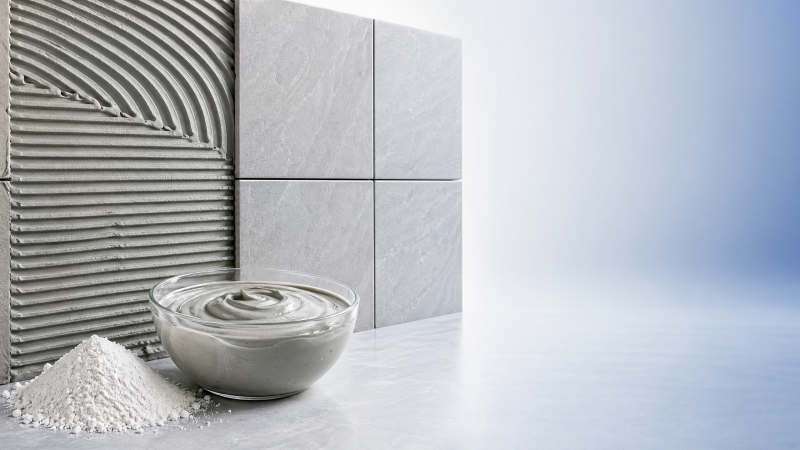
For tile installers and on-site operators, choosing the right HYDROXYPROPYL METHYL CELLULOSE for tile adhesive can make a clear difference in application performance. It helps extend open time, improve workability, and support smoother, more reliable tile placement under demanding jobsite conditions. Understanding how HPMC works is essential for achieving better efficiency, consistency, and bonding results in modern construction projects.
Why is HYDROXYPROPYL METHYL CELLULOSE for tile adhesive so important on the jobsite?
For operators, the value of HYDROXYPROPYL METHYL CELLULOSE for tile adhesive is not limited to one single effect. In practical use, it supports water retention, improves spreadability, reduces premature drying, and helps the adhesive remain usable for a longer period after combing. On a busy installation line, even an extra 10 to 20 minutes of effective open time can reduce tile repositioning problems and lower the risk of hollow spots caused by poor contact.
This matters even more when the substrate is absorbent, the ambient temperature is above 30°C, or airflow is strong. Under these conditions, cement-based tile adhesive can lose water quickly. HPMC acts as a water-retention aid, slowing down evaporation and allowing cement hydration to continue more evenly. For operators, the result is easier troweling, more stable rib formation, and better wetting of the tile back during the normal installation window.
In the chemical construction materials industry, HPMC is widely used because it helps balance several properties at once. A well-matched grade can support sag resistance on walls, improve slip control, and make the mortar feel smoother during mixing and application. For large-format tiles or extended laying areas, these benefits become especially noticeable within the first 15 to 40 minutes after application.
What problems does it help solve for installers?
When installers complain that adhesive skins too fast, drags under the trowel, or loses grip before tile placement, the cellulose ether system is often part of the root cause. Proper HYDROXYPROPYL METHYL CELLULOSE for tile adhesive helps reduce these issues by improving the mortar’s water-holding capacity and rheology. This means the mix stays more consistent from the bucket to the wall or floor.
- Reduces rapid surface drying in hot, dry, or windy conditions.
- Improves trowel feel, making spreading smoother and less tiring over 20 to 50 square meters.
- Supports longer open time, helping operators place and adjust tiles with fewer bonding defects.
- Enhances adhesion uniformity by keeping the mortar bed workable during the installation cycle.
For production-oriented buyers and site teams, it is also important that HPMC contributes to formulation stability. Since cement, fillers, sand grading, and redispersible polymer powder can all influence mortar performance, the cellulose ether has to work as part of a system rather than as a standalone additive.
Where does product consistency come in?
Consistent viscosity, substitution level, and moisture control help operators experience the same application feel batch after batch. Companies such as Jinan Ludong Chemical Co., Ltd., with annual production capacity reaching 45,000 tons and viscosity control from 400 to 200,000 CPS across HPMC series, are positioned to support customers who need stable supply and repeatable construction performance across different markets and seasons.
How exactly does HPMC improve open time and workability?
Open time refers to how long the applied adhesive remains capable of properly wetting and bonding the tile after being spread on the substrate. Workability covers how the mix behaves during mixing, standing, re-stirring, troweling, and tile pressing. HPMC affects both by managing water distribution in the mortar and by modifying its flow behavior. In many standard tile adhesive systems, dosage may fall roughly in the 0.2% to 0.6% range, depending on formulation targets.
As the cellulose ether dissolves and hydrates in water, it forms a solution that increases viscosity and supports a more cohesive mortar structure. This reduces bleeding and segregation while still allowing the mix to spread under trowel pressure. For the installer, the practical result is a mortar that feels creamy rather than harsh, and one that forms trowel ridges that hold shape instead of collapsing too early.
The open-time benefit comes mainly from water retention. By slowing water migration into absorbent substrates and reducing evaporation from the mortar surface, HPMC keeps the adhesive bed active for longer. That gives more time for tile embedding and adjustment, especially in areas where a crew may need 5 to 15 minutes between spreading and placement.
Which performance effects are most visible in daily use?
The following table summarizes the most noticeable jobsite effects and what they mean for operators handling cement-based tile adhesive systems.
The key takeaway is that open time and workability are linked. A mortar may feel smooth but still lose bondability too quickly if water retention is insufficient. Likewise, high retention without balanced rheology can create sticky or slow-spreading behavior. The best formulations create a usable balance across mixing, combing, placing, and pressing stages.
Why does the right grade matter more than simply using more?
More HPMC is not always better. Excessive dosage can increase viscosity too much, slow wetting, or affect the desired feel during application. The right grade depends on cement type, filler ratio, sand fineness, polymer level, target standard, and climate conditions. In many cases, installers benefit more from a grade optimized for hydration speed and workability than from simply pushing viscosity upward.
If your team is reviewing formulation options, a reference point can be Hydroxypropyl Methyl Cellulose used in construction-grade tile adhesive systems, where the practical target is not only thickening, but balanced performance from bucket stability to final tile contact.
How can operators judge whether the selected grade is suitable for their tile adhesive?
For users and plant operators, the fastest way to judge suitability is to look beyond one lab number and observe the full application cycle. A usable grade should mix within a predictable time, usually 3 to 5 minutes, stand without severe lumping, and re-stir smoothly. It should also maintain trowelability long enough to support practical installation speed rather than only ideal laboratory conditions.
Another key test is tile wetting after a waiting period. Spread the adhesive, leave it exposed for a defined interval such as 10, 20, or 30 minutes depending on the target class and conditions, then press the tile and inspect contact transfer. If ridge collapse, skinning, or low transfer appears too early, the formulation may need a different cellulose ether grade, dosage adjustment, or a broader reformulation review.
On-site suitability also depends on local variables. High-absorption walls, coarse sand, summer temperatures, and large ceramic or porcelain tiles all increase performance demands. That is why the same HPMC dosage may work well in one market but need adjustment in another. Operators should evaluate the system under realistic humidity, temperature, and substrate conditions whenever possible.
What should be checked before approving a formulation?
The following checklist helps users and technical teams make a practical judgment instead of relying on viscosity alone.
- Check mixing speed and whether the powder wets out evenly within the first 2 to 5 minutes.
- Observe whether the mortar feels creamy, cohesive, and easy to comb with standard notch sizes.
- Measure practical open time under site-like conditions, not only under mild indoor laboratory air.
- Inspect tile back coverage after waiting intervals and pressing force representative of actual installation.
- Evaluate anti-slip behavior for vertical tiles during the first 10 to 20 minutes after placement.
- Review compatibility with RDP, HPS, cement type, and filler composition.
These checks are especially useful for drymix mortar manufacturers and contractors that need stable performance across multiple crews. A material that performs well only in one narrow condition often leads to complaints once jobsite variables increase.
Which selection factors should be compared side by side?
When choosing among grades, comparing only price per kilogram can be misleading. The next table shows a more useful operator-focused comparison framework.
This kind of comparison often reveals that a slightly higher-priced grade can lower total application cost by reducing rework, improving crew speed, and supporting more stable placement across different weather and substrate conditions.
What are the most common mistakes when using HYDROXYPROPYL METHYL CELLULOSE for tile adhesive?
A frequent mistake is assuming that all HPMC grades behave the same because they share the same chemical name. In reality, differences in viscosity profile, substitution, particle properties, and manufacturing control can change how the adhesive mixes and performs. For operators, this can show up as very different trowel feel, setting rhythm, and tile transfer even when dosage appears unchanged.
Another mistake is focusing only on open time while ignoring workability balance. If the mortar stays open longer but becomes too sticky or too heavy under the trowel, installation efficiency may still drop. In the same way, a product that feels light and easy to spread may still fail if the surface skins over too quickly under wind or high heat. Balanced formulation remains the goal.
A third issue is not adjusting for local raw materials. Cement fineness, calcium content, sand grading, and filler absorption all influence how the cellulose ether performs. Operators should not directly copy a formula from one country or one plant to another without pilot verification. A difference of 0.1% in additive dosage or a change in filler source can noticeably alter mortar behavior.
Which warning signs suggest the grade or dosage is wrong?
- The adhesive becomes overly thick, difficult to spread, or tiring to comb over a normal 25 kg batch.
- Surface skinning appears too fast, especially within 5 to 10 minutes in warm air.
- Vertical tiles slip more than expected, suggesting poor cohesion balance.
- Powder lumps form repeatedly during mixing or the slurry does not smooth out after standing.
- Tile back coverage after pressing is uneven, despite correct trowel and placement technique.
When these symptoms appear, changing only the water addition is rarely the complete answer. It is better to review the formulation as a system, including cellulose ether grade, dosage, polymer content, and filler structure. In many cases, a supplier with broad construction-grade experience can help narrow down the cause more efficiently.
Is there a simple way to reduce troubleshooting time?
Yes. Run short, side-by-side comparisons under the same mixing method, water ratio, and climate exposure. Keep batch size, mixing time, and waiting intervals consistent. Even a 3-sample comparison can quickly show whether the issue comes from viscosity mismatch, insufficient retention, or poor synergy with other additives. If needed, you can also review a construction-grade Hydroxypropyl Methyl Cellulose option together with the total drymix system rather than evaluating it in isolation.
How should buyers and operators consider supply, production scale, and service support?
For regular production of tile adhesive, technical suitability is only one part of the decision. Supply continuity matters just as much. If a plant consumes dozens or hundreds of tons per month, inconsistent delivery can interrupt batching plans and force unplanned formula changes. Stable producers with integrated manufacturing and trading capability are often better positioned to support long-term planning, seasonal demand changes, and export requirements.
Jinan Ludong Chemical Co., Ltd., established in 2020, focuses on cellulose ethers and related construction materials such as HPMC, RDP, and HPS. With modern production lines, integrated solutions, and annual output capacity of 45,000 tons, it can flexibly support customers with different viscosity needs from 400 to 200,000 CPS. For users, this range is valuable because tile adhesive formulations do not all require the same rheological profile.
From an operator’s perspective, service response is also practical value. Questions around dosage, formulation matching, sample preparation, or adaptation to local cement should ideally be answered before full-scale purchasing. That can shorten trial cycles from several weeks to a more manageable evaluation period and reduce the number of failed pilot batches.
What should you ask a supplier before placing an order?
The most useful questions are usually technical and operational rather than purely commercial. Buyers and users should ask about recommended application range, dosage guidance, compatibility with cement-based systems, available viscosity options, sample lead time, and whether the supplier can support drymix adjustment when climate or raw materials change.
- Can you recommend a grade for wall tile adhesive versus floor tile adhesive?
- What dosage range is usually tested first for our type of drymix mortar?
- How does the grade behave in high-temperature or high-absorption environments?
- What is the expected sample preparation or delivery cycle?
- Can you help review compatibility with RDP or HPS if needed?
These questions help move the discussion from basic inquiry to practical application support. For tile adhesive users, that often leads to faster adoption and fewer jobsite surprises.
What is the simplest takeaway for improving tile adhesive performance?
The simplest takeaway is that HYDROXYPROPYL METHYL CELLULOSE for tile adhesive should be judged by real installation behavior, not by one specification alone. The right grade helps maintain open time, supports smoother workability, and improves consistency from mixing to final placement. For operators, that means fewer defects, easier handling, and a more dependable adjustment window under practical site conditions.
If you are selecting material for standard ceramic tile, porcelain tile, wall application, or large-format installation, focus on three linked questions: how long the mortar remains bondable after spreading, how it feels during troweling, and how well it transfers to the tile back after a realistic waiting period. Those three checks usually reveal whether the formulation is truly ready for use.
For teams that want stable quality across production and application, supplier capability also matters. A manufacturer with broad cellulose ether experience, integrated service, and flexible viscosity control can make formula optimization more efficient and reduce trial-and-error costs over time.
Why choose us or contact us next?
If you need help confirming the right HPMC grade for tile adhesive, we can support practical discussions around parameter confirmation, product selection, dosage direction, delivery cycle, sample support, and formulation matching with RDP or HPS. Whether you are testing a new drymix recipe or improving an existing one, early technical communication can save time in production and on the jobsite.
You can contact us to discuss your target viscosity range, tile type, climate conditions, substrate absorption, and expected open-time window. We can also communicate about packaging needs, order planning, and quotation details based on your application scenario. For users and operators who want more reliable tile placement and smoother mortar handling, a focused technical inquiry is often the best first step.
Send Your Inquiry
We welcome your cooperation and we will develop with you.
