


Choosing HPMC for Tile Adhesive Based on Water Retention and Slip Resistance
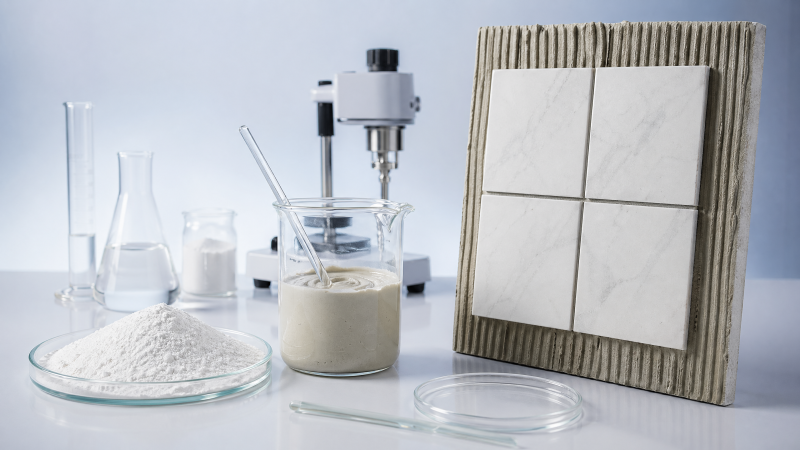
Selecting the right HYDROXYPROPYL METHYL CELLULOSE for tile adhesive is critical for technical evaluators balancing water retention, slip resistance, and workability. With viscosity ranges, substitution levels, and application demands varying widely, understanding how HPMC affects open time, sag control, and bond performance helps ensure reliable formulation decisions for modern tile adhesive systems.
What technical evaluators really need to decide first
When choosing HPMC for tile adhesive, the main question is not simply “which viscosity is best.” The real decision is whether a given grade can deliver the required water retention and slip resistance at the target dosage, within the full adhesive formula, under actual site conditions. For technical evaluators, performance consistency matters more than one isolated specification on a data sheet.
In practical formulation work, HPMC influences several linked properties at once: water retention, open time, anti-slip behavior, workability, wetting, and application feel. Improving one property may affect another. A grade that offers strong water retention can sometimes increase tack and improve vertical hold, but if the rheology is not balanced, it may also make spreading harder or reduce wetting efficiency on dense tiles.
That is why the selection process should begin with end-use requirements. Is the adhesive designed for wall tiles or floor tiles? Is it aimed at standard ceramic tiles or low-absorption porcelain? Does the formula need to meet anti-sag expectations, extended open time, or improved labor efficiency? The right HPMC choice is always application-led, not specification-led.
Why water retention is the first screening criterion
Water retention is usually the first property technical teams should screen because it directly affects cement hydration, bonding development, open time, and ease of installation. In cement-based tile adhesives, insufficient water retention means water is lost too quickly into the substrate or environment. This can weaken hydration, shorten open time, and reduce final bond strength, especially in hot, dry, or highly absorbent conditions.
HPMC acts as a water-retaining agent by forming a hydrated polymer network that slows water migration. This helps maintain moisture around cement particles for longer, supporting proper hydration and improving adhesive performance during the installation window. For evaluators, the key issue is not maximum retention in theory, but whether the adhesive still performs reliably when applied on real substrates with varying suction rates.
A well-selected HPMC grade can help the adhesive remain workable long enough for proper tile placement, while also reducing premature skinning on the mortar surface. This is especially important for large-format tiles and porcelain tiles, where installers need enough open time to achieve full contact and reposition the tile without losing bond integrity.
However, excessive focus on water retention alone can be misleading. If a grade retains water extremely well but creates an overly heavy or sticky mortar, application efficiency may suffer. Evaluators should therefore treat water retention as a foundation requirement, then verify how it interacts with slip resistance, consistency, and troweling behavior.
How HPMC affects slip resistance in vertical tile applications
Slip resistance, often discussed as anti-sag performance, is a top concern in wall tile adhesives. From a formulation perspective, HPMC contributes by increasing the cohesiveness and yield value of the wet mortar, helping the adhesive resist downward movement after tiles are pressed into place. This is critical for preventing tile slippage on vertical surfaces before the cement matrix develops sufficient strength.
Not all HPMC grades contribute equally to anti-slip behavior. The effect depends on viscosity, particle dissolution characteristics, substitution pattern, and interaction with other formulation ingredients such as fillers, cement type, and redispersible polymer powder. A higher-viscosity HPMC may improve sag resistance, but the result is not always linear. Beyond a certain point, higher viscosity may reduce workability without delivering proportionally better anti-slip performance.
Technical evaluators should also distinguish between initial slip control and overall application balance. Good anti-sag performance should not come at the expense of poor tile wetting or difficult combing. An adhesive that holds a tile in place but does not spread smoothly or transfer well may still fail in practical installation. This is why lab slip data should always be reviewed alongside workability and contact area observations.
Viscosity selection: useful, but not enough on its own
Viscosity is often the first number buyers compare, but it should be treated as a guidance parameter rather than a complete selection tool. In tile adhesive formulations, HPMC grades may range widely, and the same nominal viscosity can behave differently depending on manufacturing process, substitution level, particle size, and dissolution profile. A 100,000 CPS product from one producer may not perform identically to a similarly labeled grade from another.
For technical evaluation, moderate-to-high viscosity HPMC grades are commonly used to support water retention and anti-slip properties in cementitious tile adhesives. Lower viscosity products may improve flow and ease of mixing but may fall short on sag control. Higher viscosity products may enhance body and slip resistance, though they can also increase drag during spreading if overdosed or poorly matched with fillers.
The practical approach is to use viscosity as one screening dimension, then validate with formulation testing. Instead of asking, “What is the best viscosity for tile adhesive?” evaluators should ask, “Which viscosity range gives the best balance of retention, slip resistance, and application feel in this exact formula?” That shift in thinking usually leads to better and faster development decisions.
What formulation factors can change HPMC performance
Even a well-designed HPMC grade will not show its full value if the surrounding formulation is not aligned. Cement type, sand grading, calcium formate, starch ether, polymer powder, and total additive dosage can all influence how HPMC behaves in the final adhesive. This is one reason technical evaluators should avoid selecting HPMC based only on neat-material properties.
For example, redispersible polymer powder can improve flexibility, adhesion, and deformability, but it may also change the wet rheology of the mortar. Starch ethers are often used to strengthen anti-sag behavior and improve texture, which may allow formulators to optimize HPMC dosage instead of relying on HPMC alone for every fresh-property target. Selection should therefore consider whether HPMC is the main rheology driver or part of a broader additive package.
In some systems, auxiliary binders and film-forming additives are also reviewed to refine performance in specialized applications. Depending on formulation strategy, materials such as Polyvinyl Alcohol may be considered in broader construction chemical development work, although HPMC remains the central additive for water retention and workability control in most cement-based tile adhesive systems.
Substrate absorption and tile type also matter. Dense porcelain tiles require better wetting and open-time support than standard ceramic tiles. Highly absorbent substrates may draw water rapidly from the mortar, increasing the burden on HPMC water retention. Environmental temperature, humidity, and mixing water quality can further shift performance, meaning selection should always be validated under likely field conditions.
How to evaluate open time, wetting, and bond reliability together
Technical evaluators should not assess water retention and slip resistance in isolation. The better method is to link them to installation outcomes, especially open time retention, tile wetting, and bond development. If an HPMC grade provides excellent retention but the adhesive skins too quickly or gives poor transfer onto the tile back, then practical performance is still compromised.
Open time testing should focus on whether the adhesive remains capable of forming effective contact after exposure intervals representative of actual jobsite delays. This is particularly important for large-format installation and warm-weather conditions. Bond strength after open time exposure is often more informative than fresh-state observations alone, because it connects formulation behavior to final performance.
Wetting should be checked visually and functionally. After combing, does the adhesive maintain rib definition while still collapsing properly under pressure? Does it transfer well to the tile? Can installers achieve high contact coverage without excessive force? Good HPMC selection helps balance these factors, supporting both application efficiency and durable adhesion.
Slip resistance should then be verified under the same practical framing. A mortar that shows low tile slip in a controlled test but has poor wetting or difficult spreadability may not be the optimal choice. The best HPMC grade is the one that supports reliable bond formation while keeping vertical installation manageable and repeatable.
A practical selection workflow for technical teams
For most technical evaluators, a structured comparison process is more useful than relying on supplier recommendations alone. Start by defining the adhesive class, tile type, substrate conditions, and target standards. Then identify two or three HPMC grades in different viscosity or performance ranges that are likely to meet the basic water retention requirement.
Next, test at comparable dosages in the same base formula. Measure water retention, consistency, open time, slip resistance, and ease of application. Do not change multiple variables at once in the first round. The goal is to understand how each HPMC grade shifts the balance of properties. After screening, dosage can be fine-tuned to optimize cost and performance.
It is also important to observe mixing behavior and dissolution uniformity. Some grades may develop viscosity faster or produce a more stable mortar texture. Others may be more sensitive to mixing sequence or water ratio. These handling characteristics matter in factory production and at the jobsite, where repeatability is a key quality indicator.
Finally, confirm performance in more than one environmental condition if the adhesive will be sold across regions. A grade that behaves well in controlled lab temperature may react differently in high heat or low humidity. Robust selection means reducing risk before commercialization, not just hitting acceptable values in one test setup.
What to ask an HPMC supplier before approval
For buyers and technical reviewers, supplier capability is part of product evaluation. Beyond asking for viscosity, request information on viscosity range control, batch consistency, ash content, moisture, particle size, substitution characteristics, and recommended application dosage. Consistency between batches is especially important in tile adhesive manufacturing because small changes in cellulose ether behavior can shift application feel and field performance.
It is also valuable to ask whether the supplier can provide application-oriented grades rather than only generic HPMC categories. A supplier with deep construction chemistry experience can often suggest better starting points for wall tile adhesives, porcelain tile systems, or high-performance thin-bed mortars. That shortens development cycles and reduces unnecessary trial-and-error work.
Manufacturing scale and process stability should not be overlooked. A supplier with strong production capacity and controllable quality systems is better positioned to support long-term formulation stability. For companies formulating at scale, the ability to secure a consistent cellulose ether source is often as important as achieving the initial lab target.
Choosing the right HPMC grade for different tile adhesive priorities
If the main target is strong water retention and extended open time, technical teams should look for HPMC grades with reliable moisture-holding capacity and good support for cement hydration, then verify that wetting and spreadability remain acceptable. These grades are often preferred for dense tiles, warm climates, and installations where adjustment time matters.
If the main target is vertical anti-slip performance, the focus should shift toward grades that improve mortar body and sag resistance without making the mix overly stiff. In many cases, the best result comes not from the highest possible viscosity, but from the grade that creates a stable and cohesive rheology profile at efficient dosage.
Where balanced performance is required, especially in mainstream C1 or C2 tile adhesive systems, evaluators should prioritize formulations where water retention, slip resistance, and workability are all acceptable within one window. This usually leads to better product acceptance in the market because installers value an adhesive that performs predictably across multiple jobsite conditions.
In some development projects, broader additive screening may include supporting materials such as Polyvinyl Alcohol, but the key decision for cement-based tile adhesive still centers on selecting the HPMC grade that best aligns with the intended installation behavior and quality level.
Conclusion
Choosing HYDROXYPROPYL METHYL CELLULOSE for tile adhesive should be approached as a performance-balancing exercise, not a one-number comparison. For technical evaluators, water retention is the first critical filter because it underpins hydration, open time, and bond reliability. Slip resistance is the next major decision point, especially for wall applications, but it must be assessed together with workability and wetting.
The most effective selection process combines viscosity screening with formulation testing, practical application review, and supplier consistency assessment. A suitable HPMC grade is the one that delivers stable water retention, reliable anti-sag behavior, good application feel, and repeatable performance in the intended adhesive system. When these factors are evaluated together, formulation decisions become more accurate, commercial risk is reduced, and final tile adhesive quality becomes easier to control.
Send Your Inquiry
We welcome your cooperation and we will develop with you.
